
Boakai Bea Mountain Infrastructure Deal Liberia: US$5.7B Agreement to House
Summary
- President Joseph Nyuma Boakai submitted a US$5.7 billion Master Infrastructure Development Agreement with Bea Mountain Mining Corporation to the Liberian House of Representatives.
- The agreement proposes extensive infrastructure projects, including four power plants with 270 MW capacity and numerous road constructions across several counties.
- Its unique financing structure involves Bea Mountain funding projects, with costs offset against its eligible entitlements, sparking calls for legislative scrutiny.
- The deal was signed by President Boakai and senior officials a day before its submission for legislative approval.
- The House has referred the agreement to its Concessions and Investment and Public Works Committees for review within two weeks.
Legislative Review Initiated for Major Infrastructure Pact
This model, where project costs are offset against future mineral entitlements, represents a novel approach to Liberia mineral resources financing for large-scale development.
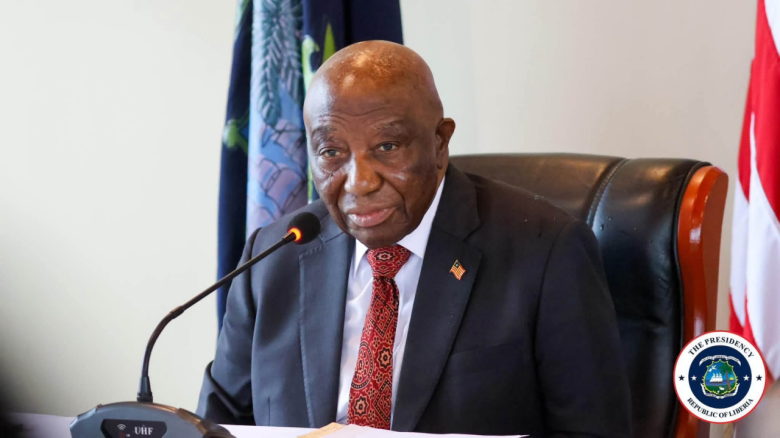
President Joseph Nyuma Boakai has formally presented a significant infrastructure development agreement, valued at US$5.7 billion, to the Liberian House of Representatives for its review and eventual ratification. This pivotal submission involves the Liberian government and the Bea Mountain Mining Corporation (BMMC), initiating a crucial legislative process concerning the nation's future infrastructure funding. The proposed arrangement, known as the Liberia Master Infrastructure Development Agreement (MIDA), aims to address critical development needs across the country.
The presidential communication, which accompanied the agreement, seeks legislative endorsement for a framework where Bea Mountain will fund various national infrastructure initiatives. The funding mechanism stipulates that approved project costs advanced by the company will subsequently be deducted from its eligible entitlements under the agreement. This submission to the House occurred just one day after President Boakai officially signed the deal. The signing ceremony was attended by several high-ranking government officials, including Justice Minister Betty Lamin Blamo, along with Finance and Development Planning Minister Augustine Kpehe Ngafuan, Mines and Energy Minister Matenokay Tingban, National Investment Commission Chairman Morley Kamara, and Presidential Legal Adviser Bushuben Keita.
Following its receipt, the House of Representatives referred the comprehensive document to its Committees on Concessions and Investment and Public Works. These committees have been tasked with examining the agreement thoroughly and are expected to present their findings to the legislative Plenary within a two-week timeframe for further deliberation and action. This move sets the stage for an extensive debate on the financing model and the broader implications of the Boakai Bea Mountain infrastructure deal Liberia.
Ambitious Scope of Infrastructure Development
The US$5.7 billion Master Infrastructure Development Agreement outlines an extensive plan for national development, primarily focusing on critical energy and transportation sectors. At its core, the initiative includes a substantial energy expansion program designed to significantly boost Liberia's power capabilities. This program encompasses the construction of four new power plants, which together are projected to achieve a combined installed capacity of 270 megawatts.
Beyond generation, the agreement details plans for approximately 305 kilometers of high-voltage transmission infrastructure. This includes a crucial 150-kilometer main transmission line intended to link the proposed power plants with the existing Mt. Coffee substation. Additionally, a 150-kilometer line is planned to extend towards Nimba County, with another line designated to serve Bong County. The comprehensive energy upgrade also provides for enhancements to substations, transformers, and the current 66-kilovolt electricity distribution network, all aimed at expanding electricity generation and improving power delivery beyond the existing supply infrastructure.
In parallel with the energy projects, the Bea Mountain Mining Corporation MIDA also proposes a wide-ranging road construction program spanning multiple counties. A key component is the development of a 146-kilometer Liberia Development Road. Further road projects include the Tubmanburg-Compoundzu Road, which will connect Bomi and Gbarpolu counties, the Brewerville-Bopolu Road, and the Cestos Junction-Cestos City Road. A coastal road connecting Cestos Junction to Greenville City and Greenville Port is also part of the plan, alongside the Gbarnga-Kokoyah-Compound 3-Buchanan Road, the Greenville-Klowne Town coastal road, and the Konia-Voinjama Road in Lofa County. Additional routes include a road linking Saclepea, Boutuo, Bahn, and Karnplay in Nimba County, the Pleebo-Barclayville-Grandcess-Big Suehn Junction coastal road, the Sengeh-Mbaloma-Gongu-Kinjor-Bandela Road in Grand Cape Mount County, and a concrete-paved road within Monrovia.
Innovative Financing and Calls for Scrutiny
The financing structure of this extensive Boakai Bea Mountain infrastructure deal Liberia has drawn considerable attention and prompted calls for rigorous scrutiny from various political leaders and stakeholders. President Boakai characterized the arrangement as an innovative mechanism designed to fund significant infrastructure projects, where the payments made by Bea Mountain would constitute a lawful satisfaction and discharge of the company's applicable entitlements. This model, where project costs are offset against future mineral entitlements, represents a novel approach to Liberia mineral resources financing for large-scale development.
Despite the administration's presentation of the deal as a strategic pathway for development, its intricate financing model and the broader implications for Liberia’s mineral resources have sparked public debate. Critics and concerned parties are advocating for a thorough independent review to ensure transparency and equitable benefits for the nation. The Liberia legislative approval infrastructure process, therefore, is not merely a formality but a critical juncture for evaluating the long-term economic and legal ramifications of such a substantial agreement.
Practical Implications
Lawyers and compliance officers should closely monitor the Liberian Legislature's review and ratification of the Bea Mountain MIDA, particularly its innovative financing structure offsetting infrastructure costs against mineral entitlements, as it could set a precedent for future large-scale resource-backed development agreements in Liberia and impact regulatory compliance for mining and infrastructure projects.
Source
How does this affect you?
Get an AI analysis of this article grounded in your jurisdictions, practice areas, and any policy documents you've uploaded to Wansom.
Finish Reading the Full Story and the Expert Analysis.
Get the latest legal & regulatory intelligence in Liberia
Wansom is AI and can make mistakes.