
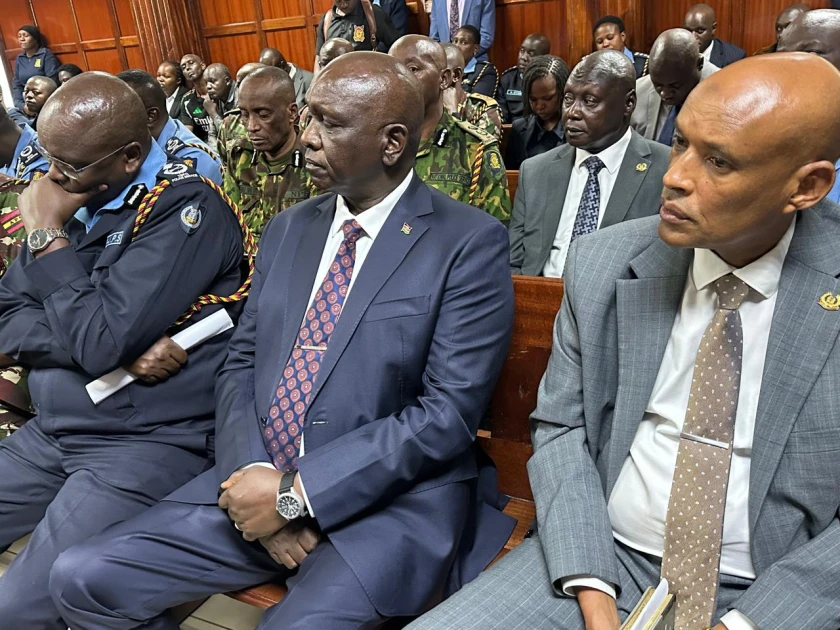
High Court: Pardons IG Kanja Over Protest Order, Warns of Custodial Sentence
Summary
- The High Court pardoned Inspector General Douglas Kanja for police non-compliance with an order against barricading roads during protests.
- The pardon was granted after Kanja personally appeared in court and assured future compliance with the directive.
- The court issued a stern warning that any future breach could lead to a custodial sentence for the Inspector General.
- Contempt proceedings were initiated to reinforce judicial authority and protect citizens' freedom of movement.
- Police have been directed to strictly adhere to the order, with repeat violations facing tougher sanctions.
High Court Pardons IG Kanja Over Protest Order Breach
This stern admonition serves as a significant deterrent, reinforcing the judiciary's resolve to ensure strict adherence to its pronouncements.
The High Court in Nairobi has granted a pardon to Inspector General Douglas Kanja following the police force's non-compliance with a previous directive that prohibited the barricading of public roads during demonstrations. This decision, which followed the Kenya police barricading roads ruling, came with a severe caution, however, indicating that any future disregard for the court's order could result in a custodial sentence for the Inspector General. The ruling underscores the judiciary's firm stance on the enforcement of court orders, particularly concerning public protests.
The court's leniency was primarily influenced by Inspector General Kanja's personal appearance before the bench, accompanied by other high-ranking police officials. During this appearance, Kanja provided explicit assurances that the order would be fully respected and implemented by the National Police Service moving forward. The presiding judge specifically cited Kanja's direct engagement and his commitment to future compliance as the basis for the pardon, stating that his personal undertaking was a key factor in the decision to avert immediate punitive measures.
Legal Context and Judicial Authority
The High Court emphasized that the police's actions, specifically the barricading of roads, directly infringed upon citizens' fundamental freedom of movement. This interference necessitated the initiation of contempt proceedings against Inspector General Douglas Kanja to reaffirm the judiciary's authority and uphold the foundational principles of the rule of law within Kenya. The court's intervention highlights its role in ensuring that executive actions do not undermine constitutional rights.
Furthermore, the judge acknowledged Inspector General Kanja's detailed explanation regarding the proposed implementation of the court's directive. Kanja also confirmed that he had issued clear instructions to all police officers, stressing the imperative of adhering to court orders. The court appreciated this proactive step, noting that the Inspector General had underscored to his personnel the critical importance of compliance. A more comprehensive ruling is anticipated, which will further delineate the National Police Service's responsibilities in safeguarding and upholding the rule of law.
Stern Warning and Future Implications
Despite the pardon, the High Court issued an unequivocal High Court warning custodial sentence IG, making it clear that any subsequent violation of the order would compel the court to consider imposing a custodial sentence on the Inspector General. This stern admonition serves as a significant deterrent, reinforcing the judiciary's resolve to ensure strict adherence to its pronouncements. The court explicitly directed the police to strictly comply with the ruling prohibiting the barricading of roads during demonstrations.
The ruling sends a strong message regarding the enforcement of court orders Kenya police, indicating that the judiciary will not tolerate repeated non-compliance. Any further breaches are expected to attract tougher sanctions, moving beyond warnings to more severe penalties. This development is crucial for civil liberties advocates and legal practitioners, as it solidifies the judiciary's commitment to holding executive officials accountable for actions that impede citizens' rights during public demonstrations. The High Court's decision in the Inspector General Douglas Kanja contempt proceedings underscores a critical moment for judicial oversight in Kenya.
Practical Implications
This ruling reinforces the judiciary's commitment to upholding court orders against executive actions, particularly concerning public demonstrations. Lawyers advising on civil liberties or representing clients affected by police conduct during protests should note the High Court's stern warning to the Inspector General, indicating a low tolerance for future non-compliance and potential for custodial sentences.
Source
How does this affect you?
Get an AI analysis of this article grounded in your jurisdictions, practice areas, and any policy documents you've uploaded to Wansom.
Finish Reading the Full Story and the Expert Analysis.
Get the latest legal & regulatory intelligence in Kenya
Wansom is AI and can make mistakes.