
Karnataka High Court: Puttarajamma v State of Karnataka Quashes Land Acquisition
Summary
- The Karnataka High Court quashed the acquisition of over 1,938 acres for the Suryanagar housing project by the Karnataka Housing Board.
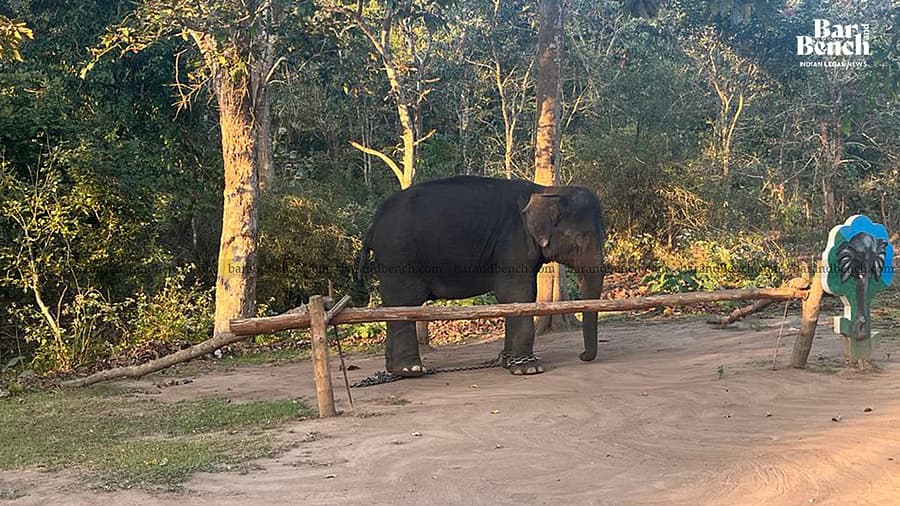
- The court cited irreversible ecological and wildlife-related consequences, specifically impacting the Karadikkal-Madeshwara elephant corridor.
- Justices DK Singh and H Shanthi Bhushan ruled that elephants cannot be treated as "occupants without rights" whose homes may be displaced at will.
- The land acquisition proceedings were found to lack a scientific environmental impact assessment and consideration of socio-ecological factors.
- The decision in Puttarajamma v State of Karnataka establishes a significant precedent for wildlife rights and environmental protection in India.
Landmark Ruling Halts Housing Project
The bench articulated a powerful stance on animal rights, unequivocally stating that elephants, for whom these corridors constitute not merely a passage but an essential part of their natural habitat and existence, cannot be treated as occupants without rights whose homes may be displaced at will.
The Karnataka High Court, in a significant ruling in the case of Puttarajamma v State of Karnataka, has invalidated the acquisition of more than 1,938 acres of land intended for the fourth phase of the Suryanagar housing project. This extensive land parcel was earmarked for development by the Karnataka Housing Board (KHB) with the stated aim of providing affordable and planned housing plots. The division bench, comprising Justices DK Singh and H Shanthi Bhushan, delivered this judgment, effectively overturning a prior decision by a single-bench that had only partially interfered with the acquisition on January 13, 2025.
The court's decision came in response to appeals lodged by landowners whose agricultural properties were targeted for acquisition. These landowners challenged the legality and implications of the proposed development, leading to a comprehensive review by the higher court. The quashing of the Karnataka Housing Board land acquisition marks a pivotal moment for environmental jurisprudence in the region, signaling a heightened judicial scrutiny over large-scale development initiatives.
Ecological Imperatives and Wildlife Rights
Central to the Karnataka High Court's decision was the finding that the Suryanagar housing project would lead to "irreversible ecological and wildlife-related consequences." The court specifically highlighted that the development would deprive local wildlife of their natural habitat, posing a severe threat to biodiversity. A critical concern raised was the project's direct impact on the Karadikkal-Madeshwara Corridor, an essential migratory route for elephants. This corridor is not merely a transit path but a fundamental component of the elephants' natural existence and habitat.
The bench articulated a powerful stance on animal rights, unequivocally stating that elephants, for whom these corridors constitute not merely a passage but an essential part of their natural habitat and existence, cannot be treated as occupants without rights whose homes may be displaced at will. Furthermore, the court found that the entire land acquisition process was flawed, having proceeded "without undertaking the relevant considerations such as, scientific study of environment impact assessment, socio-ecological factors," indicating a failure to conduct a proper Bannerghatta environmental impact assessment given the proximity to such sensitive areas.
Setting a Precedent for Environmental Protection
This judgment from the Karnataka High Court sets a significant precedent for environmental and wildlife protection in land acquisition cases across India. By quashing the acquisition for the Suryanagar housing project due to its ecological ramifications, the court has reinforced the principle that developmental goals cannot override critical environmental safeguards and the rights of wildlife. The explicit recognition of elephants' inherent rights and the importance of their natural corridors, particularly near ecologically sensitive zones like the Bannerghatta region, is a landmark development in Indian jurisprudence.
Lawyers advising on infrastructure or housing projects, especially those planned near ecologically sensitive areas, must now account for heightened judicial scrutiny regarding environmental impact assessments and potential challenges based on animal rights. This ruling, Puttarajamma v State of Karnataka, serves as a powerful reminder that comprehensive scientific studies and consideration of socio-ecological factors are indispensable prerequisites for any large-scale land acquisition. It contributes significantly to the evolving body of elephant rights legal precedent and broader wildlife rights India judgment, signaling a more robust legal framework for conservation.
Practical Implications
This judgment sets a significant precedent for environmental and wildlife protection in land acquisition cases in India. Lawyers advising on infrastructure or housing projects, especially near ecologically sensitive areas, must now account for heightened judicial scrutiny regarding environmental impact assessments and potential challenges based on animal rights.
Source
How does this affect you?
Get an AI analysis of this article grounded in your jurisdictions, practice areas, and any policy documents you've uploaded to Wansom.
Finish Reading the Full Story and the Expert Analysis.
Wansom is AI and can make mistakes.