
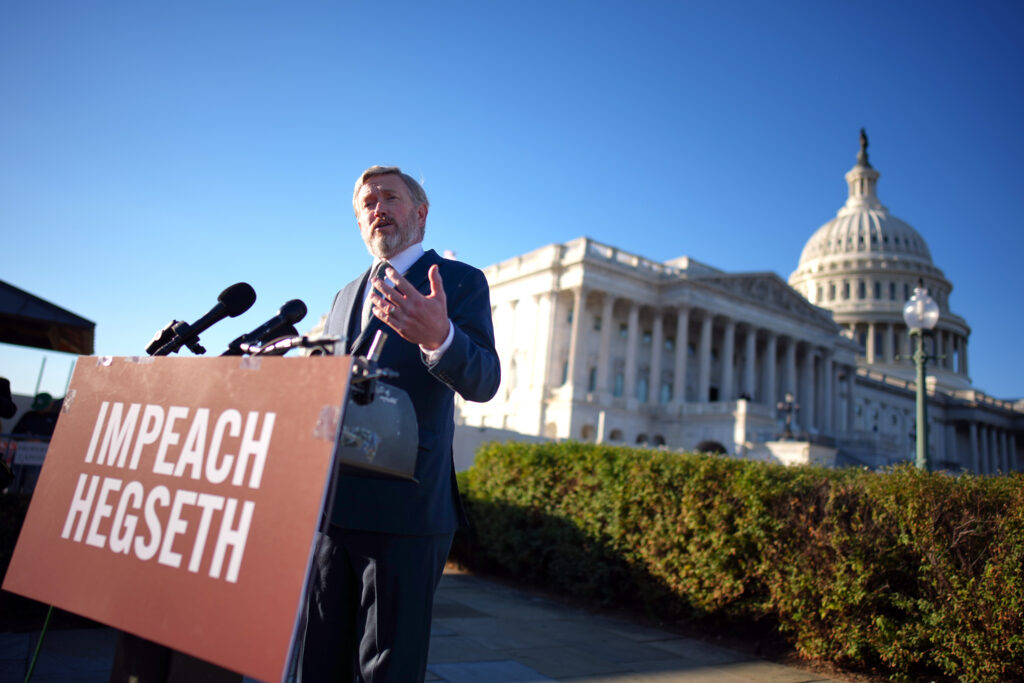
US House: Hegseth Impeachment Vote Stalled by Committee Referral
Summary
- The U.S. House of Representatives voted 211-204 to send an impeachment resolution to the Judiciary Committee.
- The resolution, introduced by Rep. Thomas Massie, targeted an impeachment effort against Defense Secretary Pete Hegseth.
- This procedural move effectively stalled the Hegseth impeachment vote.
- The action is expected to kill the impeachment effort for the current Congress.
- Any future attempt to revive the impeachment would require reintroduction in the next Congress.
What Happened
For the time being, the House's decisive action ensures that the Hegseth impeachment vote stalled, thereby bringing this particular chapter of the impeachment effort to a procedural close.
The United States House of Representatives recently undertook a significant procedural action concerning an impeachment resolution, effectively ensuring the Hegseth impeachment vote stalled. In a recorded vote of 211 in favor and 204 against, the House decided to refer the impeachment resolution, which aimed to initiate proceedings against the individual in question, directly to the House Judiciary Committee. This parliamentary maneuver represents a critical juncture for such legislative efforts, diverting the resolution from an immediate floor debate and vote to a committee for further consideration.
This specific impeachment resolution was formally introduced by Representative Thomas Massie. By choosing to send the measure to the House Judiciary Committee, the broader legislative body opted against a direct up-or-down vote on the impeachment articles themselves. Instead, the resolution is now situated within the committee traditionally tasked with the initial review and drafting of impeachment articles, a process that often leads to the indefinite shelving of such proposals. This decision underscores the House's current stance on advancing the impeachment effort.
Legislative Context
The referral of the Hegseth impeachment resolution to the House Judiciary Committee is a well-established procedural mechanism within the intricate US House impeachment process. The Judiciary Committee holds a pivotal role as the primary legislative body responsible for examining, debating, and potentially drafting articles of impeachment before they can be presented to the full House for a vote. Historically, a substantial number of impeachment initiatives, particularly those that do not garner widespread bipartisan consensus, are directed to this committee, where they frequently remain without further legislative progress.
This particular procedural step serves as an effective means to either indefinitely postpone or effectively table a direct vote on the impeachment measure by the entire House. While this action does not constitute an outright rejection of the underlying allegations or the substance of the resolution, the referral of the Hegseth resolution to the House Judiciary Committee clearly indicates a prevailing lack of immediate political will among a majority of House members to actively pursue the impeachment process at the present time. It provides members with a way to address the resolution without committing to a definitive position on the impeachment itself, instead relying on the committee's deliberative process, which often results in inaction.
The Resolution's Future
The immediate and most significant consequence of the House's recent vote is that the impeachment effort has been effectively terminated for the duration of the current legislative session. The referral to the Judiciary Committee dictates that the Hegseth impeachment resolution is highly improbable to advance any further or be brought back to the floor for a vote before the conclusion of the present Congress. This procedural outcome places a substantial and perhaps insurmountable obstacle in the path of those who advocate for the impeachment, as the resolution will not see further action unless the committee itself decides to move forward, an eventuality that is rare for resolutions sent to committee in this manner.
Consequently, any potential re-initiation or revival of this specific impeachment attempt would necessarily be deferred until the convening of the next Congress. Should the proponents of impeachment wish to continue their pursuit of the matter, Representative Thomas Massie or another member would be required to formally reintroduce a similar impeachment resolution during a subsequent legislative session. For the time being, the House's decisive action ensures that the Hegseth impeachment vote stalled, thereby bringing this particular chapter of the impeachment effort to a procedural close.
Practical Implications
This article details a procedural legislative development regarding an impeachment resolution. It does not present a direct actionable legal implication for lawyers or compliance officers, as it concerns a political process being stalled rather than a new law, regulation, or definitive legal outcome requiring immediate action or advice.
Source
How does this affect you?
Get an AI analysis of this article grounded in your jurisdictions, practice areas, and any policy documents you've uploaded to Wansom.
Finish Reading the Full Story and the Expert Analysis.
Get the latest legal & regulatory intelligence in United States
Wansom is AI and can make mistakes.