
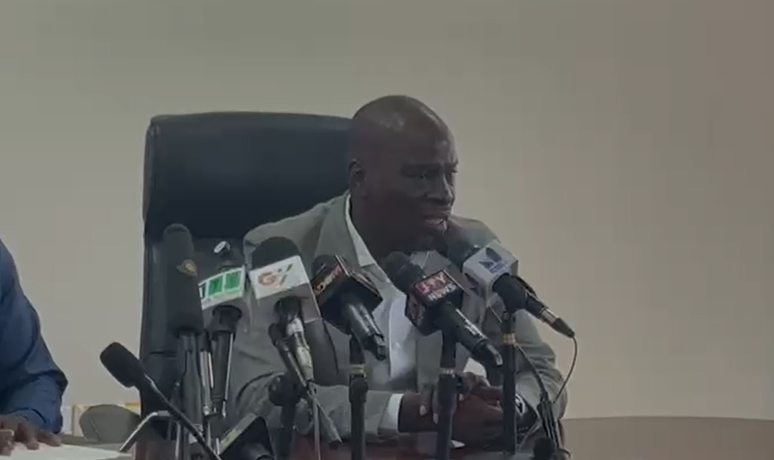
Haruna Iddrisu: Ghana Teacher Strike Appeal for School Resumption
Summary
- Education Minister Haruna Iddrisu has appealed to striking teacher unions to return to classrooms.
- The Minister is engaging union leadership alongside the Controller and Accountant General's Department (CAGD), Fair Wages and Salaries Commission (FWSC), and Ghana Education Service (GES).
- Iddrisu stressed the importance of protecting the school calendar, which recently returned to a September-to-July cycle.
- He acknowledged the teacher unions' strike action as publicly and justifiably declared.
- The Minister, acting as their employer, aims to persuade unions to maintain academic continuity while their legitimate concerns are addressed.
Minister Appeals Amidst Education Sector Dispute
The Minister's statement highlights a delicate balance between acknowledging workers' rights and protecting the continuity of essential public services like education.
Ghana's Education Minister, Haruna Iddrisu, has issued a direct appeal to the nation's striking teacher unions, urging them to resume their duties in classrooms. The Minister's intervention comes as he engages in high-level discussions with the leadership of these unions, aiming to resolve the ongoing industrial action. These critical negotiations also involve key governmental bodies responsible for public sector employment and financial management.
Specifically, the Controller and Accountant General's Department (CAGD) and the Fair Wages and Salaries Commission (FWSC) are participating in these talks, alongside the Ghana Education Service (GES). The multi-party engagement underscores the complexity of the dispute, which involves both the unions' demands and the broader administrative and financial frameworks governing public sector workers in Ghana. Minister Iddrisu's primary objective in these discussions is to facilitate a swift return to normalcy within the educational system.
Protecting the Academic Calendar
A central theme of Minister Iddrisu's address was the imperative to safeguard Ghana's academic calendar. He emphasized that the school year had only recently been restored to its traditional September-to-July cycle, and maintaining this schedule is crucial for educational stability. The Minister articulated his position directly to the union leaders, whom he welcomed warmly, acknowledging their public declaration of a strike action as justifiable.
In his capacity as the employer representative, Minister Iddrisu sought to persuade the union leadership to ensure the academic calendar remains uninterrupted and runs smoothly. This appeal is being made concurrently with efforts to thoroughly investigate and address the legitimate issues and concerns that prompted the teachers' industrial action. The Minister's statement highlights a delicate balance between acknowledging workers' rights and protecting the continuity of essential public services like education.
Broader Implications for Public Sector Labor
The ongoing Ghana teacher union strike negotiations, spearheaded by Haruna Iddrisu, represent a significant moment in Ghana's public sector labor relations. The involvement of multiple government agencies—CAGD, FWSC, and GES—alongside the Education Minister, illustrates a coordinated approach to resolving the dispute. This collective engagement aims to find a resolution that satisfies the legitimate grievances of the teachers while upholding the integrity of the national education system.
The Haruna Iddrisu education minister statement underscores the government's commitment to dialogue even in the face of industrial action. His appeal for Ghana school calendar protection, while simultaneously acknowledging the just nature of the strike, sets a precedent for how future Ghana public sector labor disputes might be managed. The outcome of these negotiations could influence collective bargaining strategies and strike resolution mechanisms across other essential services in the country, emphasizing the role of ministerial intervention in balancing worker demands with national interests.
Practical Implications
Lawyers advising public sector unions or government entities in Ghana should monitor these ongoing negotiations for potential precedents in collective bargaining and strike resolution, particularly concerning the protection of essential services like education and the role of ministerial intervention.
Source
Source: Original reporting via GhanaWeb
How does this affect you?
Get an AI analysis of this article grounded in your jurisdictions, practice areas, and any policy documents you've uploaded to Wansom.
Finish Reading the Full Story and the Expert Analysis.
Get the latest legal & regulatory intelligence in Ghana
Wansom is AI and can make mistakes.