
Ghana Government: Teachers Strike Resolution Talks Underway
Summary
- Education Minister Haruna Iddrisu is leading government talks with three major teacher unions to end a nationwide strike.
- The Ghana National Association of Teachers (GNAT), National Association of Graduate Teachers (NAGRAT), and Pre-Tertiary Teachers Association of Ghana (PRETAG) began an indefinite strike on September 25.
- The strike was triggered after a September 24 deadline for addressing grievances, including unpaid promotion arrears and delays in a new Collective Agreement, passed unresolved.
- Officials from the Fair Wages and Salaries Commission and the Controller and Accountant-General’s Department are also participating in the discussions.
- The industrial action has caused significant disruption to teaching and learning across Ghana.
High-Level Talks Underway to End Teacher Strike
The government, represented by Education Minister Haruna Iddrisu, is actively seeking a resolution to the Ghana teachers strike resolution talks, which have significantly disrupted educational activities across the country.
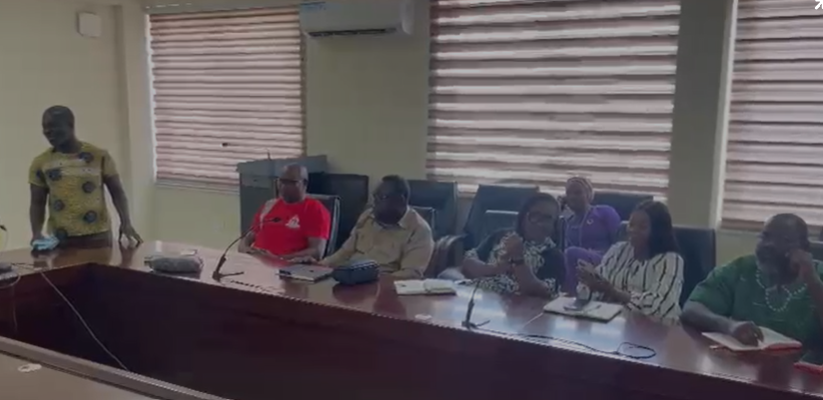
Intensive negotiations are currently in progress to resolve a nationwide industrial action initiated by Ghana's three primary pre-tertiary teacher unions. The government, represented by Education Minister Haruna Iddrisu, is actively seeking a resolution to the Ghana teachers strike resolution talks, which have significantly disrupted educational activities across the country. These crucial discussions commenced on Monday, September 28, at the Ministry of Education, bringing together key stakeholders in an effort to restore normalcy to the academic calendar.
Participating in these high-stakes discussions are the leadership of the Ghana National Association of Teachers (GNAT), the National Association of Graduate Teachers (NAGRAT), and the Pre-Tertiary Teachers Association of Ghana (PRETAG). Beyond the direct parties, officials from the Fair Wages and Salaries Commission (FWSC) and the Controller and Accountant-General’s Department (CAGD) are also integral to the engagement, underscoring the financial and administrative complexities involved in addressing the unions' demands. The presence of these government bodies highlights the broader public sector implications of the ongoing dispute.
Roots of the Industrial Action
The current Ghana teacher union strike escalated into an indefinite industrial action on Friday, September 25, following the expiration of a critical deadline. The unions had set a September 24 deadline for the government to address their long-standing concerns, but this passed without a satisfactory resolution, prompting the widespread cessation of teaching and learning. This collective action by GNAT, NAGRAT, and PRETAG underscores deep-seated grievances that have been simmering within the education sector.
The core demands driving the GNAT NAGRAT PRETAG strike are multifaceted. Prominently, the unions are protesting against unpaid promotion-related arrears, a critical issue affecting the financial well-being of many educators. Furthermore, significant delays in negotiating a new Collective Agreement have contributed to the teachers' frustration, as this agreement dictates their terms of service and remuneration. The third major point of contention revolves around the implementation of the Deprived Area Allowance, a provision intended to compensate teachers working in challenging regions.
Broader Public Sector Labour Implications
The ongoing Haruna Iddrisu teacher talks are not merely about resolving a specific strike but also reflect a wider Ghana public sector labour dispute landscape. The involvement of the Fair Wages and Salaries Commission Ghana and the Controller and Accountant-General’s Department signals that the issues at hand extend beyond the Ministry of Education, touching upon broader government wage policies and financial management. The outcome of these negotiations could set precedents for other public sector unions and their collective bargaining agreements.
The disruption to teaching and learning across the nation is a significant consequence of the industrial action, impacting countless students and their academic progress. The government's urgent push to end the strike through these high-level meetings underscores the critical importance of education and the need to quickly find common ground. Resolving these grievances is essential not only for the immediate return of teachers to classrooms but also for fostering a stable and productive working environment within Ghana's public education system.
Practical Implications
This development signals active public sector labour disputes in Ghana, requiring labour law practitioners to monitor collective bargaining agreement negotiations and advise clients on potential industrial action risks or compliance with public sector wage policies.
Source
How does this affect you?
Get an AI analysis of this article grounded in your jurisdictions, practice areas, and any policy documents you've uploaded to Wansom.
Finish Reading the Full Story and the Expert Analysis.
Get the latest legal & regulatory intelligence in Ghana
Wansom is AI and can make mistakes.