
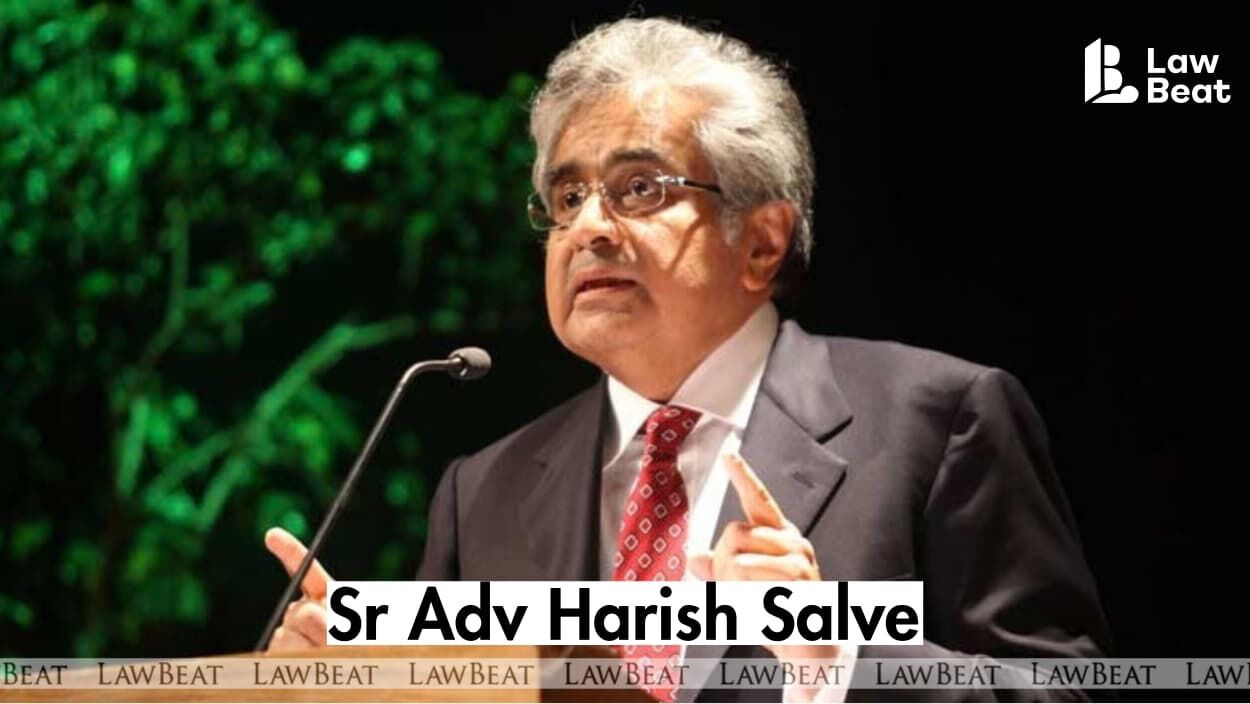
Harish Salve: Opposition ECI Protest Criticism Targets Institutions
Summary
- Senior Advocate Harish Salve criticized the Opposition's protest against the Election Commission of India (ECI), stating that constitutional institutions should not be targets of political attacks.
- Salve's comments followed the INDIA bloc's campaign against CEC Gyanesh Kumar over the Special Intensive Revision (SIR) of electoral rolls, which included a protest march on October 6.
- The Opposition alleged unauthorized changes to Form 6 during the SIR and questioned CEC Kumar's decisions, while the ECI maintained all decisions were unanimous and Form 6 was not modified.
- Salve affirmed the ECI's co-equal status within India's constitutional framework but noted the Supreme Court holds the ultimate authority to review and set aside any legally infirm actions by constitutional bodies.
- He warned against a 'short-sighted approach' of undermining institutions, suggesting that leaders should avoid destroying the very structures they might one day be called upon to govern.
Senior Advocate Condemns Political Attacks on ECI
Senior Advocate Harish Salve has voiced strong criticism regarding the Opposition's recent protest against the Election Commission of India (ECI), emphasizing that political discourse must operate within defined, legitimate boundaries.
Senior Advocate Harish Salve has voiced strong criticism regarding the Opposition's recent protest against the Election Commission of India (ECI), emphasizing that political discourse must operate within defined, legitimate boundaries. The former Solicitor General of India underscored that while political parties are free to challenge their opponents, constitutional institutions should not become targets of political attacks, a principle central to maintaining the integrity of the nation's governance.
Salve's remarks came in the wake of the INDIA bloc's campaign targeting Chief Election Commissioner (CEC) Gyanesh Kumar. This campaign specifically centered on the Special Intensive Revision (SIR) of electoral rolls, prompting a march by INDIA bloc leaders towards the ECI headquarters in New Delhi on October 6. The protest resulted in police intervention, leading to the detention of several Opposition figures, including Lok Sabha Leader of Opposition Rahul Gandhi, highlighting the intensity of the political dispute. The Election Commission of India, for its part, has consistently denied any wrongdoing, asserting that all decisions related to the SIR process were reached unanimously.
The Core of the Electoral Controversy
The immediate controversy stems from allegations of internal disagreements within the three-member Election Commission concerning decisions related to voter-list revision. An investigative report by the Indian Express specifically claimed that CEC Gyanesh Kumar proceeded with certain decisions despite objections from the other two Election Commissioners, thereby raising questions about his operational conduct. However, the ECI has maintained a unified front, stating that all its decisions were made with full consensus.
Another significant point of contention revolves around Form 6, the standard application used for enrolling new voters. The Opposition has alleged that this form underwent unauthorized changes during the Special Intensive Revision exercise. The ECI has refuted these claims, clarifying that while the SIR process was underway, Form 6 itself was not modified.
Upholding Constitutional Institutions and Judicial Authority
Harish Salve articulated his understanding of the ECI's constitutional standing, explaining that India's constitutional framework establishes various institutions with co-equal authority within their designated spheres. He highlighted that the Legislature, the elected Executive, the Judiciary, and the Election Commission all operate as co-equal bodies, with the ECI holding supreme authority in its specific domain of electoral management.
Crucially, Salve clarified that the Supreme Court retains the ultimate authority in instances where a constitutional institution is alleged to have overstepped the limits imposed by law or the Constitution. He stressed that if the Supreme Court determines that an order or action by such a body is legally infirm, it possesses the power to intervene and set aside those orders. This judicial review mechanism ensures that while constitutional bodies are supreme in their areas, their actions remain subject to legal and constitutional scrutiny.
A Warning Against Undermining State Structures
In an interview, Salve offered a broader philosophical warning, cautioning against actions that could destabilize the nation's foundational structures. He remarked that even a Leader of the Opposition, particularly one with aspirations for higher office, should recognize the long-term consequences of undermining established institutions. His comments suggested that a leader should avoid a path of destruction, as it could leave nothing substantial to govern in the future.
Salve characterized such an approach as short-sighted, observing a sentiment where individuals might feel compelled to dismantle systems if they cannot control them. He emphasized that politics should not stray beyond its legitimate boundaries, implying that the current level of criticism directed at the ECI risks eroding the very institutions essential for a functioning democracy.
Practical Implications
This article underscores the legal principle that while constitutional institutions like the ECI are subject to judicial review for transgressions, political criticism must operate within legitimate boundaries. Lawyers should note the Supreme Court's ultimate authority in adjudicating disputes concerning constitutional bodies' actions, particularly regarding electoral processes, and advise clients on the appropriate channels for challenging such decisions.
Source
Source: Original reporting via ANI
How does this affect you?
Get an AI analysis of this article grounded in your jurisdictions, practice areas, and any policy documents you've uploaded to Wansom.
Finish Reading the Full Story and the Expert Analysis.
Get the latest legal & regulatory intelligence in India
Wansom is AI and can make mistakes.