
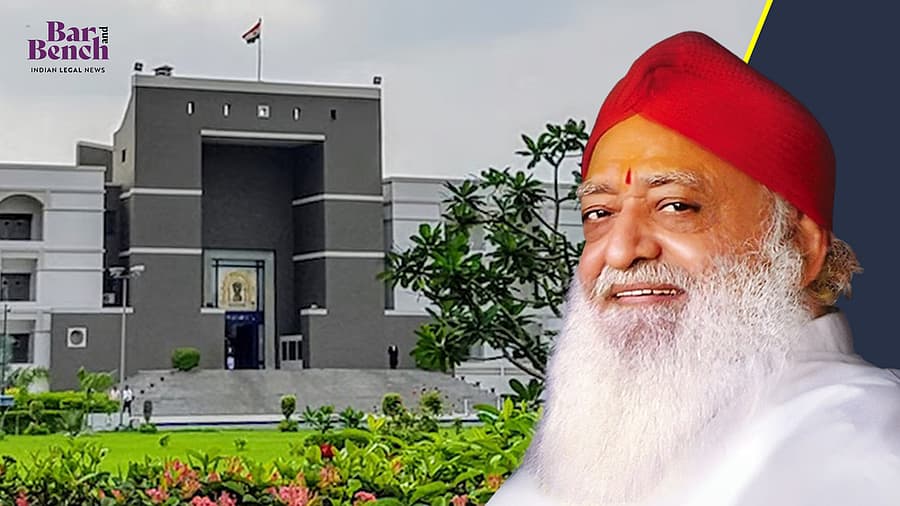
Gujarat High Court: Rejects Asaram's 20-Day Temporary Bail Plea
Summary
- The Gujarat High Court rejected Asaram's plea for 20 days of temporary bail in a 2013 rape conviction case.
- The decision was made by a Division Bench of Justice Gita Gopi and Justice LS Pirzada in the case of Ashumal @ Asharam v State of Gujarat.
- The court cited a prior Supreme Court order from August 6, 2026, which granted Asaram liberty to approach the apex court if his health deteriorated, following a Rajasthan High Court order on August 3, 2026.
- Asaram is serving a life sentence from a January 2023 Gandhinagar Sessions Court judgment for raping a woman disciple and also a life sentence for raping a minor in Rajasthan.
High Court Rejects Temporary Bail Bid
The Gujarat High Court's decision to reject Asaram's 20-day bail request was primarily based on a prior directive from the Supreme Court.
The Gujarat High Court recently declined a request from self-styled godman Asaram for a 20-day temporary bail. This application was lodged in connection with his ongoing criminal appeal against a life imprisonment sentence handed down in January 2023 by the Gandhinagar Sessions Court for rape and related offenses. The court's decision effectively means Asaram's bid for temporary release, citing health grounds, will not proceed through this avenue.
The specific case under consideration was titled Ashumal @ Asharam v State of Gujarat. The Division Bench, comprising Justice Gita Gopi and Justice LS Pirzada, found no compelling reason to grant the temporary bail plea. This ruling underscores the judiciary's careful consideration of such applications, particularly when higher court directives are already in place.
Background of Asaram's Convictions
Asaram's current legal predicament stems from a 2013 rape case where he was convicted and sentenced to life imprisonment by a Gandhinagar court. The charges involved the repeated sexual assault of a woman disciple from Surat, which occurred between 2001 and 2006. At the time of these offenses, the victim resided at Asaram's ashram located in Motera.
Beyond this particular conviction, Asaram is also serving a separate life sentence. This additional conviction relates to another case involving the rape of a minor girl, which took place in Rajasthan. These multiple convictions highlight a pattern of serious criminal offenses that have led to his prolonged incarceration.
Legal Rationale for the Rejection
The Gujarat High Court's decision to reject Asaram's 20-day bail request was primarily based on a prior directive from the Supreme Court. The High Court noted that the Supreme Court, through an order dated August 6, 2026—issued after a Rajasthan High Court order on August 3, 2026—had already granted Asaram the specific liberty to approach the Supreme Court directly should his health deteriorate.
Given this existing avenue for relief, the Division Bench concluded that there was no justification to entertain the current temporary bail application. The court explicitly stated that it found no reason to consider the plea, citing the applicant's reserved right to move the Supreme Court. This emphasizes the principle that lower courts may defer to or avoid redundant applications when a higher court has already provided a specific mechanism for addressing a litigant's concerns, especially concerning health-related relief.
Implications for High-Profile Cases
The Gujarat High Court's rejection of Asaram's temporary bail plea carries significant implications for how similar applications are handled, particularly for high-profile convicts. The ruling highlights that when the Supreme Court has established a clear pathway for health-related relief, lower courts may deem subsequent applications for the same purpose as unnecessary. This reinforces the hierarchy of judicial directives and the expectation that litigants follow the prescribed channels.
Lawyers handling temporary bail applications for high-profile convicts should note that lower courts may reject such pleas if the Supreme Court has already provided a specific avenue for health-related relief, emphasizing the need to follow higher court directives and avoid redundant applications. The court's stance in this instance underscores the importance of judicial efficiency and adherence to established legal procedures, especially when a superior court has already weighed in on potential grounds for relief.
Practical Implications
Lawyers handling temporary bail applications for high-profile convicts should note that lower courts may reject such pleas if the Supreme Court has already provided a specific avenue for health-related relief, emphasizing the need to follow higher court directives and avoid redundant applications.
Source
How does this affect you?
Get an AI analysis of this article grounded in your jurisdictions, practice areas, and any policy documents you've uploaded to Wansom.
Finish Reading the Full Story and the Expert Analysis.
Wansom is AI and can make mistakes.