
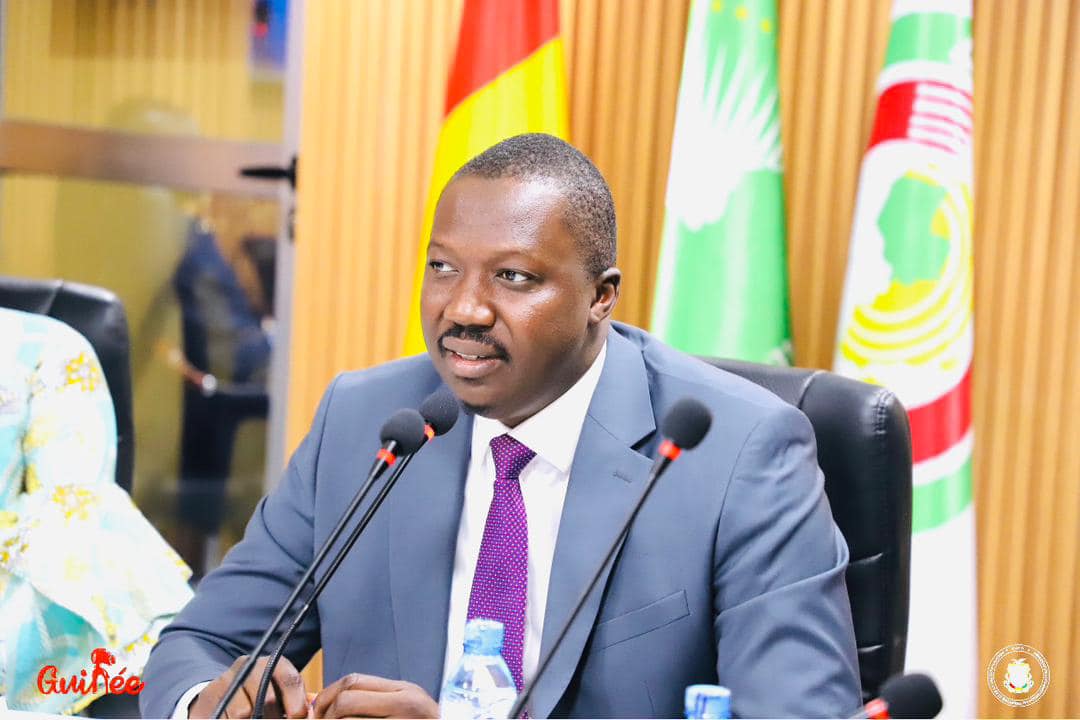
Mamoudou Nagnalen Barry: Seeks Guinée Simandou Énergie Clarification
Summary
- A Guinean deputy recently described the nation's energy export policy as paradoxical, sparking public debate.
- Earlier public statements also addressed banknote availability and the operational status of the Simandou project.
- Mamoudou Nagnalen Barry, PCA of the Compagnie du TransGuinéen (CTG), has called for official clarification on these issues.
- Barry emphasized that public debate, while necessary, must be founded on accurate information, not approximations.
- The call for transparency specifically targets energy export, monetary governance, and the Simandou mining project.
Recent Public Discourse in Guinea
Barry emphasizes the fundamental importance of grounding public discourse in verifiable facts, asserting that while public debate is both necessary and desirable, its efficacy is undermined when based on conjecture rather than concrete information.
Recent public discourse in Guinea has been significantly shaped by a series of high-profile statements concerning critical economic and developmental issues. A notable contribution to this debate came from a parliamentary deputy, who recently characterized the nation's energy export policies as paradoxical. This particular declaration has ignited considerable discussion, drawing attention to the complexities and perceived inconsistencies within the country's energy sector.
Beyond the deputy's specific remarks on energy, the broader national conversation has also been fueled by earlier public pronouncements. These previous statements touched upon the availability of banknotes within the financial system, a matter of direct relevance to monetary stability and daily economic transactions. Additionally, the operational status and broader implications of the Simandou mining project in Guinea have been a recurring subject, reflecting its immense strategic importance for the nation's economic landscape, especially since its first shipment in December 2025 and first high-grade iron ore sales in April 2026.
Collectively, these varied statements have contributed to a vibrant, albeit often imprecise, national dialogue. The discussions, while necessary for a healthy public sphere, have frequently been marked by numerous approximations, leading to a situation where clarity and factual accuracy are increasingly sought after. This environment underscores the need for authoritative information to guide public understanding and policy formulation.
Call for Official Clarification
Amidst this backdrop of spirited but sometimes speculative public debate, Mamoudou Nagnalen Barry, serving as the President of the Board of Directors (PCA) of the Compagnie du TransGuinéen (CTG), has issued a direct call for official clarification. Barry emphasizes the fundamental importance of grounding public discourse in verifiable facts, asserting that while public debate is both necessary and desirable, its efficacy is undermined when based on conjecture rather than concrete information.
His appeal specifically targets three pivotal areas that have been central to recent discussions: the nation's energy export policies, the overarching framework of monetary governance in Guinea, and the operational outcomes and impacts of the Simandou mining project. Barry's intervention highlights a perceived gap between public understanding and official information regarding these critical sectors.
This demand for greater transparency is particularly pertinent for the Guinée projet Simandou clarification énergie, as the project's scale and potential impact necessitate precise communication. Similarly, issues surrounding exportation énergie Guinée politique and the broader réglementation énergie Guinée require clear, unambiguous statements from relevant authorities to dispel uncertainties and foster informed public opinion.
Importance of Transparency for Governance
The call for clarification from a figure like Mamoudou Nagnalen Barry underscores a broader imperative for robust governance and public trust in Guinea. When discussions around key economic drivers such as energy export, monetary policy, and major industrial projects like Simandou are characterized by approximations, it can erode confidence in governmental institutions and economic stability. Clear and consistent communication from official sources is vital for maintaining an informed citizenry and enabling sound decision-making across all sectors.
Addressing the ambiguities surrounding the exportation énergie Guinée politique and the nuances of monetary governance Guinée débat is not merely about satisfying public curiosity; it is about providing a stable and predictable environment for both domestic and international stakeholders. For instance, the long-term implications of the Simandou mining project Guinea, including its economic returns and environmental considerations, demand a transparent approach to ensure accountability and sustainable development.
Ultimately, the ability of a nation to engage in productive public debate, and for its citizens to hold their leaders accountable, relies heavily on the availability of accurate and timely information. The current situation in Guinea, marked by calls for clarification on these significant issues, serves as a reminder that transparency is a cornerstone of effective governance and a prerequisite for fostering a well-informed and engaged populace.
Practical Implications
Lawyers advising clients in Guinea's energy, mining, or finance sectors should monitor official clarifications regarding energy export policies, monetary governance, and the Simandou project. These clarifications are crucial for assessing regulatory stability, investment risks, and compliance requirements for ongoing and future operations in these critical economic areas.
Source
How does this affect you?
Get an AI analysis of this article grounded in your jurisdictions, practice areas, and any policy documents you've uploaded to Wansom.
Wansom is AI and can make mistakes.