
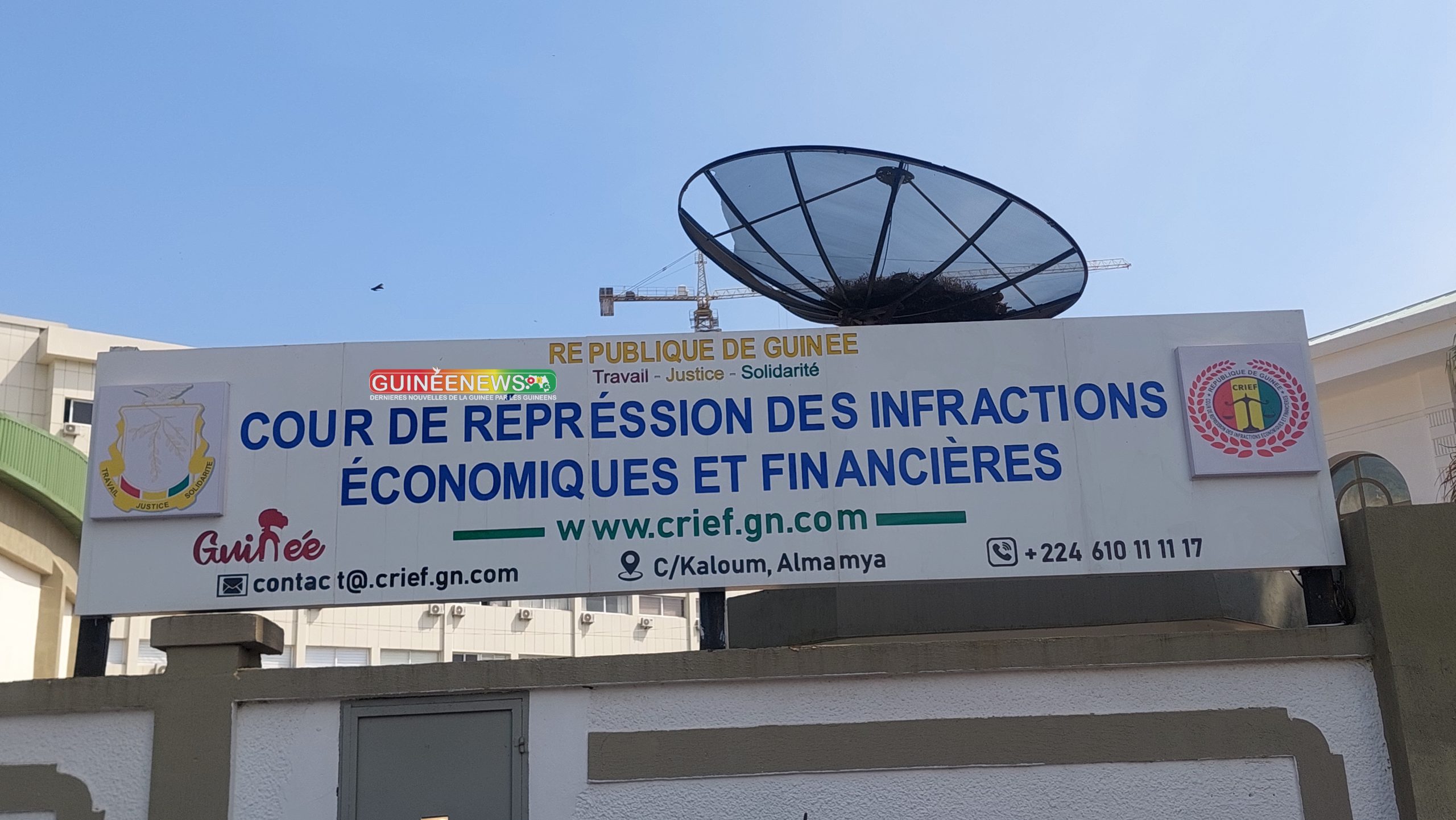
CRIEF Guinea: Affaire Ecobank Verdict Sentences Lawyers, Bailiffs
Summary
- Guinea's CRIEF delivered a verdict in the "Ecobank Affair" on November 4, 2026.
- The case involved two bailiffs, Me Mandjou Sangaré and Me Sory Daouda Camara, and attorney Me Halimé Saad Chaloub.
- The court found bailiffs Me Mandjou Sangaré and Me Sory Daouda Camara guilty of usurpation of function and complicity, respectively, sentencing them to two years suspended prison and a 30 million GNF fine each. Attorney Me Halimé Saad Chaloub was found guilty of fraudulent judgment and false and use of false documents, receiving a three-year firm prison sentence, a 50 million GNF fine, and an arrest warrant. The three were also ordered to jointly pay 1.5 billion GNF in damages to Ecobank.
- This verdict highlights the scrutiny of legal professionals in economic and financial crime cases.
- The judgment could influence future interpretations of professional liability for lawyers and bailiffs in Guinea.
What Happened
This judgment could potentially establish an important precedent regarding the accountability of legal practitioners in economic and financial crime cases.
The Judgment Chamber of Guinea's Court for the Repression of Economic and Financial Offenses (CRIEF) delivered its decision on Wednesday, November 4, 2026, in the high-profile "Ecobank Affair." This verdict specifically addressed the involvement of two judicial bailiffs, Me Mandjou Sangaré and Me Sory Daouda Camara, alongside attorney Me Halimé Saad Chaloub. The court's deliberation culminated in a ruling where Me Mandjou Sangaré was found guilty of usurpation of function and Me Sory Daouda Camara of complicity in this infraction, both receiving a two-year suspended prison sentence and a fine of 30 million Guinean francs. Me Halimé Saad Chaloub was found guilty of fraudulent judgment and false and use of false documents, and sentenced to three years of firm imprisonment and a fine of 50 million Guinean francs, with an arrest warrant issued against her. The court also ordered the three defendants to jointly pay 1.5 billion Guinean francs to Ecobank as damages, while dismissing the charges of false documents against the bailiffs.
This judicial pronouncement from the specialized economic crimes court marks a significant development in a case that has drawn attention to the conduct of legal professionals. The involvement of both bailiffs and a lawyer underscores the intricate nature of the allegations being examined by the CRIEF, a body specifically tasked with combating financial misconduct within the nation. The precise details of what the court chose to dismiss remain to be fully elaborated, but the fact of a verdict being rendered against these specific legal practitioners is a key outcome.
Legal and Professional Context
The Cour de répression des infractions économiques et financières (CRIEF) operates as a specialized judicial body within Guinea, established with the explicit mandate to investigate, prosecute, and adjudicate cases involving economic and financial crimes. Its jurisdiction covers a broad spectrum of offenses, ranging from corruption and embezzlement to other forms of financial malfeasance that can undermine the nation's economic stability and public trust. The court's focus on such complex cases often necessitates a thorough examination of financial transactions and the roles played by various actors, including those within the legal profession.
Judicial bailiffs, known as huissiers de justice, hold a crucial position in the Guinean legal system, primarily responsible for the formal service of legal documents, the execution of court judgments, and the drawing up of official reports. Their duties demand strict adherence to legal procedures and impartiality. Similarly, avocats (lawyers) are entrusted with representing clients' interests, providing legal counsel, and ensuring due process, all while upholding ethical standards and professional integrity. The involvement of individuals from both these professions in a CRIEF case highlights the potential for scrutiny over their professional conduct in matters related to economic and financial dealings.
Why It Matters
The CRIEF's verdict in the "Ecobank Affair," particularly its focus on legal professionals, carries substantial implications for the landscape of professional liability and the enforcement of economic crime regulations across Guinea. When a specialized court like the CRIEF examines the actions of bailiffs and lawyers, it signals a heightened level of scrutiny over the conduct of those entrusted with upholding the law and facilitating justice. This scrutiny can extend to how legal practitioners manage client funds, execute judicial orders, or advise on transactions that might later be implicated in financial irregularities.
This judgment could potentially establish an important precedent regarding the accountability of legal practitioners in economic and financial crime cases. Lawyers, compliance officers, and other stakeholders within Guinea's legal and financial sectors will likely analyze the full judgment to discern the court's specific interpretations of professional duties and potential exposures related to economic offenses. Understanding the CRIEF's stance on the responsibilities of huissiers and avocats in such contexts is crucial for guiding future professional conduct and ensuring adherence to the country's evolving framework for combating financial misconduct.
Practical Implications
This verdict from the CRIEF involving legal professionals in the Ecobank case could establish a precedent for professional liability and the enforcement of economic crime regulations in Guinea. Lawyers and compliance officers should analyze the judgment to understand the court's stance on the conduct of legal practitioners and potential exposures related to economic offenses.
Source
How does this affect you?
Get an AI analysis of this article grounded in your jurisdictions, practice areas, and any policy documents you've uploaded to Wansom.
Wansom is AI and can make mistakes.