
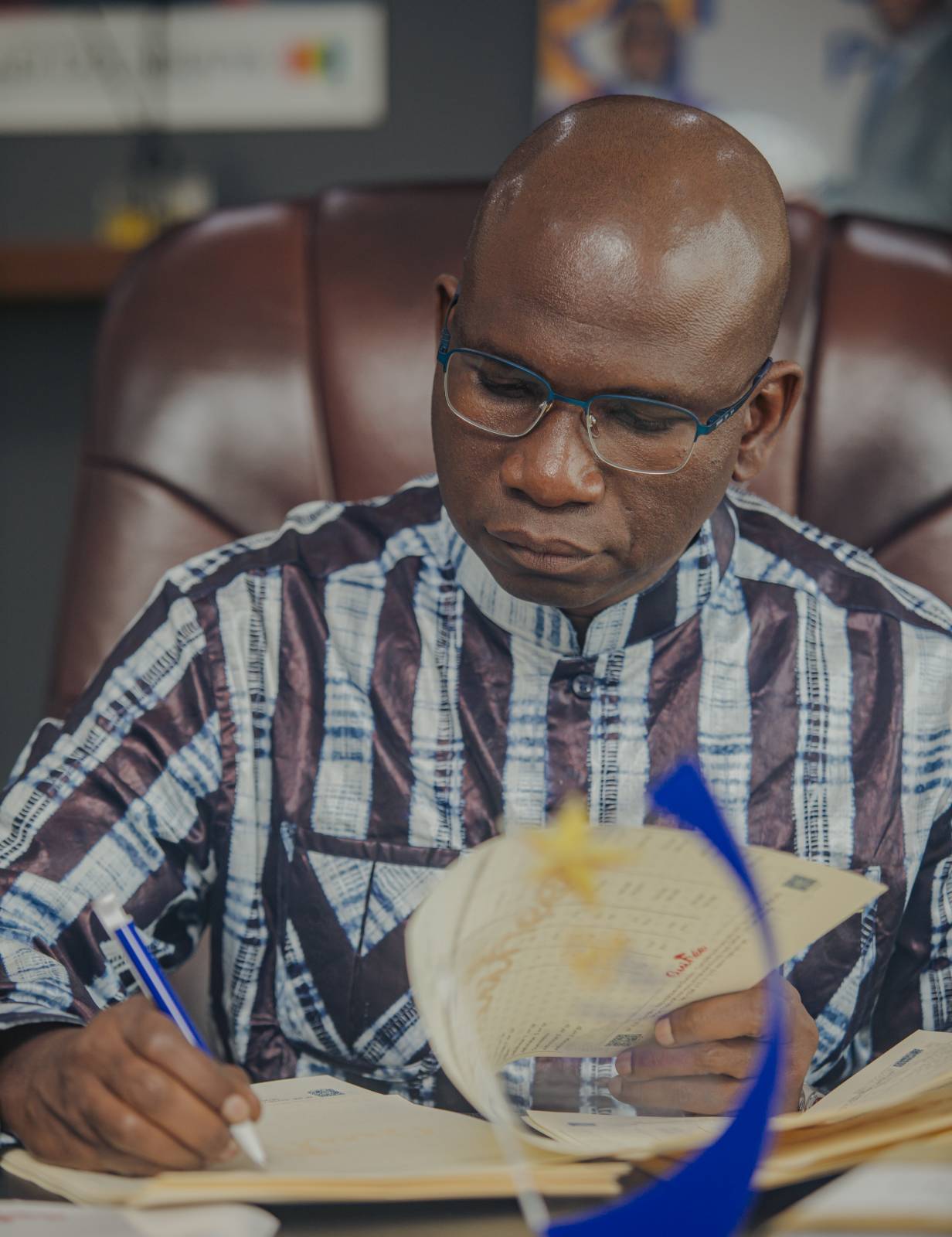
Aladji Cellou OGP Detention Guinea: Ex-Director's Health Fails After 3 Months
Summary
- Aladji Cellou Camara, former director general of the Office guinéen de publicité (OGP), was placed under a detention order on July 9, 2026.
- He has been held at the Coyah penitentiary center for over three months without a trial date.
- A source close to the facility reports that Mr. Camara's health is currently failing.
- The case, known as the "Affaire OGP," raises concerns about prolonged pre-trial detention and due process in Guinea.
The Detention of Aladji Cellou Camara
The prolonged pre-trial detention of Aladji Cellou Camara, a key figure in the "Affaire OGP," brings into sharp focus the principles of due process and the legal limits of "détention provisoire Guinée."
Aladji Cellou Camara, formerly the director general of the Office guinéen de publicité (OGP), was formally placed under a detention order on July 9, 2026. This judicial action initiated his incarceration, and he has since remained in custody at the Coyah penitentiary center. The "Affaire OGP," as this case is known, has seen Mr. Camara's detention extend for a period now exceeding three months. His continued confinement without resolution has drawn considerable attention to the processes of justice in Guinea.
Mr. Camara's role as the former head of the Office guinéen de publicité positions this case as one of public interest, with stakeholders closely observing the progression of the legal proceedings. The specific date of his placement under the detention order, July 9, 2026, marks the beginning of a pre-trial period that has now stretched into its fourth month, raising questions about the efficiency and speed of the judicial system in handling such matters.
Health Concerns and Judicial Stagnation
Concerns are mounting regarding the well-being of Aladji Cellou Camara during his time at the Coyah penitentiary center. A source with direct knowledge of the facility's operations has indicated that the former OGP director general's health is reportedly "failing," or "chancelant," suggesting a significant deterioration since his initial placement under the detention order. This health update adds another layer of urgency to the ongoing situation.
Despite the passage of more than three months since his initial detention on July 9, 2026, there remains a notable absence of any clear progress toward the commencement of his trial, leaving the prospects of a swift judicial resolution uncertain. The lack of a defined timeline for judicial proceedings in the "Affaire OGP" contributes to the growing interrogations surrounding Aladji Cellou OGP detention Guinea, particularly given the reported state of his health.
Legal Framework and Due Process in Guinea
The prolonged pre-trial detention of Aladji Cellou Camara, a key figure in the "Affaire OGP," brings into sharp focus the principles of due process and the legal limits of "détention provisoire Guinée." International human rights standards, alongside many national legal systems, stipulate that pre-trial detention should be an exceptional measure, applied only when strictly necessary and for the shortest possible duration. The absence of a trial date for Mr. Camara, now more than three months into his incarceration at the Coyah penitentiary center, raises questions about adherence to these fundamental tenets within the Guinean legal system.
This situation underscores the critical importance of ensuring that individuals are not held indefinitely without formal charges being heard and adjudicated, safeguarding their right to a timely trial and the presumption of innocence. The legal community often emphasizes that prolonged pre-trial detention can amount to a form of punishment before conviction, thereby undermining the very foundations of a fair justice system. The circumstances surrounding Aladji Cellou Camara's case serve as a pertinent example for evaluating the practical application of these legal safeguards in Guinea.
Broader Implications for Guinean Justice
The case of Aladji Cellou OGP detention Guinea carries significant implications for the broader legal landscape and human rights compliance within the nation. The reported failing health of Mr. Camara, combined with the extended period of his detention without trial, could establish precedents concerning the treatment of detainees and the enforcement of judicial timelines. Legal professionals and human rights advocates are likely to scrutinize this development closely, as it may influence how future cases involving lengthy pre-trial detentions are handled.
Lawyers should monitor such developments for precedents on detention limits, human rights compliance, and to advise clients facing similar lengthy detentions or advocating for timely judicial proceedings. This scenario highlights the ongoing need for robust judicial oversight to prevent arbitrary or excessively long detentions, ensuring that the Guinean legal system upholds its commitments to fair and timely justice for all, including those accused in high-profile cases like the "Affaire OGP" at the Coyah penitentiary center.
Practical Implications
This case highlights potential concerns regarding prolonged pre-trial detention and due process in Guinea. Lawyers should monitor such developments for precedents on detention limits, human rights compliance, and to advise clients facing similar lengthy detentions or advocating for timely judicial proceedings.
Source
How does this affect you?
Get an AI analysis of this article grounded in your jurisdictions, practice areas, and any policy documents you've uploaded to Wansom.
Wansom is AI and can make mistakes.