
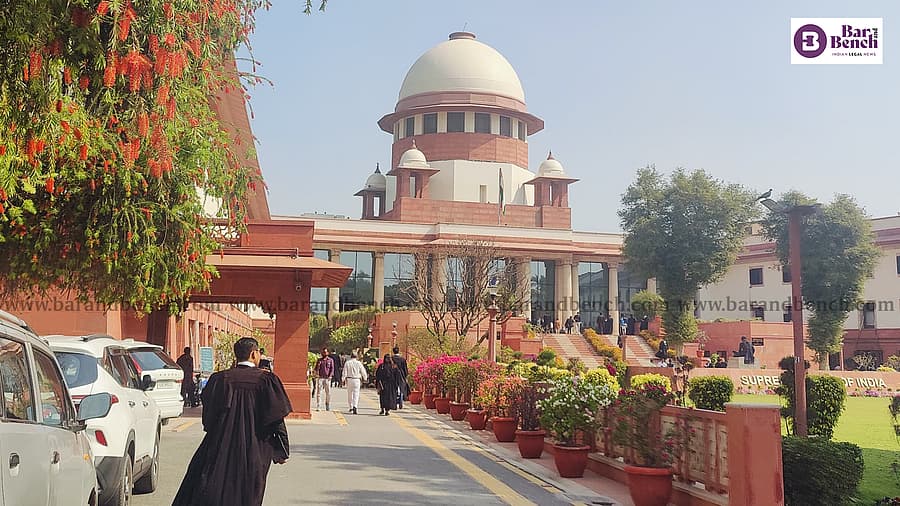
Supreme Court: Guangwen Kuang PMLA Travel on Chinese Consulate Guarantee
Summary
- The Supreme Court granted Vivo executive Guangwen Kuang one month to secure a Chinese Consulate guarantee for his return to India.
- Kuang sought permission to visit his 82-year-old critically ill father in Guangzhou, China.
- The Delhi High Court had previously denied travel due to serious PMLA allegations, the magnitude of alleged crime proceeds, Kuang's foreign national status, and the absence of an extradition treaty.
- Kuang's counsel argued that the right to travel under Article 21 should not depend on nationality or extradition treaties.
- The Supreme Court insisted on an assurance of his return to face prosecution under the Prevention of Money Laundering Act.
Supreme Court's Conditional Travel Order
The Supreme Court's decision to allow a conditional travel permit, contingent on a consular guarantee, establishes a notable precedent.
The Supreme Court of India recently issued a conditional directive concerning Guangwen Kuang, a Vivo executive currently facing prosecution under the Prevention of Money Laundering Act (PMLA). On Monday, a bench comprising Justices Sanjay Kumar and Sanjeev Sachdeva mandated that Kuang must secure a formal guarantee from the Chinese Consulate within one month. This assurance is crucial: it must confirm his commitment to return to India to continue facing legal proceedings, should he be granted permission to travel abroad.
Kuang's request to temporarily leave India stems from a deeply personal matter. He sought to visit his 82-year-old father in Guangzhou, China, who is reportedly in a critical medical condition. The Supreme Court's decision, in the case identified as Guangwen Kuang @ Andrew v. Directorate of Enforcement, marks a significant development in his ongoing legal battle, which has seen him subject to PMLA travel restrictions as a foreign national due to the serious nature of the charges.
Delhi High Court's Prior Refusal
The Supreme Court's intervention followed an appeal by Kuang against a previous ruling by the Delhi High Court. The High Court had explicitly denied his request for travel, citing several substantial concerns. Among these were the gravity of the allegations in the money laundering case itself, the considerable scale of the alleged proceeds of crime involved, and Kuang's status as a foreign national.
A pivotal factor in the Delhi High Court's refusal was also the absence of an extradition treaty between India and China. This lack of a formal agreement raised concerns about the enforceability of his return to India if he were permitted to leave, highlighting the complexities involved when a Vivo official seeks India PMLA travel permission.
Legal Arguments on Right to Travel
During the Supreme Court proceedings, Senior Advocate N Hariharan, representing Guangwen Kuang, presented a fundamental legal argument. He contended that the case brought to the forefront a critical constitutional question: whether the fundamental Article 21 right to travel India, recognized as an integral aspect of personal liberty, could legitimately be made contingent on an individual's nationality or the existence of an extradition treaty between their home country and India.
Despite these arguments emphasizing the universal nature of the right to travel, the Supreme Court bench remained firm on its requirement. The justices insisted on a concrete assurance from the Chinese consulate guarantee India PMLA that Kuang would indeed return to India to face the ongoing prosecution. This stance highlights the judiciary's approach to balancing individual rights with the imperative of ensuring justice in economic offense cases.
Implications for Foreign Nationals Under PMLA
This ruling carries significant implications for foreign nationals facing similar PMLA travel restrictions in India. The Supreme Court's decision to allow a conditional travel permit, contingent on a consular guarantee, establishes a notable precedent. It suggests a pathway for individuals like Guangwen Kuang, in his Supreme Court travel PMLA case, to address urgent personal matters abroad, even while under serious legal scrutiny, provided diplomatic assurances are secured.
The case underscores the Indian legal system's careful consideration of a foreign national's right to travel under Article 21, while simultaneously upholding the stringent requirements of the Prevention of Money Laundering Act. For legal practitioners advising foreign clients, this development provides critical insight into the Supreme Court's approach to balancing a foreign national's right to travel under Article 21 against PMLA prosecution, particularly the requirement for a consular guarantee. Lawyers advising foreign clients facing economic offense charges in India should note this precedent for navigating travel restrictions and the potential role of diplomatic assurances.
Practical Implications
This development provides critical insight into the Supreme Court's approach to balancing a foreign national's right to travel under Article 21 against PMLA prosecution, particularly the requirement for a consular guarantee. Lawyers advising foreign clients facing economic offense charges in India should note this precedent for navigating travel restrictions and the potential role of diplomatic assurances.
Source
How does this affect you?
Get an AI analysis of this article grounded in your jurisdictions, practice areas, and any policy documents you've uploaded to Wansom.
Finish Reading the Full Story and the Expert Analysis.
Wansom is AI and can make mistakes.