
Ghana NACOC: Calls For Enhanced Regional Drug Trafficking Cooperation
Summary
- Ghana called for stronger regional and international cooperation against drug trafficking and transnational organised crime at the 33rd HONLAF meeting in Vienna.
- The Narcotics Control Commission (NACOC) reported 217 arrests, 165 prosecutions, and the seizure of over 8.5 tonnes of narcotics and 45.4 million tramadol tablets during the review period.
- Ghana is enhancing its capabilities with digital intelligence, financial investigations, and a new forensic laboratory to combat diversifying criminal networks, including those trafficking pharmaceutical substances.
- NACOC has signed cooperation agreements with Nigeria, Zambia, and Burkina Faso, and actively participates in international platforms like AIRCOP and SEACOP.
- The nation advocates for deeper collaboration, including connecting investigations, tracing criminal proceeds, and dismantling cross-border organised crime groups.
Ghana's Urgent Call for Regional Action
The Ghanaian delegation stressed that effective regional cooperation must transcend mere interception of drug consignments.
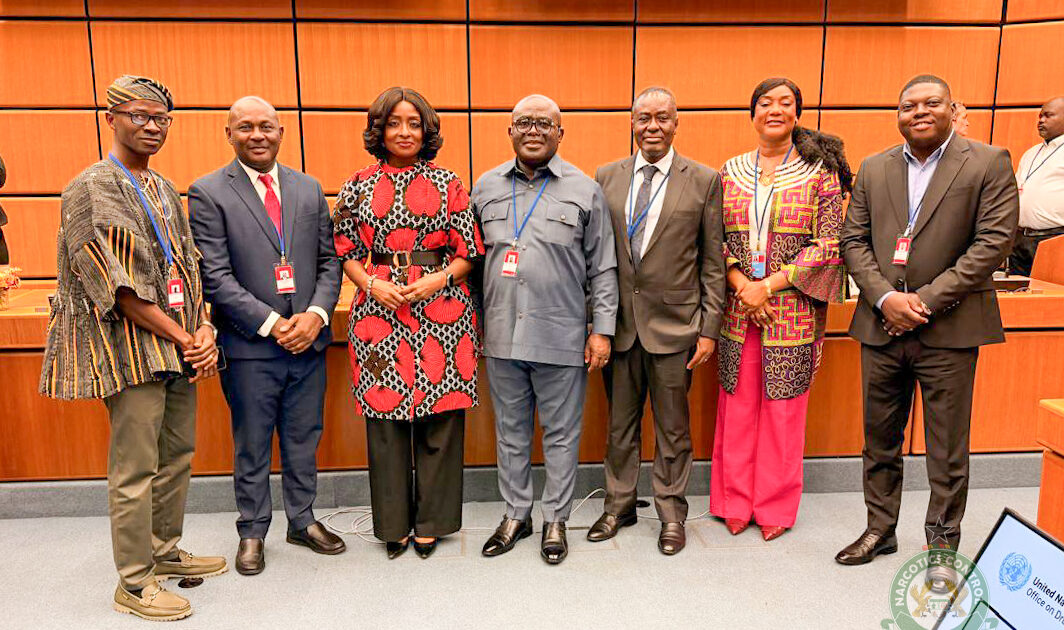
Ghana has issued a compelling plea for enhanced regional and international collaboration to combat the escalating menace of drug trafficking and transnational organised crime. This urgent call was articulated by a Ghanaian delegation, spearheaded by Major General Maxwell Obuba Mantey, who serves as the Director-General of the Narcotics Control Commission (NACOC). The appeal was made during the 33rd Meeting of Heads of National Drug Law Enforcement Agencies, Africa (HONLAF), convened in Vienna, Austria, from September 8 to 11, 2026. The proceedings of this significant gathering were presided over by Her Excellency Matilda Alomatu Osei-Agyeman, Ghana’s Ambassador and Permanent Representative to Vienna.
The Ghanaian representatives underscored the critical understanding that no single nation possesses the capacity to effectively confront the dynamic and complex drug problem in isolation. They highlighted how criminal networks persistently exploit national borders and continuously refine their trafficking methodologies, necessitating a united front. This perspective frames the intensified focus on Ghana NACOC regional drug trafficking cooperation as an indispensable strategy for West Africa.
Domestic Enforcement and Evolving Threats
Domestically, Ghana's Narcotics Control Commission (NACOC), in conjunction with partner security agencies, has demonstrated robust enforcement capabilities. During the period under review, intelligence-led operations resulted in a substantial 217 arrests and initiated 165 prosecutions. These efforts also led to significant seizures, including over 8.5 tonnes of various narcotic drugs and an alarming 45.4 million tablets of tramadol.
The delegation further revealed that criminal enterprises are increasingly diversifying their illicit activities. Beyond traditional narcotics such as cocaine, heroin, and cannabis, there is a growing trend in the trafficking and diversion of pharmaceutical and synthetic substances, notably tramadol and tapentadol. In response to these evolving threats, Ghana is bolstering its investigative toolkit, emphasizing digital intelligence, forensic analysis, and financial investigations to pinpoint trafficking networks and trace the proceeds derived from the illicit drug trade. The nation has also commenced construction on a dedicated forensic laboratory, a move set to significantly improve the timely identification and analysis of suspected narcotic drugs and other related exhibits, thereby raising the standard of evidence in future prosecutions.
Beyond enforcement, Ghana is actively implementing measures to mitigate drug demand and provide support for individuals affected by substance use disorders. Prevention and public education initiatives have reached approximately 495,000 people. Furthermore, 30 treatment centres have extended support to 1,179 individuals, while 800 Senior High School Guidance and Counselling Coordinators have received training to assist in prevention, early identification, and referral processes.
Expanding Cross-Border Cooperation
Ghana's commitment to combating transnational organised crime is further evidenced by its expanding counter-narcotics cooperation with neighbouring countries and other regional partners. The Narcotics Control Commission Ghana has formalized a significant counter-narcotics cooperation agreement with Nigeria’s National Drug Law Enforcement Agency (NDLEA). Additionally, NACOC has entered into Memoranda of Understanding with the Drug Enforcement Commission of Zambia and the Government of Burkina Faso, solidifying its network of alliances across the continent.
Beyond these formal pacts, NACOC maintains active collaboration with adjacent nations, particularly Togo, through critical intelligence sharing and joint efforts aimed at facilitating the apprehension of individuals under investigation. Ghana also reaffirmed its active participation in several international cooperation platforms, including AIRCOP, SEACOP, the UNODC Global Container Control Programme, the INCB-GRIDS Programme, and Project Cohesion, underscoring its multifaceted approach to West Africa drug law enforcement.
The Imperative for Deeper Integration and Financial Scrutiny
The Ghanaian delegation stressed that effective regional cooperation must transcend mere interception of drug consignments. A more profound integration of efforts is required, urging countries to connect investigations, precisely identify trafficking networks, meticulously trace criminal proceeds, locate wanted persons, and ultimately dismantle organised crime groups operating across national borders. This comprehensive approach is vital for addressing the root causes and financial infrastructure of illicit operations.
To achieve this, Ghana advocated for stronger intelligence sharing, coordinated investigations, and robust financial investigations. The objective is to ensure that information gathered in one jurisdiction can effectively support enforcement actions elsewhere, creating a seamless web of accountability. For legal and compliance professionals operating in Ghana and the broader West African region, this signals an era of intensified cross-border enforcement and intelligence sharing. It necessitates stricter due diligence in supply chains, trade, and financial transactions to mitigate client exposure to illicit activities, particularly concerning the diversion of pharmaceutical substances and the laundering of criminal proceeds. The establishment of a dedicated forensic lab further indicates a higher standard of evidence in future prosecutions, demanding meticulous compliance from all stakeholders.
Practical Implications
Lawyers and compliance officers operating in Ghana and the West African region should be aware of the intensified cross-border enforcement, intelligence sharing, and financial investigations targeting drug trafficking and transnational organized crime. This necessitates stricter due diligence in supply chains, trade, and financial transactions to mitigate client exposure to illicit activities, particularly concerning the diversion of pharmaceutical substances and money laundering from criminal proceeds. The establishment of a dedicated forensic lab also indicates a higher standard of evidence in future prosecutions.
Source
How does this affect you?
Get an AI analysis of this article grounded in your jurisdictions, practice areas, and any policy documents you've uploaded to Wansom.
Finish Reading the Full Story and the Expert Analysis.
Get the latest legal & regulatory intelligence in Ghana
Wansom is AI and can make mistakes.