
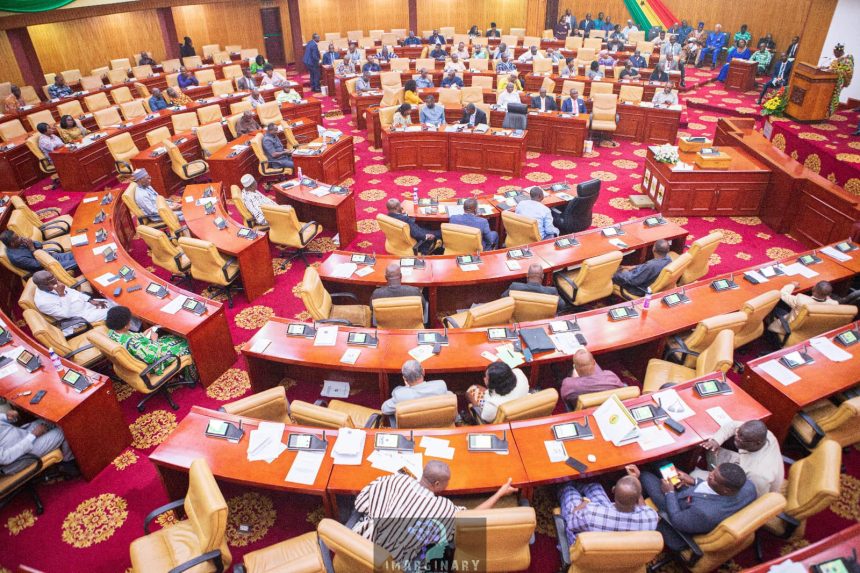
Ghana Parliament: No AKSA Bribery Evidence Found for MPs or Staff
Summary
- Ghana's Parliament found no evidence that its members or staff received alleged bribes related to the 2015 AKSA emergency power agreement.
- Speaker Alban S.K. Bagbin initiated the administrative review, which examined parliamentary records and interviewed relevant individuals.
- The Speaker clarified that the review's findings do not confirm the absence of bribes or absolve any potential recipients, as it was not a criminal investigation.
- The allegations stem from the U.S. conviction of Asante Kwaku Berko, a former Goldman Sachs employee, for facilitating bribes concerning the AKSA power project.
- The parliamentary report and supporting documents will be forwarded to the Office of the Special Prosecutor and other agencies for further criminal investigation.
Parliamentary Review Finds No Direct Evidence
Crucially, the Speaker emphasized that this administrative exercise was not a criminal investigation and therefore lacked the capacity to establish the guilt or innocence of any implicated individual.
Ghana's Parliament has concluded an internal administrative review into allegations of bribery surrounding the 2015 AKSA emergency power agreement, reporting that no evidence was found to suggest any Member of Parliament or staff of the Parliamentary Service received illicit payments. The review, initiated by Speaker Alban S.K. Bagbin, specifically investigated claims that approximately $46,000 was paid to individuals associated with the legislative body to influence the agreement's approval.
Despite this finding, Speaker Bagbin was careful to clarify that the outcome of the review does not definitively prove that no bribes were exchanged, nor does it exonerate anyone who may have accepted such payments. The exercise involved a thorough examination of parliamentary records, including the Votes and Proceedings, official reports, various committee documents, and the resolution by which the House approved the agreement. Additionally, interviews were conducted with former and current officers of the Parliamentary Service, as well as a former chairperson of the Committee on Mines and Energy.
Background to the Bribery Allegations
The controversy surrounding the AKSA emergency power agreement in Ghana is directly linked to the conviction of Asante Kwaku Berko in the United States. Berko, a former employee of Goldman Sachs, was found guilty for his role in facilitating bribe payments intended for Ghanaian officials. These payments were connected to the development and financing of a power generation project within Ghana, undertaken by the Turkish energy company AKSA.
Asante Kwaku Berko was convicted on August 6, 2026, and his sentencing was scheduled for November 10, 2026, in the U.S. case. The allegations of bribery, brought to light by this conviction, prompted the internal inquiry by the Ghana Parliament. Speaker Bagbin stated that the parliamentary review aimed to ascertain the circumstances surrounding the legislative body's consideration and approval of the agreement, identify all participants in the process, and determine what relevant information the institution could provide to assist broader investigations.
Limitations and Future Investigations
The parliamentary review, while comprehensive in its scope of internal records, operated under significant limitations due to its administrative nature. Crucially, the Speaker emphasized that this administrative exercise was not a criminal investigation and therefore lacked the capacity to establish the guilt or innocence of any implicated individual. It did not possess the authority to compel witnesses to appear, administer oaths for evidence, or demand the production of documents from external entities.
Furthermore, the review had no access to critical financial information such as bank records, transaction details, or communications held outside the custody of Parliament. Recognizing these constraints, Speaker Bagbin announced that the full report, along with all supporting documentation, would be transmitted to the Office of the Special Prosecutor (OSP) and other relevant investigative agencies. This referral is intended to provide these law enforcement bodies with the information gathered from Parliament’s records and interviews, enabling them to pursue any further inquiries deemed necessary for a complete Ghana anti-corruption investigation, particularly regarding financial transactions and evidence beyond Parliament’s reach.
Practical Implications
Lawyers and compliance officers should recognize that internal administrative reviews, even by parliamentary bodies, do not preclude ongoing criminal investigations by agencies like Ghana's Office of the Special Prosecutor. This case highlights the continued scrutiny of foreign bribery allegations involving Ghanaian officials and the potential for future enforcement actions, despite initial internal findings.
Source
How does this affect you?
Get an AI analysis of this article grounded in your jurisdictions, practice areas, and any policy documents you've uploaded to Wansom.
Finish Reading the Full Story and the Expert Analysis.
Get the latest legal & regulatory intelligence in Ghana
Wansom is AI and can make mistakes.