
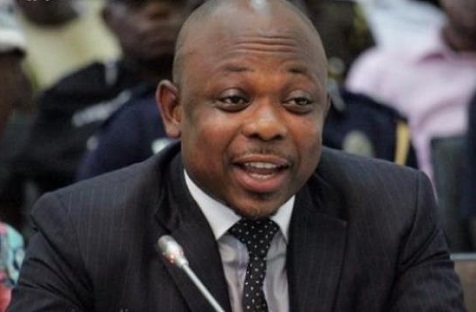
Ghana GoldBod Losses: Agalga Refutes Claims, Cites Surplus
Summary
- James Agalga, a prominent Ghanaian MP, now serving as the Majority Leader, has disputed claims that GoldBod incurred losses from its domestic gold purchasing operations.
- Agalga asserts that GoldBod recorded a significant surplus, citing the 2025 Auditor-General’s report which contained no adverse findings against the entity.
- He highlighted a 2023 agreement between the defunct PMMC and the Bank of Ghana, noting that while it previously outlined cost allocations, GoldBod has since transitioned to a self-funding model for its gold purchases.
- Agalga advocates for broadening any parliamentary investigation beyond 2025 to include the program's 2021 inception and address potential issues like forex rate discrepancies.
- He referenced an IMF report indicating a $400 million loss through the program, emphasizing its original intent to support the cedi.
Agalga Challenges GoldBod Loss Claims Amidst Probe Push
The Gold Board, according to Mr. Agalga, is prepared to engage with any investigation, asserting its commitment to transparency and accountability regarding its operations.
A prominent Ghanaian legislator, James Agalga, has strongly refuted allegations that the Gold Board (GoldBod) sustained financial losses through its domestic gold purchasing activities. Mr. Agalga, who serves as the Majority Leader, asserted that GoldBod has, in fact, generated a substantial surplus, contradicting narratives suggesting financial mismanagement.
These remarks come as the Minority caucus in Parliament advocates for the establishment of an ad hoc committee to investigate what they describe as losses within the government's gold trading scheme. Mr. Agalga indicated that he has engaged with GoldBod CEO Sammy Gyamfi and reviewed pertinent documentation concerning the ongoing debate.
The Gold Board, according to Mr. Agalga, is prepared to engage with any investigation, asserting its commitment to transparency and accountability regarding its operations. He conveyed GoldBod's eagerness for an opportunity to clarify the issues that have emerged over time, emphasizing that the institution is not evading scrutiny.
Financial Context and Regulatory Framework
In support of his position, Mr. Agalga pointed to the 2025 Auditor-General’s report, highlighting that it contains no adverse findings specifically against GoldBod. He further stated that the report confirms GoldBod's significant surplus, which he estimated to be in the region of over 4 billion.
He also referenced a 2023 agreement between the now-defunct Precious Minerals Marketing Company (PMMC) and the Bank of Ghana, which previously detailed the cost provisions associated with the Domestic Gold Purchase Programme before GoldBod transitioned to a self-funding model. Mr. Agalga clarified that transitional arrangements designate GoldBod as the successor to PMMC, inheriting both assets and liabilities under this framework.
The agreement explicitly outlines various costs related to gold purchases, including expenses for security, insurance, assaying, and smelting. Mr. Agalga underscored that GoldBod functions as an agent of the Bank of Ghana, implying that the principal entity, the Bank of Ghana, is responsible for covering these operational costs.
Call for Broader Inquiry Scope
Mr. Agalga argued that any parliamentary inquiry into the Domestic Gold Purchase Programme should not be confined solely to the year 2025. He stressed the importance of extending the investigation's scope, noting that the program commenced in 2021. This broader examination, he contended, would allow for a comprehensive review of how gold purchases were managed under the previous administration.
He cited an International Monetary Fund (IMF) report which reportedly indicated a loss of $400 million through the Domestic Gold Purchase Programme. Mr. Agalga explained that the program was a deliberate government initiative designed to bolster the cedi against the US dollar, necessitating financial outlays from the Bank of Ghana to achieve these objectives.
Furthermore, Mr. Agalga raised questions regarding whether PMMC utilized forex bureau rates instead of official Bank of Ghana rates for gold acquisitions in 2021. He suggested that any discrepancies between these rates could have generated additional costs, and called for Parliament to ascertain who bore these expenses at the time and if such practices persist. He warned that limiting the investigation to 2025, especially given that the 2023 agreement, whose core financing arrangement has changed, could compromise the integrity and effectiveness of the entire process.
Practical Implications
This development signals potential increased parliamentary and public scrutiny over the financial operations of state-backed gold purchasing programs in Ghana. Lawyers advising entities like GoldBod, the Bank of Ghana, or related mining/trading companies should prepare for possible inquiries into their financial records and operational agreements, particularly concerning cost allocations and reporting.
Source
How does this affect you?
Get an AI analysis of this article grounded in your jurisdictions, practice areas, and any policy documents you've uploaded to Wansom.
Wansom is AI and can make mistakes.