
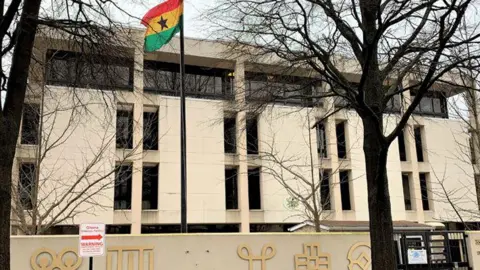
Ghana Embassy US: Fred Kwarteng Payments Queried in Conflict of Interest Audit
Summary
- A forensic audit uncovered a conflict of interest at the Ghana Embassy in the US involving IT officer Fred Kwarteng.
- Kwarteng's company, Stefrann LLC, received nearly $296,000 for renovating the ambassador's residence.
- Citibank, the embassy's bank, queried the payments due to questionable invoices, company detail inconsistencies, and the conflict of interest.
- The transactions violated Ghana's Public Financial Management Act 2016 and Foreign Service Regulations 2019, which prohibit conflicts of interest and mandate due diligence.
- The Auditor-General recommended recovering the funds from key actors and strengthening vendor due diligence for high-value contracts.
What Happened
The forensic audit determined that the transactions contravened the Public Financial Management Act, 2016 (Act 921) Ghana.
A specialized forensic audit into the operations of Ghana's Embassy in the United States has brought to light a significant conflict of interest involving an IT officer and a substantial renovation contract. The audit revealed that Fred Kwarteng, who served as the embassy's Information and Communication Officer from November 2016 until his dismissal in May 2025, owned a company named Stefrann LLC. This company was subsequently awarded a contract valued at nearly $296,000 for renovation and furnishing work at the ambassador’s residence.
The Ghana Embassy in the US made two distinct payments to Stefrann LLC for these services. The first payment, amounting to $159,043.84, was processed in February 2019, followed by a second payment of $136,864.00 in June 2020. The then Chief Treasury Officer, Janet Maku Koranteng, confirmed Fred Kwarteng's ownership of Stefrann LLC. These Ghana Embassy US Fred Kwarteng payments queried by the mission's banking partner, Citibank, due to various irregularities.
Citibank raised concerns regarding the transactions, citing questionable invoices and inconsistencies in the company's details. Crucially, the bank also highlighted the inherent conflict of interest arising from an embassy staff member being the direct beneficiary of these substantial payments. Despite these red flags and the compliance issues flagged by Citibank, the embassy proceeded with the financial transactions.
Regulatory Breaches and Audit Findings
The forensic audit determined that the transactions contravened the Public Financial Management Act, 2016 (Act 921) Ghana. This legislation mandates that public officials managing state resources must ensure the safeguarding of public funds, proper authorization and documentation of all financial transactions, and their subjection to independent audit verification. The Ghana Foreign Service Regulations 2019 conflict of interest provisions also explicitly prohibit public officials serving in Ghana’s diplomatic missions from engaging in transactions that create such conflicts. Furthermore, these regulations stipulate that all vendor engagements must undergo appropriate due diligence and comply with host-country financial and regulatory requirements.
Auditors identified systemic weaknesses, including inadequate vendor checks, the establishment of parallel financial arrangements, and the use of third-party payments, all of which compromised internal controls. The Citibank Ghana Embassy transaction query was detailed, with bank representative Jay Varkey requesting specific documentation. This included a copy of the U.S. State Department's approval for the renovation work, comprehensive details on the project's scope and budget, a list of all contractors and vendors involved, and evidence of internal approvals.
Further scrutiny from the bank focused on a payment to Stefrann LLC, where the check memo indicated "payment of furniture for residency." The bank questioned whether the furniture was procured through Stefrann LLC or Persiano Furniture Gallery, and sought clarification on whether Persiano Furniture Gallery had been fully compensated, either directly or via Stefrann LLC. The audit team's own investigation into the company's existence found registrations for "STEFRAN LLC" but not for "STEFRANN LLC," adding another layer of inconsistency to the Stefrann LLC Ghana Embassy contract.
Official Recommendations and Broader Context
In light of these findings, the Ghana Auditor-General recovery recommendation calls for the full amount to be recouped from the key individuals involved. The Auditor-General also advised the embassy to significantly enhance its vendor due diligence processes, particularly for high-value contracts. This includes implementing a tiered review system encompassing identity verification, ownership checks, sanctions and Politically Exposed Person (PEP) screenings, and beneficial ownership assessments, aligning with established bank expectations for Ghana diplomatic mission vendor due diligence.
Fred Kwarteng's tenure as Information and Communication Officer from November 2016 until his termination in May 2025 placed him in a critical position of operational control over the Mission’s digital platforms. His responsibilities included website configuration, online visa and passport acquisition processes, and the integration of payment gateways. The audit report further noted that Kwarteng was responsible for linking unauthorized websites to the official Embassy website and charging visa and passport applicants unapproved fees, significantly exceeding the official rates.
Practical Implications
This case underscores the critical need for legal and compliance professionals advising public officials and diplomatic missions to implement stringent vendor due diligence, prevent conflicts of interest, and ensure strict adherence to public financial management regulations (e.g., Ghana's Act 921) to mitigate financial irregularities and potential recovery actions. It highlights the importance of robust internal controls and external scrutiny, even from banking partners, in preventing procurement fraud and ensuring accountability for public funds.
Source
Source: Original reporting via PACGH.
How does this affect you?
Get an AI analysis of this article grounded in your jurisdictions, practice areas, and any policy documents you've uploaded to Wansom.
Finish Reading the Full Story and the Expert Analysis.
Wansom is AI and can make mistakes.