
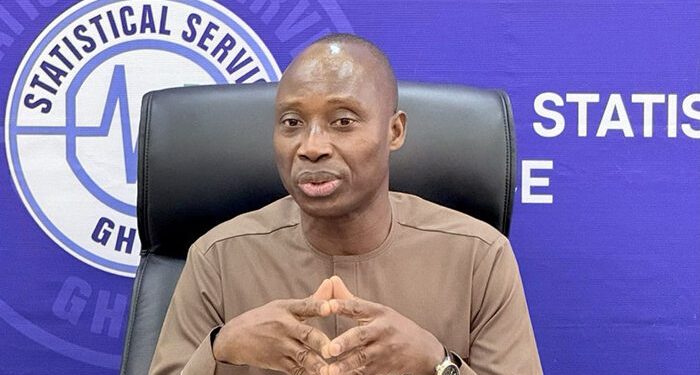
Ghana Government Statistician: Compulsory Data Funding for Ministries
Summary
- Government Statistician Dr. Alhassan Iddrisu proposes mandatory annual funding for data collection in all Ghanaian ministries and agencies.
- This funding would be a regular budget item for MDAs, with chief directors accountable for its use, starting ideally in 2028.
- Data spending is framed as an investment, with an estimated $32 return for every $1 spent.
- The Ghana Statistical Service plans to establish a Statistics Fund under a new Statistics Bill to secure predictable financing.
- These reforms aim to strengthen Ghana's national statistical system, addressing challenges like inconsistent funding and fragmented data.
Call for Mandatory Data Funding
He highlighted that data is not an expense but an investment, citing estimates that every dollar invested in data generation can produce a return of approximately 32 US dollars.
Government Statistician Dr. Alhassan Iddrisu has advocated for a new policy that would mandate annual financial allocations for data collection and management across all government ministries, departments, and agencies (MDAs) in Ghana. He emphasized that Ghana's national development planning could face significant setbacks if public institutions continue to undervalue the importance of statistical information. This proposal aims to embed funding for statistical activities as a standard component within the annual budgets of MDAs, with chief directors being held accountable for both the allocation and proper utilization of these funds.
Dr. Iddrisu suggested that this new framework should ideally commence in 2028, though he urged the government to consider incorporating such provisions during the current budget formulation process. His remarks were made on November 17 at the 2026 Annual Forum for Data Producers, Users and Enhancers, held in Accra. He stressed the critical need for public sector entities to assume direct responsibility for generating the data essential for guiding national policy decisions and effectively monitoring development programs.
Investment in National Development
The current reliance on sporadic government support, external donor contributions, and short-term project funding is deemed unsustainable for maintaining a robust and dependable Ghana national statistical system. Dr. Iddrisu argued that expenditures on data collection should be perceived as a strategic investment capable of yielding substantial economic and social returns, rather than merely another administrative cost competing for limited resources. He highlighted that data is not an expense but an investment, citing estimates that every dollar invested in data generation can produce a return of approximately 32 US dollars.
Furthermore, the proposal seeks to link the performance evaluations of chief directors directly to their respective institutions' efficacy in collecting, managing, and providing statistical information. This measure is intended to foster greater accountability, which Dr. Iddrisu believes will significantly enhance the quality and accessibility of official data. Such improvements would empower government agencies to make decisions grounded in solid evidence, moving away from reliance on mere assumptions.
Strengthening Ghana's Statistical System
In parallel with these recommendations, the Ghana Statistical Service (GSS) is actively exploring strategies to lessen its dependence on direct government budgetary allocations and international development assistance. A key initiative under consideration is the establishment of a dedicated Statistics Fund, which would be created as part of a forthcoming Statistics Bill Ghana. This fund is designed to offer a more stable and predictable source of financing for the country's statistical infrastructure.
The draft legislation for this Statistics Bill is slated for submission to Cabinet before proceeding to Parliament for legislative review and approval. These proposed funding reforms are integral to broader national efforts aimed at strengthening Ghana's overall data infrastructure. The government has previously acknowledged persistent challenges, including fragmented administrative databases, inconsistent Ghana Statistical Service funding, and an over-reliance on external support for producing reliable statistics. In a notable commitment, the 2026 Budget allocated GH¢207 million in domestic funding specifically for reinforcing the national statistical system, underscoring the imperative for more sustainable financial arrangements.
Enhancing Data Quality and Collaboration
Beyond financial restructuring, the Ghana Statistical Service is also pursuing internal reforms to enhance the timeliness and relevance of official statistics. These initiatives include plans to bolster economic data reporting, refine methods for inflation measurement, and generate more granular regional economic estimates. The objective is to ensure that the data produced is not only accurate but also highly pertinent to current policy needs and economic realities.
Dr. Iddrisu also called for enhanced collaboration among various stakeholders: institutions responsible for generating data, organizations that utilize this information, and development partners who support statistical endeavors. He emphasized that data producers bear the responsibility of delivering precise, timely, and comprehensive information, which is crucial for policymakers and other users to effectively leverage statistics for national progress.
Practical Implications
Lawyers and compliance officers should monitor the progress of Ghana's proposed Statistics Bill and any resulting regulations, as these could introduce new compliance obligations or impact data access and reporting requirements for entities interacting with Ghanaian government ministries and agencies.
Source
How does this affect you?
Get an AI analysis of this article grounded in your jurisdictions, practice areas, and any policy documents you've uploaded to Wansom.
Finish Reading the Full Story and the Expert Analysis.
Get the latest legal & regulatory intelligence in Ghana
Wansom is AI and can make mistakes.