
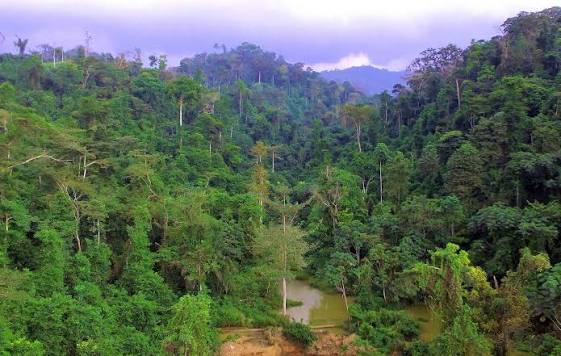
Ghana: First in Africa to Secure 6.57M ART TREES Carbon Credits
Summary
- Ghana has secured 6.57 million carbon credits for reducing emissions from deforestation and forest degradation.
- This achievement makes Ghana the first African nation to receive credits under the Architecture for REDD+ Transactions (ART) program.
- The credits, covering 2.5 million hectares from 2017-2021, are expected to generate approximately US$43 million for the government.
- Ghana's credits are the first under ART's TREES Crediting Level approach to receive the Core Carbon Principles (CCP) Approved label from ICVCM.
- The issuance followed rigorous verification, distinguishing the 6.57 million issued credits from Ghana's reported 11.9 million tonnes of CO2e reductions.
A Landmark Achievement in Carbon Credits
Ghana's pioneering role in securing ART TREES carbon credits marks a significant milestone for the voluntary carbon market, particularly in Africa, underscoring the increasing maturity and credibility of carbon offsetting mechanisms.
Ghana has successfully secured 6.57 million carbon credits, a significant milestone recognizing its efforts in reducing emissions stemming from deforestation and forest degradation. This achievement, formalized with the issuance of credits to the Government of Ghana on November 12, 2026, positions the nation as the first in Africa to receive such credits under the Architecture for REDD+ Transactions (ART) program. The government anticipates generating approximately US$43 million from the sale of a portion of these newly acquired credits.
These Ghana ART TREES carbon credits specifically acknowledge forest protection initiatives spanning an estimated 2.5 million hectares across the country, covering the period between 2017 and 2021. Furthermore, Ghana distinguishes itself as the inaugural country to be awarded credits under ART's TREES Crediting Level approach that also carries the Core Carbon Principles (CCP) Approved label, a mark of quality from the Integrity Council for the Voluntary Carbon Market (ICVCM).
The successful issuance of these credits is the culmination of several years of dedicated work aimed at enhancing forest monitoring systems and actively mitigating the activities that contribute to forest loss. Beyond their environmental impact, these credits provide Ghana with a crucial mechanism to raise funds, which will be directed towards ongoing forest protection efforts and supporting the livelihoods of farmers and communities who depend on these vital forest resources.
Ghana's Comprehensive REDD+ Initiative
The 6.57 million credits specifically recognize reductions in greenhouse gas emissions achieved through Ghana's REDD+ programme, which stands for Reducing Emissions from Deforestation and Forest Degradation. This comprehensive program extends beyond mere emission reduction, also encompassing forest conservation, the promotion of sustainable forest management practices, and strategic efforts to increase the amount of carbon stored within its forests.
Ghana's forests have historically faced considerable pressure from various sources, including the expansion of agricultural lands, widespread illegal mining activities, and unsustainable logging practices. The growth of cocoa production has also contributed to forest degradation in certain regions as farms expand into previously forested landscapes. To counter these challenges, Ghana's national program fosters collaboration among diverse stakeholders, including government agencies, cocoa farmers, private companies, and local communities, all working together to implement more sustainable agricultural practices and protect vital ecosystems.
Rigorous Verification and International Standards
To qualify for the ART TREES carbon credits, Ghana was required to provide robust evidence of its emissions reductions. This involved employing sophisticated systems capable of accurately measuring changes in forest cover and precisely estimating the quantities of carbon released or removed from the atmosphere. The Food and Agriculture Organization of the United Nations (FAO) played a critical supporting role, assisting the Forestry Commission in significantly improving the nation's forest monitoring, measurement, and reporting systems, including the integration of advanced digital tools for data collection and analysis.
While Ghana initially reported 11.9 million tonnes of carbon dioxide equivalent (CO₂e) in emissions reductions for the 2017–2021 period, with approximately 90 percent attributed to reduced deforestation and degradation and 10 percent to increased carbon removals through restoration, ART ultimately issued 6.57 million credits following its rigorous assessment and verification process. This distinction highlights that reported emissions reductions do not automatically translate into carbon credits; they must meet the specific requirements of the applicable standard and undergo thorough independent evaluation before official issuance.
The fact that Ghana's credits have received the Core Carbon Principles Approved label is a testament to their high quality. This label, developed by the Integrity Council for the Voluntary Carbon Market (ICVCM), signifies adherence to stringent principles designed to ensure the environmental integrity and credibility of carbon credits within the Voluntary Carbon Market Ghana.
Implications for the Voluntary Carbon Market
Ghana's pioneering role in securing ART TREES carbon credits marks a significant milestone for the voluntary carbon market, particularly in Africa, underscoring the increasing maturity and credibility of carbon offsetting mechanisms. This development sets a crucial precedent, demonstrating the viability of large-scale forest carbon projects under rigorous international standards and offering a blueprint for other nations seeking to leverage their natural assets for climate action.
The successful issuance of these Ghana ART TREES carbon credits, further bolstered by the ICVCM Core Carbon Principles Ghana approval, signals a robust framework for future carbon credit transactions. This creates new avenues for entities seeking to engage in credible carbon offsetting strategies and provides a clear pathway for legal and compliance professionals to advise clients on structuring such transactions and ensuring adherence to evolving international standards in the burgeoning environmental sector.
Practical Implications
Lawyers and compliance officers should note Ghana's pioneering role in securing ART TREES carbon credits, which signals a maturing voluntary carbon market in the region. This development creates new avenues for advising clients on carbon offsetting strategies, structuring carbon credit transactions, and ensuring compliance with international standards like ART TREES and ICVCM, particularly for entities operating in or looking to invest in Ghana's environmental sector.
Source
How does this affect you?
Get an AI analysis of this article grounded in your jurisdictions, practice areas, and any policy documents you've uploaded to Wansom.
Finish Reading the Full Story and the Expert Analysis.
Get the latest legal & regulatory intelligence in Ghana
Wansom is AI and can make mistakes.