
Gene Atkins: 236-Year Sentence for Trader Joe's Shooting
Summary
- Gene Atkins received a 236-year-to-life prison sentence for a 2018 rampage that led to a fatal police shooting at a Los Angeles Trader Joe's.
- Atkins was convicted of 43 criminal counts, including second-degree murder for the death of store employee Melyda Corado, who was killed by a stray police bullet.
- A second jury found Atkins guilty of murder after the first jury deadlocked, based on the theory he should have known police would return fire.
- The defense argued Atkins suffered from a mental health crisis, while the prosecution highlighted his history of violence and human trafficking of a minor.
- Superior Court Judge Lisa Lench handed down the lengthy sentence, acknowledging the dramatic impact of Atkins' behavior on many lives.
The Tragic Events at Trader Joe's
In this case, it was dramatic how many lives were changed forever as a result of Mr. Atkins’ behavior.
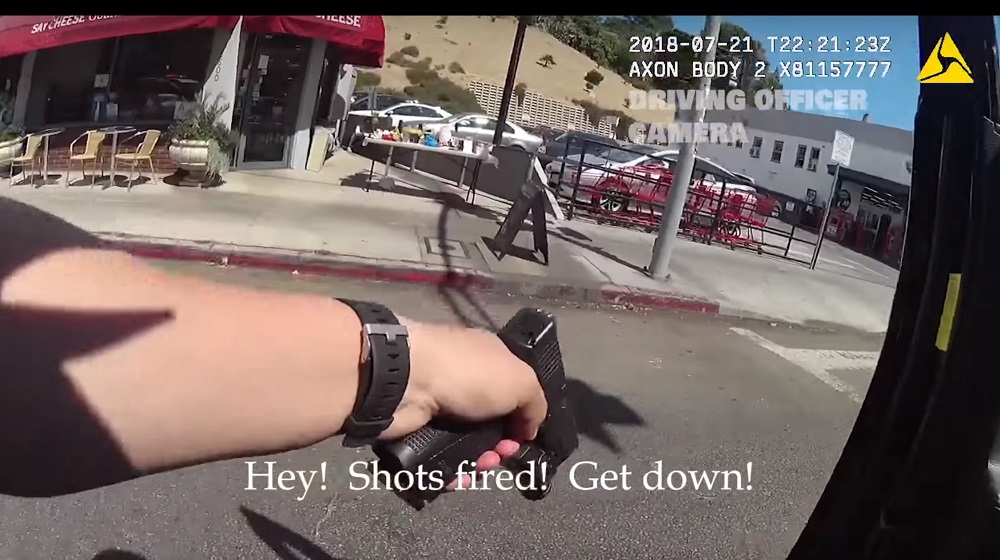
Gene Atkins received a sentence of 236 years to life in state prison following a violent rampage in 2018 that culminated in a fatal police shooting at a Los Angeles Trader Joe's. The incident, which unfolded in the Silver Lake neighborhood, resulted in the death of 27-year-old store employee Melyda Corado, who was tragically struck by a stray bullet fired by a police officer. Atkins, then 36, was convicted on a total of 43 criminal counts, including second-degree murder for Corado's death.
The chaotic sequence of events began with Atkins leading law enforcement on a high-speed pursuit. The chase concluded when his vehicle crashed into a utility pole directly outside the supermarket. As Atkins exited his car and fled into the Trader Joe's, he opened fire on police officers. In response, two officers discharged their weapons, and it was during this exchange that one of their bullets inadvertently hit and killed Ms. Corado. This tragic outcome formed a central point of contention in the subsequent legal proceedings against Atkins.
The Path to Conviction and Sentencing
Atkins' legal journey involved two separate trials to determine his culpability for the various charges. In the initial trial held in May, he was found guilty of three counts of attempted murder, stemming from shooting his grandmother, a 17-year-old girl named Leah Williams, and firing at police officers. He also faced conviction on dozens of additional counts related to the police pursuit and his actions leading up to the supermarket confrontation. However, the first jury remained deadlocked on the critical charge of second-degree murder concerning Melyda Corado's death.
Undeterred, prosecutors opted to retry Atkins specifically for the murder charge. Their theory posited that Atkins either knew or should have reasonably anticipated that police would return fire during his armed flight into a public space, thereby creating a high likelihood of a bystander being hit. The second jury ultimately agreed with the prosecution, finding Atkins guilty of second-degree murder, which brought his total convictions to 43 counts. This conviction paved the way for the lengthy sentence handed down by Superior Court Judge Lisa Lench.
Competing Narratives at Sentencing
During the sentencing hearing, significant arguments were presented regarding Gene Atkins' mental state and his past conduct. His attorney, Errol Cook, advocated for a substantially shorter sentence of 15 years to life, asserting that "something was going on in his brain" on the day of the incident. Cook referenced testimony from Leah Williams, who recounted waking up in Atkins' bed without memory of how she got there and hearing him utter "wacky things" like, "If I can't have you, no one can," and "you left me here with these people." The defense suggested these statements indicated Atkins was "experiencing some type of auditory or visual hallucination," arguing that "something was wrong that day, and catastrophic events followed."
Conversely, Deputy District Attorney Ben Schwartz pressed for a much harsher penalty, presenting a starkly different portrayal of Atkins. Schwartz contended that the violent events were not an isolated incident, emphasizing that "Mr. Atkins had a history of violent conduct." He further clarified the nature of Atkins' relationship with Leah Williams, stating it was a mischaracterization to call her his girlfriend. Schwartz revealed that Atkins had met Williams when she was 14 or 15, "walking around her school," and subsequently "groomed her over a period of time, forced her into prostitution, human trafficked her," and that "she endured rapes."
These aggravating factors were presented to underscore a pattern of predatory and violent behavior, influencing the court's decision. Superior Court Judge Lisa Lench acknowledged the profound impact of Atkins' actions, stating, "In this case, it was dramatic how many lives were changed forever as a result of Mr. Atkins’ behavior." Melyda Corado's father, Albert Corado, addressed Atkins directly, expressing his profound grief: "You ruined our life. You ripped my heart in two." Atkins, making a rare court appearance and reportedly showing little reaction, did not speak during the proceedings.
Practical Implications
Criminal defense and prosecution lawyers should note this case for its complex causation arguments regarding bystander death by police fire during a defendant's rampage, and how mental state defenses are weighed against aggravating factors like a history of violence and human trafficking during sentencing for high-profile crimes.
Source
How does this affect you?
Get an AI analysis of this article grounded in your jurisdictions, practice areas, and any policy documents you've uploaded to Wansom.
Finish Reading the Full Story and the Expert Analysis.
Get the latest legal & regulatory intelligence in United States
Wansom is AI and can make mistakes.