
Oakland: Sheng Thao Bribery Trial Begins Over Public Corruption
Summary
- Former Oakland Mayor Sheng Thao is on trial for public corruption, facing charges including bribery and fraud.
- Prosecutors allege Thao accepted bribes from businessmen David and Andy Duong for city contracts, including for Evolutionary Homes.
- The prosecution's case heavily relies on the testimony of Mario Juarez, a former business partner of the Duongs, who pleaded guilty to conspiracy to commit a bribe.
- Evidence includes alleged checks for a negative campaign against Thao's 2022 mayoral opponents and payments to her partner, Andre Jones.
- All four co-defendants, including Thao, Jones, and the Duongs, have pleaded not guilty to the charges.
What Happened
The prosecution asserts that Ms. Thao, while holding public office, effectively 'put her power up for sale,' engaging in a corruption scheme involving 'paid and accepted bribes for the promise of future influence.'
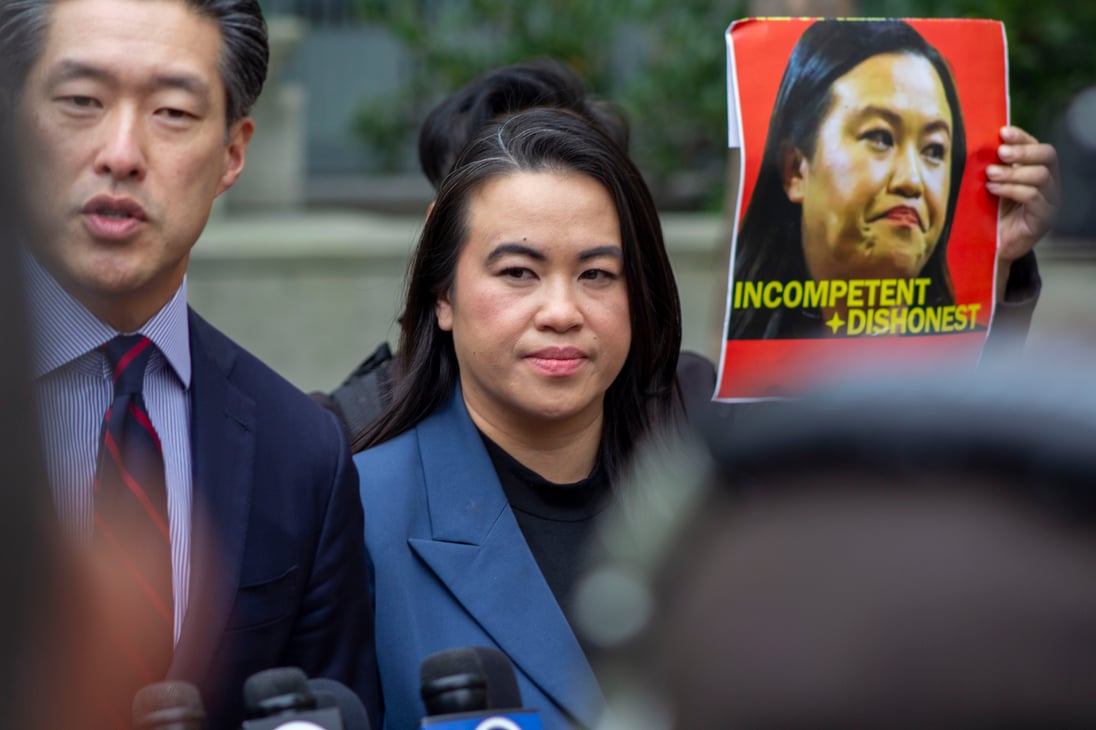
The high-profile Sheng Thao bribery trial Oakland has commenced with opening statements, focusing on allegations of public corruption against the former Oakland Mayor and three co-defendants. Prosecutors contend that Ms. Thao, 41, betrayed her public trust by accepting bribes from Oakland businessmen in exchange for promises of lucrative city contracts. The former mayor faces eight counts, including conspiracy, bribery, fraud, and making a false statement to a government official, alongside her romantic partner Andre Jones, 55, and businessmen David Duong, 68, and his son Andy Duong, 37.
Assistant U.S. Attorney Abraham Fine characterized the alleged actions as a "corruption scheme of 'paid and accepted bribes for the promise of future influence'," asserting that Ms. Thao, while holding public office, effectively "put her power up for sale." All four defendants have entered pleas of not guilty. The defense, led by Thao's attorney Jeffrey Tsai, countered by portraying Ms. Thao as an ordinary Oakland renter, a mother, daughter, sister, and aunt, who did not live a "luxury lifestyle" indicative of a bribery scheme. The proceedings are taking place at the Ron V. Dellums Courthouse in Oakland, presided over by Chief U.S. District Judge Yvonne Gonzalez Rogers.
The Allegations and Evidence
The core of the Oakland Mayor public corruption charges involves an alleged scheme where the Duongs purportedly bribed Ms. Thao and Mr. Jones. The objective of these alleged bribes was twofold: to secure Evolutionary Homes city contracts for up to 300 modular units, each valued at $300,000, and to obtain an extension for California Waste Solutions' city contract. Evolutionary Homes, a shipping container shelter company, was co-founded by Juarez and the Duongs in 2022.
Prosecutors plan to present a range of evidence to support their claims, including audio recordings, text messages, emails, and Apple notes. Financial transactions are also central to the case, with evidence expected to include checks totaling $75,000 from California Waste Solutions. These funds were allegedly directed to one of Juarez's shell companies, purportedly to finance a negative mailer campaign targeting Ms. Thao's opponents during the 2022 Oakland mayoral election. Additionally, five-figure checks from Evolutionary Homes to Mr. Jones, marked as "advance," are cited as further proof of the alleged bribery scheme.
The investigation intensified in 2024 when Mario Juarez provided information to the FBI following a dispute with the Duongs. This led to FBI raids in June 2024 on the defendants' residences and the California Waste Solutions building, gathering crucial evidence for the United States v. Sheng Thao case.
Legal Context and Defense Strategy
This high-profile public corruption trial highlights the significant legal risks associated with seeking government contracts and the intense scrutiny of financial dealings with public officials. The prosecution's reliance on a cooperating witness like Mario Juarez, who has already pleaded guilty to a related charge, underscores a common strategy in complex bribery cases. Juarez's agreement to cooperate in exchange for a reduced sentence positions him as a critical, albeit potentially vulnerable, component of the government's narrative. The defense's immediate challenge to his character and motivations is a predictable and crucial element of their strategy.
Ms. Thao faces a potential maximum sentence of 95 years in prison if convicted on all counts, emphasizing the severe penalties associated with public corruption. The defense for Ms. Thao and Mr. Jones, represented by attorney Mark Goldrosen, argues that despite their cohabitation, the couple maintained separate bank accounts and did not exchange text messages concerning money linked to the Duongs. Furthermore, Goldrosen asserts that Mr. Jones held a legitimate position as a government liaison for Evolutionary Homes, suggesting that any payments received were for legitimate services, not illicit activities. These arguments aim to dismantle the prosecution's claims of a coordinated bribery effort involving David Duong federal charges and the other co-defendants.
Why It Matters
The outcome of this trial carries substantial implications for public trust in Oakland's governance and the broader landscape of public service. It serves as a stark reminder of the intense scrutiny public officials face regarding their financial ties and the processes by which government contracts are awarded. The detailed presentation of electronic and financial evidence, alongside the pivotal role of a cooperating witness, illustrates the modern tools and strategies employed by prosecutors in combating public corruption.
Beyond the immediate legal consequences for the defendants, this case will likely influence future compliance practices for businesses seeking government contracts and for public officials managing such processes. The focus on specific financial transactions, communications, and the alleged quid pro quo arrangement between public influence and private gain underscores the critical need for transparency and ethical conduct in all interactions between government and the private sector.
Practical Implications
This high-profile public corruption trial highlights the significant legal risks associated with seeking government contracts and the intense scrutiny of financial dealings with public officials. Lawyers and compliance officers should note the critical role of cooperating witnesses and the types of electronic and financial evidence used by prosecutors, informing strategies for internal investigations and compliance program development to mitigate bribery and fraud exposures.
Source
How does this affect you?
Get an AI analysis of this article grounded in your jurisdictions, practice areas, and any policy documents you've uploaded to Wansom.
Finish Reading the Full Story and the Expert Analysis.
Get the latest legal & regulatory intelligence in United States
Wansom is AI and can make mistakes.