
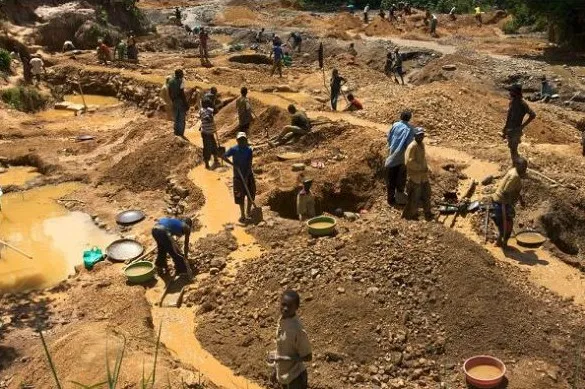
Prof. Appiagyei-Tua: Ghana Galamsey Now Transnational Organised Crime
Summary
- Professor Kwadwo Appiagyei-Tua asserts that illegal mining in Ghana, known as galamsey, has evolved into a form of transnational organised crime.
- This reclassification is attributed to the operations' reliance on profit, coercion, violence, and widespread corruption.
- Galamsey now involves sophisticated networks of influential actors, including political figures, extending beyond individual miners.
- The scale and organization of these activities indicate a complex criminal enterprise requiring collaboration among various interests.
- Combating galamsey has become significantly more challenging due to its profit-driven nature and the systemic use of illicit methods.
The Evolving Nature of Illegal Mining in Ghana
The classification of galamsey as transnational organised crime underscores its deep-seated nature, driven by profit, coercion, violence, and pervasive corruption.
Illegal mining activities in Ghana, commonly referred to as galamsey, have undergone a significant transformation, now qualifying as a form of transnational organised crime. This assessment comes from Professor Kwadwo Appiagyei-Tua, an expert in International Law and Human Rights at the University of Ghana School of Law. He highlights that the menace has progressed far beyond the scope of individual prospectors, evolving into a sophisticated criminal enterprise.
Defining Transnational Organised Crime in Context
The classification of galamsey as transnational organised crime underscores its deep-seated nature, driven by profit, coercion, violence, and pervasive corruption. Professor Appiagyei-Tua emphasized that these operations are no longer confined to the immediate mining sites but are facilitated by extensive networks. These networks involve a diverse array of influential actors, notably including political figures, who play a crucial role in enabling and sustaining the illicit trade.
This sophisticated structure points to a collaborative effort among various interests, moving beyond localized criminal acts to a more systemic problem. The professor noted that the networking extends not only among the direct criminal actors but also encompasses political appointees and individuals within the government, facilitating these activities in multiple ways. This broad involvement complicates efforts to curb illegal mining Ghana organised crime, making it a formidable challenge for authorities.
Broader Societal and Governance Challenges
The scale and intricate organization of galamsey operations clearly indicate a highly sophisticated criminal enterprise. These transnational crime networks Ghana leverage their influence to facilitate the trade, ensuring their profit-driven objectives are met through illicit means. The pervasive nature of corruption and the use of violence are integral to maintaining these operations, creating an environment where legal frameworks are undermined and communities suffer.
Professor Appiagyei-Tua expressed profound dismay regarding the current state of affairs, stressing the critical need to recognize galamsey for what it has become: a transnational organised crime. The involvement of political actors and the systemic nature of the corruption and violence inherent in these operations underscore the profound governance challenges facing Ghana in its efforts to combat this destructive practice. The fight against Prof. Kwadwo Appiagyei-Tua galamsey insights reveal is not merely about stopping illegal digging, but dismantling powerful, interconnected criminal structures.
Practical Implications
Lawyers advising clients in the mining sector or those with supply chain exposure to Ghana must recognize the elevated legal and reputational risks associated with galamsey, now classified as transnational organised crime. This necessitates enhanced due diligence for anti-money laundering, anti-corruption, and human rights compliance, particularly when engaging with entities or individuals connected to the Ghanaian mining industry, to mitigate potential liabilities.
Source
Source: Original reporting via JoyNews.
How does this affect you?
Get an AI analysis of this article grounded in your jurisdictions, practice areas, and any policy documents you've uploaded to Wansom.
Finish Reading the Full Story and the Expert Analysis.
Wansom is AI and can make mistakes.