
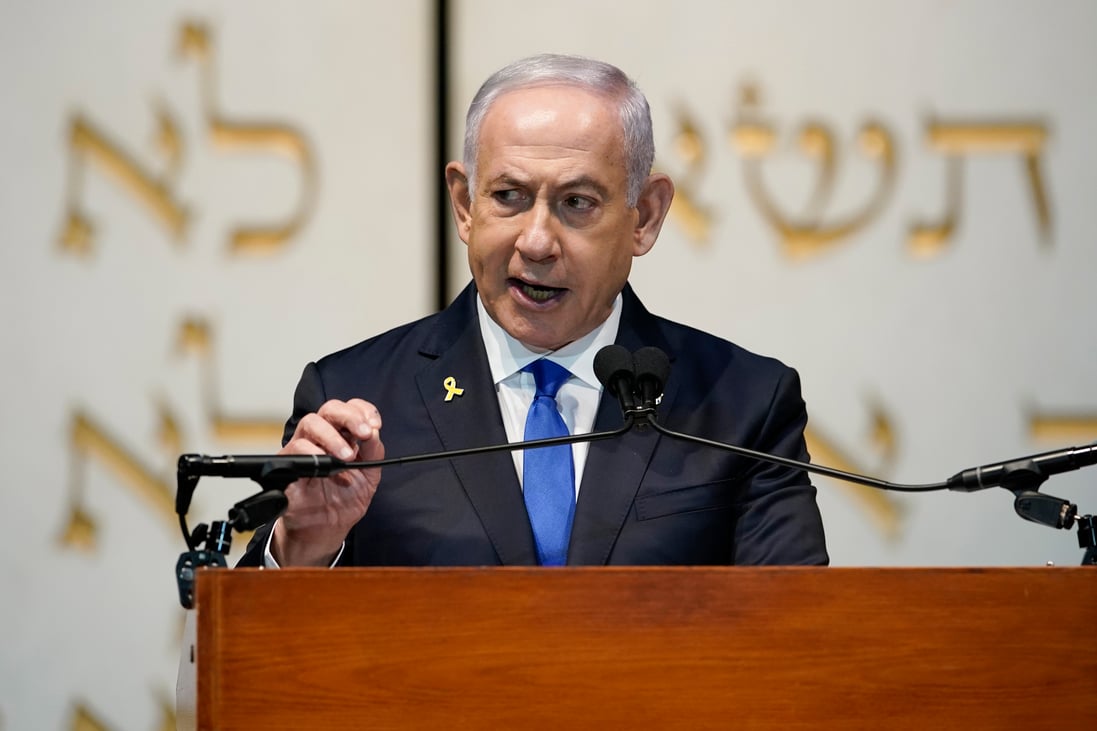
Gadi Eisenkot: Pledges to Dismantle Hamas in Gaza Within 18 Months
Summary
- Gadi Eisenkot pledged to end Hamas rule in Gaza within 18 months if elected Prime Minister on October 27.
- His plan involves either implementing the Trump ceasefire plan for disarmament or using Israeli military operations.
- Hamas previously announced intentions to disband its governing body and hand over weapons to a technocratic committee, but Israel remains skeptical due to lack of verifiable disarmament.
- Eisenkot accused Prime Minister Netanyahu of "strategic failure" in Gaza and called for an inquiry into security lapses before the October 7 attack.
- Current polls indicate neither Eisenkot's nor Netanyahu's bloc is likely to secure a parliamentary majority in the upcoming Israeli election.
The Political Pledge
Gadi Eisenkot, a prominent Israeli opposition figure and the leader of the center-right Yashar party, has made a significant commitment regarding the future of Gaza.
Gadi Eisenkot, a prominent Israeli opposition figure and the leader of the center-right Yashar party, has made a significant commitment regarding the future of Gaza. Speaking at a news conference held near the conflict-affected Palestinian territory on Thursday, Eisenkot pledged to dismantle Hamas's governance in the Gaza Strip within 18 months of assuming the Prime Minister's office. This declaration comes ahead of the closely contested Israeli election scheduled for October 27, where Eisenkot stands as Prime Minister Benjamin Netanyahu’s principal challenger.
The 66-year-old former military chief outlined two primary pathways to achieve this objective. One approach involves the implementation of U.S. President Donald Trump’s ceasefire plan, which includes provisions for the phased disarmament of Hamas and a subsequent transfer of power within the territory. Alternatively, Eisenkot stated he would resort to "creative operations" by the Israeli military, specifically designed to neutralize the Palestinian movement's military capabilities. This bold campaign promise is among the most assertive statements made by Eisenkot to date.
The Disarmament Context
The feasibility of such a plan, particularly regarding disarmament, faces considerable hurdles, as evidenced by past attempts. Last July, Hamas indicated its intention to dissolve its governing body, aiming to facilitate a transition of Gaza's administration to a newly formed technocratic Palestinian committee. This entity, known as the National Committee for the Administration of Gaza, was established following a ceasefire in October of the previous year and operates under the oversight of Trump’s Board of Peace, with its current base in Cairo.
Later that same month, Hamas reportedly agreed to a deal that would entail the surrender of its weaponry to this committee. However, Israel has maintained a skeptical stance, with Prime Minister Netanyahu insisting on verifiable decommissioning of all weapons before any Israeli military withdrawal could commence. To date, Hamas has not proceeded with disarmament, and consequently, Israel has not initiated any reciprocal withdrawal of its forces. Furthermore, the National Committee for the Administration of Gaza is not yet operational within the territory, highlighting the ongoing impasse. Official reports indicate that while Israeli forces were permitted to remain in 53% of Gaza under the ceasefire terms, they now control approximately 70% of the area a year later.
Broader Political and Military Landscape
Eisenkot's pledge and the upcoming election are set against the backdrop of the devastating October 7, 2023, attack by Hamas on Israel, which resulted in the deaths of over 1,200 individuals. In retaliation, Israel launched a large-scale offensive in Gaza, leading to more than 74,300 fatalities, according to the Gaza Health Ministry, whose figures are generally considered reliable by the United Nations despite the ministry operating under Hamas. Eisenkot sharply criticized Netanyahu on Thursday, attributing a "strategic failure" to the current Prime Minister in Gaza, asserting that after three years of conflict, Hamas remains "the sovereign … armed, arming itself, and militarily active."
Beyond his immediate policy proposals, Eisenkot has consistently advocated for the establishment of a state commission of inquiry. This commission would be tasked with identifying those responsible for any security lapses that preceded the October 7 attack, a move that the current government has so far resisted. Eisenkot emphasized that such an inquiry is crucial to "prevent the next disaster." Like other opposition figures, he frequently implicates Netanyahu in personal responsibility for the October 7 events, citing media reports that suggest the Prime Minister ignored warnings from his security services and the United Arab Emirates. Netanyahu, however, has vehemently denied these accusations, stating that security officials did not alert him on the morning of the attack. Current polling data suggests a tight race, with neither Netanyahu’s bloc nor Eisenkot’s faction projected to secure the 61 seats necessary to control the 120-seat parliament and form a governing coalition.
Practical Implications
This article reports on a political promise by an Israeli opposition leader regarding future policy in Gaza. It does not present any immediate, direct, or actionable legal or compliance implications for lawyers or compliance officers. It is a geopolitical development to monitor for potential future shifts in regional stability that could eventually impact international law or business operations, but no specific legal action is required now.
Source
How does this affect you?
Get an AI analysis of this article grounded in your jurisdictions, practice areas, and any policy documents you've uploaded to Wansom.
Finish Reading the Full Story and the Expert Analysis.
Get the latest legal & regulatory intelligence in United States
Wansom is AI and can make mistakes.