
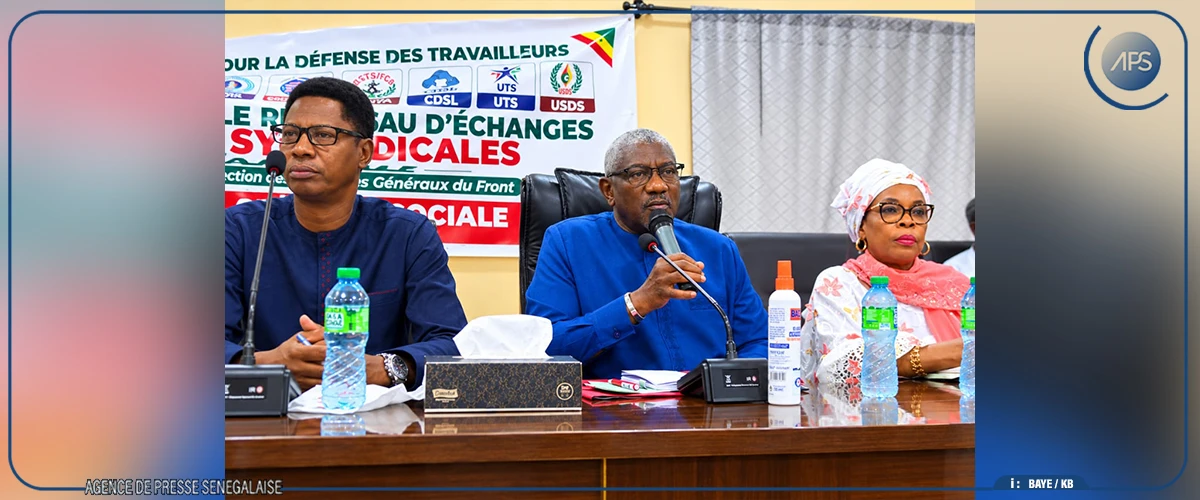
FSDT Sensibilisation Kaolack: Grève Octobre 2026 Mobilizes Workers
Summary
- The Front syndical pour la défense du travail (FSDT) conducted a sensitization tour in Kaolack ahead of a three-day general strike scheduled for October 21-23, 2026.
- The upcoming strike, targeting public, private, and informal sectors, addresses concerns including layoffs, social dialogue, economic hardship, and the precarious status of certain workers.
- Unions are protesting the government's adoption of draft Labour and Social Security Code reforms on August 18, 2026, without prior consultation with social partners.
- Key demands include the application of the National Social Stability Pact, reintegration of dismissed workers, and salary increases.
- This follows a 24-hour general strike on July 10, 2026, which Mody Guiro reported saw over 75% worker participation.
Upcoming Industrial Action
The impending industrial action is slated to encompass the public, private, and informal sectors across Senegal, signaling widespread discontent.
The Front syndical pour la défense du travail (FSDT) recently concluded a national tour in Kaolack, engaging with various union organizations and workers. This outreach effort was part of a broader strategy to sensitize participants ahead of a significant three-day general strike planned for October 21, 22, and 23, 2026. The impending industrial action is slated to encompass the public, private, and informal sectors across Senegal, signaling widespread discontent.
During the Kaolack gathering, the FSDT also utilized the opportunity to gather direct feedback and concerns from the workforce. This direct engagement aimed to ensure that the upcoming `grève générale Sénégal octobre 2026` accurately reflects the pressing issues faced by employees. The `FSDT sensibilisation Kaolack grève octobre 2026` is a critical step in mobilizing support and articulating the collective grievances that underpin the planned stoppage.
Key Grievances and Demands
Discussions in Kaolack, as reported by APS, highlighted a range of critical issues driving the workers' dissatisfaction. Prominent among these were the `licenciements Kaolack entreprises` that have recently occurred in the region, alongside a pervasive lack of meaningful social dialogue between authorities and workers' representatives. Economic concerns also featured heavily, including declining purchasing power, the high cost of living, and broader issues related to employment, pensions, and social protection, all impacting the dignity of workers.
Further specific `FSDT revendications syndicales` emerged from the Kaolack consultations. Participants raised concerns about union freedoms and the inadequate housing provisions for public sector agents, particularly those employed in public health establishments. The precarious status of 'décisionnaires,' volunteers, and community workers was also a significant point of contention; Mody Guiro, Secretary General of the National Confederation of Workers of Senegal, noted that some individuals have served for years without a clearly defined employment status. Additionally, the non-payment of salaries and bonuses in local authorities, as well as within the health and education sectors, contributed to the collective grievances.
Broader Legislative and Social Context
This upcoming mobilization follows a previous 24-hour general strike on July 10, 2026, which Mody Guiro indicated was observed by over 75% of workers. That earlier action similarly protested the government's decision to transmit draft reforms to the Labour Code and the Social Security Code to the National Assembly without prior consultation with social partners. Cheikh Alassane Sène, Secretary General of the FGTS/A, specifically criticized the authorities for adopting two legislative projects on August 18, 2026, again without engaging in preliminary discussions with social stakeholders. These legislative projects, adopted by the National Assembly, are not yet promulgated or in force.
Beyond these specific legislative concerns, unions are also pressing for the full implementation of the `Pacte national stabilité sociale`. Other core demands include the reintegration of workers who have been dismissed and a general revaluation of salaries across various sectors. The ongoing dispute surrounding the `réforme Code du travail Sénégal` and the Social Security Code underscores a deeper struggle for improved social dialogue and worker rights.
Looking Ahead
The FSDT's planned three-day general strike in October 2026 represents a significant escalation of industrial action, building on the substantial participation seen in the July 2026 stoppage. In addition to the strike, the FSDT is also contemplating a national march as part of its broader action plan. These concerted efforts highlight the persistent tensions between labor organizations and the government over worker conditions, legislative processes, and social stability.
Practical Implications
Lawyers and compliance officers in Senegal should prepare clients for potential business disruptions due to the upcoming general strike and advise on compliance with evolving labour laws and social dialogue obligations, especially concerning layoffs and worker status. Monitoring the proposed reforms to the Labour and Social Security Codes is crucial for proactive compliance.
Source
Source: Original reporting via APS
How does this affect you?
Get an AI analysis of this article grounded in your jurisdictions, practice areas, and any policy documents you've uploaded to Wansom.
Finish Reading the Full Story and the Expert Analysis.
Get the latest legal & regulatory intelligence in Senegal
Wansom is AI and can make mistakes.