
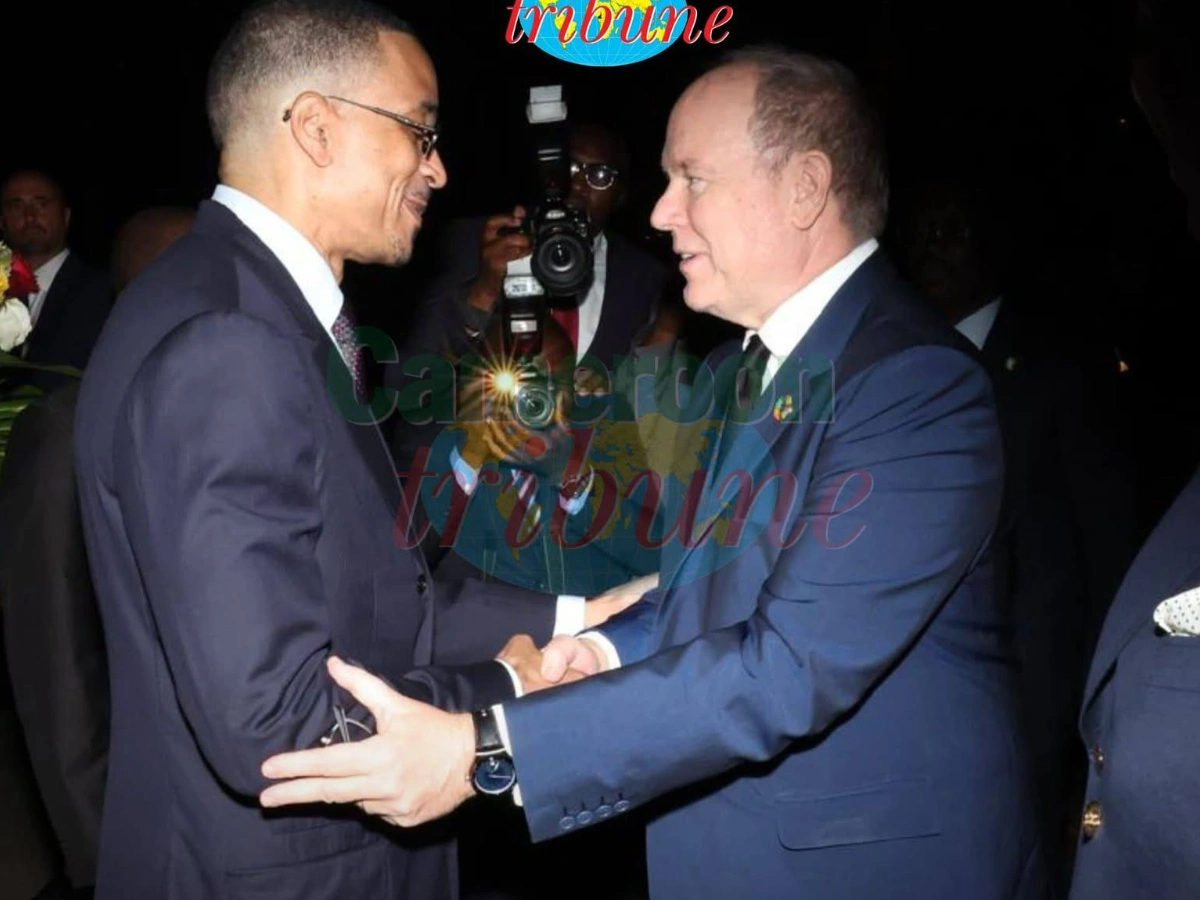
Franck Biya Monaco Dinner: Public Funds Allegedly Used for Private Event
Summary
- Franck Biya's private dinner with Prince Albert II in Monaco has sparked significant public tension in Cameroon.
- SDF activist Achille Leudjio alleged on STV that the event was entirely financed by Cameroonian public funds.
- Leudjio criticized this as an institutional deviation and a misuse of taxpayer money for a personal initiative.
- Concerns were raised about Franck Biya, who now holds the official state capacity of Vice President, engaging in "parallel diplomacy."
- Critics emphasize Cameroon's republican nature, opposing any perceived dynastic succession attempts.
Public Outcry Over Monaco Dinner
The core of the controversy centers on the assertion that this informal gathering, hosted by an individual with official state capacity, was fully underwritten by the Cameroonian public treasury.
The recent encounter between Franck-Emmanuel Biya, son of Cameroon's head of state, and Prince Albert II of Monaco has ignited significant public debate and tension across Cameroon. This high-profile meeting, particularly the financial arrangements surrounding a private dinner, has drawn sharp criticism from various quarters. Achille Leudjio, a prominent activist affiliated with the Social Democratic Front (SDF), voiced strong disapproval during an appearance on the television program 7HEBDO on STV.
Leudjio specifically condemned the perceived closeness between Biya and the Monégasque sovereign, alongside the alleged use of public funds to cover the entirety of the private dinner's expenses. This incident has been framed by critics as a profound institutional deviation, with the presidential entourage's actions sending concerning signals to the Cameroonian populace. The controversy surrounding the Franck Biya Monaco dinner public funds highlights broader questions about accountability and the appropriate use of state resources. The activist's comments underscore a growing public demand for transparency regarding the financial backing of such unofficial diplomatic engagements.
Allegations of Public Funds Misappropriation
At the heart of the current controversy are explicit allegations concerning the financing of Franck Biya's activities, particularly a gala dinner organized in honor of Prince Albert II. Achille Leudjio asserted unequivocally that this informal event was "supported from beginning to end by the public treasury," implying a direct misuse of state funds. He argued that since the gathering was a strictly personal initiative, all associated costs should have been borne by Franck Biya's own finances, rather than being passed on to Cameroonian taxpayers. This claim has fueled the Cameroon public funds controversy, raising serious questions about the oversight and allocation of national resources.
Leudjio's remarks on STV directly challenged the legitimacy of using taxpayer money for what he described as a private affair. The activist's strong stance suggests that such expenditures, if proven, could constitute a form of Franck Biya misuse state treasury resources, given his official government position. The public discourse now centers on whether the state's financial mechanisms were improperly engaged to facilitate a personal diplomatic overture.
Diplomatic Conduct and Republican Principles
The rapprochement between Franck-Emmanuel Biya and Prince Albert II of Monaco has been labeled "highly questionable" by the STV guest, primarily due to Biya's official state function as Vice President of the Republic of Cameroon. This "parallel diplomacy," conducted by an individual now within the formal governmental apparatus, has prompted widespread scrutiny regarding its legitimacy and underlying motivations. Achille Leudjio's STV comments emphasized that such high-level contacts, when undertaken by private citizens, blur the lines of official representation and accountability.
Furthermore, Leudjio forcefully reiterated Cameroon's democratic foundations, directly countering any perceived attempts to establish a dynastic succession at the nation's helm. He declared, "Cameroon is a Republic. Cameroon is the favorite dish of all Cameroonians. It is not the land title of a dynasty," underscoring the country's republican identity. The activist contended that maneuvers seemingly aimed at positioning Franck-Emmanuel Biya as a natural heir fundamentally clash with the republican nature of the nation, further intensifying the Cameroon corruption allegations.
Broader Implications for Governance and Transparency
The unfolding situation carries significant implications for governance, financial transparency, and public trust within Cameroon. The allegations of using public funds for a private event involving an official figure like Franck Biya, coupled with concerns about "parallel diplomacy," suggest a potential for institutional deviation and a lack of accountability. Such incidents can erode public confidence in the integrity of state institutions and the management of national resources.
The core of the controversy centers on the assertion that this informal gathering, hosted by an individual with official state capacity, was fully underwritten by the Cameroonian public treasury. This scenario could lead to investigations or legal actions concerning corruption or embezzlement, particularly if the claims of Franck Biya misuse state treasury funds are substantiated. Lawyers and compliance officers are likely to monitor these developments closely for their implications on financial transparency, accountability, and potential political exposure risks related to the Cameroonian government and its affiliates.
Practical Implications
This article highlights potential misuse of public funds by an individual without official state capacity, which could lead to investigations or legal actions concerning corruption or embezzlement in Cameroon. Lawyers and compliance officers should monitor developments for implications on financial transparency, accountability, and potential political exposure risks related to the Cameroonian government and its affiliates.
Source
How does this affect you?
Get an AI analysis of this article grounded in your jurisdictions, practice areas, and any policy documents you've uploaded to Wansom.
Finish Reading the Full Story and the Expert Analysis.
Wansom is AI and can make mistakes.