
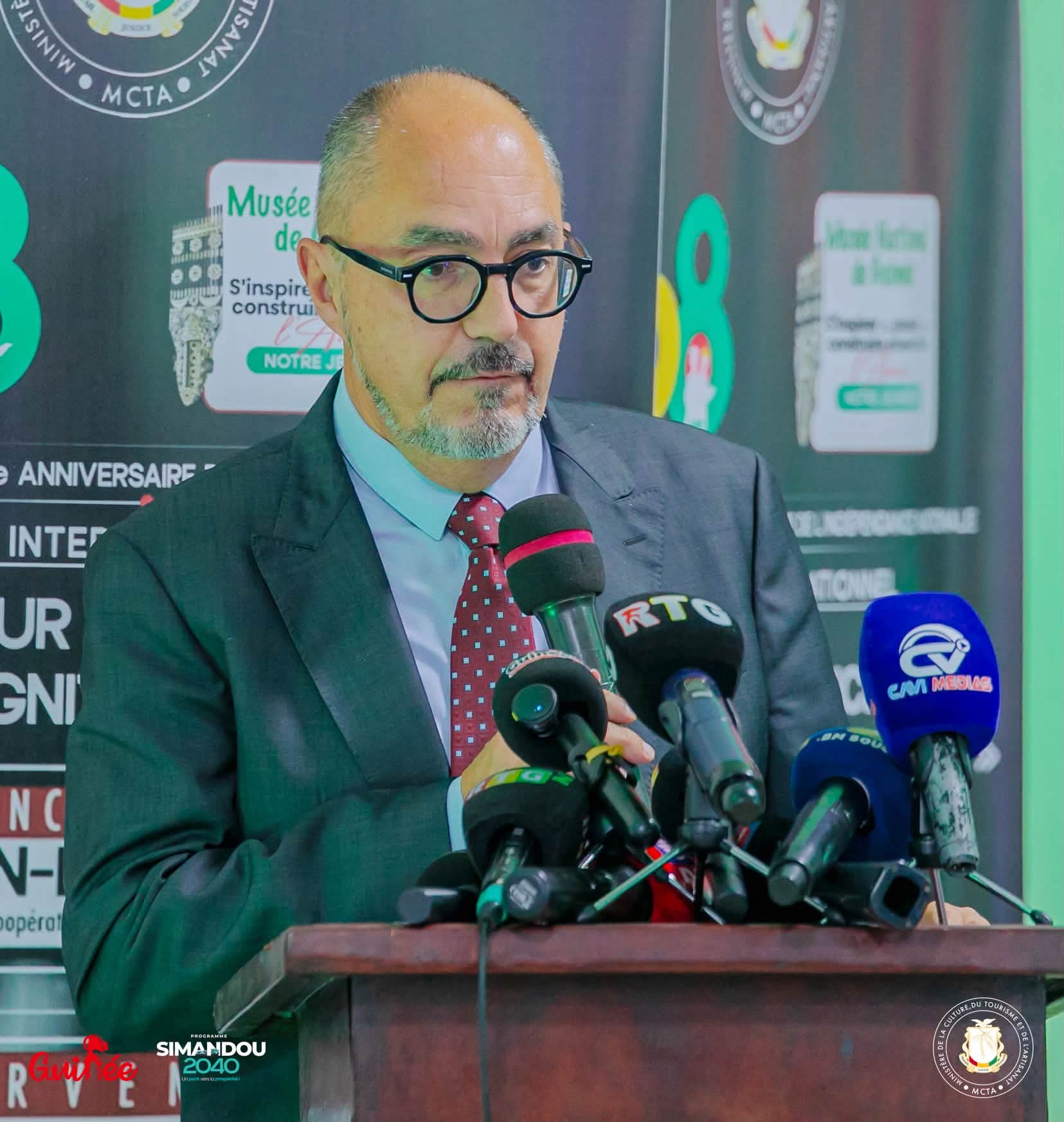
France: Pledges Guinea Cultural Goods Restitution Acceleration
Summary
- Jean-Luc Martinez, France's Ambassador for International Heritage Cooperation, spoke at the Conakry National Museum during Guinea's National Day Week.
- He reaffirmed France's commitment to accelerate the restitution of cultural goods and historical human remains to Guinea.
- This announcement signifies a crucial step in France's ongoing efforts to return patrimonial objects to their countries of origin.
A Renewed Commitment to Repatriation
This commitment by France to accelerate the return of cultural goods and human remains to Guinea signals a strengthening trend in international cultural heritage law.
During Guinea's National Day Week, a significant announcement was made regarding the future of cultural artifacts and historical human remains held by France. Jean-Luc Martinez, who serves as France's Ambassador for International Heritage Cooperation, delivered a speech at the Conakry National Museum. His address underscored Paris's unwavering dedication to the expedited return of these patrimonial objects and human remains to Guinea.
The French government's pledge to accelerate the restitution process highlights a growing recognition of the importance of cultural heritage repatriation, particularly for nations that have historically seen their artifacts removed under colonial rule. This commitment by France to accelerate the return of cultural goods and human remains to Guinea signals a strengthening trend in international cultural heritage law. The presence of a high-ranking French official like Ambassador Martinez at such a culturally significant event in Conakry further emphasizes the seriousness with which France approaches its responsibilities in this area. It also reflects a broader shift in France's approach to its historical relationship with African nations, moving towards greater cultural cooperation and reconciliation.
The Broader Landscape of Cultural Heritage Return
This specific commitment to France Guinea cultural goods restitution acceleration is not an isolated event but rather fits into a larger global movement advocating for the return of cultural property to its countries of origin. For many African nations, the repatriation of cultural heritage is seen as a crucial step in reclaiming their historical narratives and identity. The items in question often hold immense spiritual, historical, and artistic value, representing tangible links to ancestral traditions and national memory. The discussions surrounding Jean-Luc Martinez Guinea restitution efforts are therefore watched closely by other nations with similar claims.
The issue of African cultural property return to France has gained considerable momentum in recent years, prompting a re-evaluation of collections in French museums. While the source text specifically mentions Guinea, the principles and mechanisms established for this restitution could potentially set precedents for similar claims from other African nations. This ongoing process involves complex legal and ethical considerations, requiring careful negotiation and collaboration between governments and cultural institutions. The Conakry National Museum restitution efforts, as highlighted by Ambassador Martinez's visit, exemplify a concrete step in this evolving landscape of international cultural diplomacy and justice.
Implications for International Cultural Cooperation
The reaffirmation of France's commitment to accelerate the return of cultural goods and historical human remains to Guinea carries significant implications for France Africa cultural cooperation. It demonstrates a tangible effort by France to address historical injustices and foster stronger, more equitable relationships with its former colonies. Such acts of restitution can build trust and pave the way for deeper collaboration in various cultural and educational spheres, moving beyond mere diplomatic rhetoric to concrete action.
Legal professionals should monitor the specific mechanisms and agreements established, as they could set precedents for similar repatriation claims from other African nations, impacting art law, international law, and cultural property compliance. The decision to prioritize and expedite these returns underscores a recognition that cultural heritage is not merely an aesthetic object but a vital component of national identity and sovereignty. This move by France, articulated by Ambassador Martinez at the Conakry National Museum, serves as a powerful symbol of renewed partnership and mutual respect between France and Guinea, potentially influencing future international norms regarding cultural heritage.
Practical Implications
This commitment by France to accelerate the return of cultural goods and human remains to Guinea signals a strengthening trend in international cultural heritage law. Legal professionals should monitor the specific mechanisms and agreements established, as they could set precedents for similar repatriation claims from other African nations, impacting art law, international law, and cultural property compliance.
Source
Source: Per original reporting.
How does this affect you?
Get an AI analysis of this article grounded in your jurisdictions, practice areas, and any policy documents you've uploaded to Wansom.
Finish Reading the Full Story and the Expert Analysis.
Get the latest legal & regulatory intelligence in Guinea
Wansom is AI and can make mistakes.