
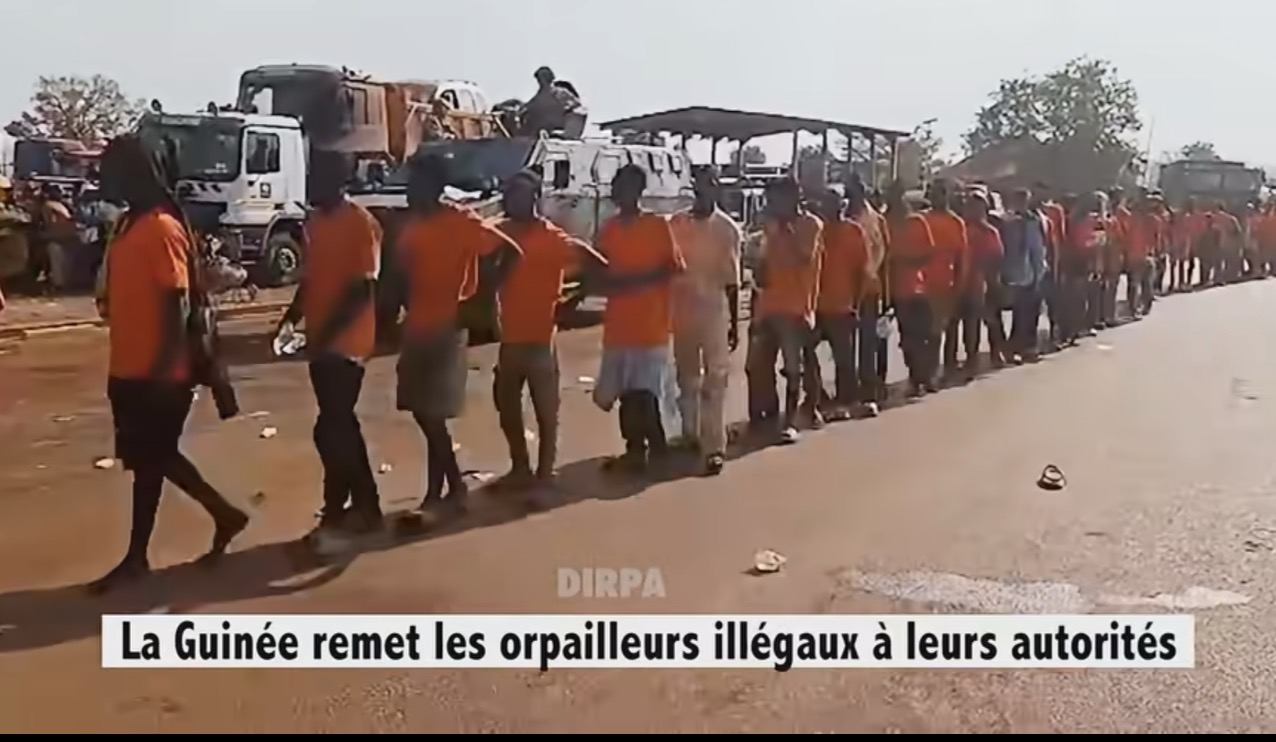
Guinée: 1,557 Orpailleurs Illegaux Graciés et Rapatriés via Kourémalé
Summary
- On November 15, 2026, a convoy transported 1,557 illegal gold miners across the Kourémalé border post in Guinea.
- These miners, of multiple nationalities, had been apprehended from various unauthorized mining sites.
- They were subsequently released following a government pardon and then repatriated.
- The Direction de l’Information et des Relations publiques des Armées (DIRPA) officially published details of this operation.
- This action suggests a potential Guinean government policy favoring mass repatriation over prosecution for illegal mining offenses.
Mass Repatriation at Kourémalé Border
This event highlights the Guinean government's approach to managing illegal mining and foreign nationals, potentially signaling a policy of mass repatriation over prosecution for certain offenses.
On Sunday, November 15, 2026, a significant logistical operation culminated in the passage of a lengthy convoy across the Kourémalé border post. This convoy was responsible for transporting 1,557 individuals, all identified as illegal gold miners, who represented a diverse array of nationalities. These foreign nationals had been previously apprehended from various unauthorized mining sites located within Guinea's territory.
Crucially, these individuals were not subjected to further legal prosecution or prolonged incarceration. Instead, they were granted release under a formal pardon issued by the authorities. Following this grâce orpailleurs Guinée, the group was then systematically escorted to the border, facilitating their rapatriement Kourémalé. The details of this extensive operation were officially confirmed and disseminated through a publication by the Direction de l’Information et des Relations publiques des Armées (DIRPA).
Government's Stance on Illegal Mining
The decision by Guinean authorities to issue a pardon to such a substantial number of foreign nationals involved in illicit mining activities, rather than pursuing criminal charges, highlights a specific policy approach. These individuals, often referred to as orpailleurs clandestins Guinée, operate outside the nation's established legal and regulatory frameworks for mineral extraction. Their activities present considerable challenges to Guinea's efforts in managing its natural resources, ensuring environmental protection, and maintaining economic stability in the mining sector.
This method of handling foreign nationals engaged in illegal resource exploitation, which combines apprehension with a subsequent pardon and repatriation, suggests a strategic choice within Guinea's broader Guinée gestion immigration illégale and politique minière Guinée. It could indicate a governmental preference for de-escalation and the physical removal of offenders from the country, potentially aiming to avoid the complexities and resource demands associated with extensive legal proceedings and long-term detention for such offenses.
Broader Implications for Policy and Enforcement
The large-scale rapatriement Kourémalé of over 1,500 illegal miners, made possible by a government pardon, represents a significant event in how Guinea manages its valuable natural resources and addresses the presence of foreign populations engaged in unauthorized activities. This action could be interpreted as a clear signal regarding the government's evolving strategy for tackling the persistent issue of illegal mining and the involvement of foreign nationals in these operations.
This event highlights the Guinean government's approach to managing illegal mining and foreign nationals, potentially signaling a policy of mass repatriation over prosecution for certain offenses. The choice to pardon and repatriate such a substantial number of individuals, rather than pursuing judicial avenues, could establish a precedent for how future similar situations are handled. It suggests a pragmatic and perhaps more efficient approach focused on border control and removal, rather than engaging in potentially lengthy and resource-intensive legal processes for non-violent resource-related infractions. This approach could influence future enforcement actions and policy developments related to illegal mining and immigration across the country.
Practical Implications
This event highlights the Guinean government's approach to managing illegal mining and foreign nationals, potentially signaling a policy of mass repatriation over prosecution for certain offenses. Lawyers advising mining companies or foreign nationals in Guinea should monitor for any formal policy changes or increased enforcement actions related to illegal mining or immigration.
Source
How does this affect you?
Get an AI analysis of this article grounded in your jurisdictions, practice areas, and any policy documents you've uploaded to Wansom.
Finish Reading the Full Story and the Expert Analysis.
Get the latest legal & regulatory intelligence in Guinea
Wansom is AI and can make mistakes.