
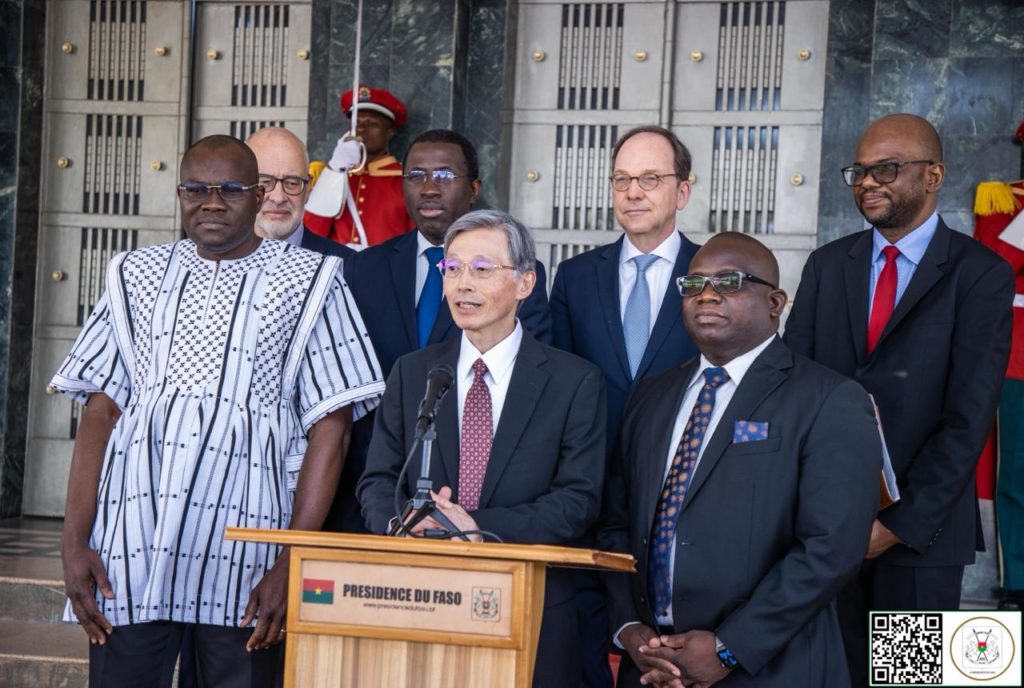
FMI: Burkina Faso Must Boost Revenue Mobilisation Efforts
Summary
- The International Monetary Fund (FMI) has urged Burkina Faso to strengthen its revenue mobilization.
- This recommendation is a key finding of the FMI's annual 2026 report.
- The call comes amidst increasing pressure on public finances due to international debt, geopolitical tensions, and declining development aid.
- The FMI emphasizes mobilizing domestic resources and controlling public spending globally.
IMF Urges Fiscal Strengthening in Burkina Faso
The FMI's explicit recommendation for Burkina Faso to strengthen its revenue mobilization efforts signals a likely trajectory towards significant policy adjustments.
The International Monetary Fund (FMI) has issued a clear call for Burkina Faso to intensify its efforts in revenue mobilization. This recommendation comes amidst significant budgetary pressures facing the nation, as detailed in the FMI's annual report for 2026. The report underscores the urgent need for the West African country to bolster its financial resilience by enhancing domestic resource generation.
This directive from the FMI is a central finding of its comprehensive 2026 assessment, which specifically addresses the fiscal landscape of Burkina Faso. The institution's emphasis on strengthening the FMI Burkina Faso mobilisation recettes highlights a critical area for policy focus, aiming to equip the government with the necessary financial capacity to navigate current economic challenges. The call is a direct response to the mounting strain observed on public finances.
Global Headwinds and Domestic Fiscal Strain
Burkina Faso's budgetary challenges are not isolated, but rather unfold within a complex global environment characterized by several compounding factors. The international arena is currently marked by increasing levels of public debt, which places constraints on national economies worldwide. Concurrently, persistent geopolitical tensions contribute to economic uncertainty and can disrupt trade and investment flows, further complicating fiscal management.
Adding to these global headwinds is a noticeable decline in development aid, a crucial external funding source for many developing nations. These international dynamics collectively exert considerable pressure on public finances, making it imperative for countries like Burkina Faso to look inward for sustainable financial solutions. The FMI's broader strategic focus, as articulated in its 2026 report, centers on two key pillars: the robust mobilization of domestic resources and stringent control over public expenditures. This dual approach is deemed essential for countries to maintain fiscal stability in the face of such pervasive challenges.
Anticipating Policy Shifts and Legal Implications
The FMI's explicit recommendation for Burkina Faso to strengthen its revenue mobilization efforts signals a likely trajectory towards significant policy adjustments. Given the institution's influence, this call for enhanced fiscalité Burkina Faso FMI is expected to translate into concrete governmental actions aimed at increasing state revenues. Such measures could encompass a range of initiatives, including the introduction of new taxes, the revision of existing tax rates, or a more rigorous enforcement of tax compliance across various sectors.
For legal and compliance professionals operating within Burkina Faso, this development necessitates proactive engagement. The emphasis on réformes fiscales Burkina Faso implies that businesses and individuals should anticipate potential legislative changes designed to broaden the tax base or improve collection efficiency. Monitoring upcoming legal frameworks and regulatory updates will be crucial for advising clients on the potential impacts to their financial planning, operational costs, and overall compliance obligations. The FMI's assessment, particularly its FMI rapport 2026 Burkina Faso, serves as an important indicator of the fiscal direction the nation is likely to pursue in the coming years.
Practical Implications
Lawyers and compliance officers in Burkina Faso should anticipate potential tax reforms, increased fiscal scrutiny, or new levies following the IMF's call for strengthened revenue mobilization. This necessitates monitoring upcoming legislative changes to advise clients on potential impacts to their financial planning and compliance obligations.
Source
How does this affect you?
Get an AI analysis of this article grounded in your jurisdictions, practice areas, and any policy documents you've uploaded to Wansom.
Finish Reading the Full Story and the Expert Analysis.
Get the latest legal & regulatory intelligence in Burkina Faso
Wansom is AI and can make mistakes.