
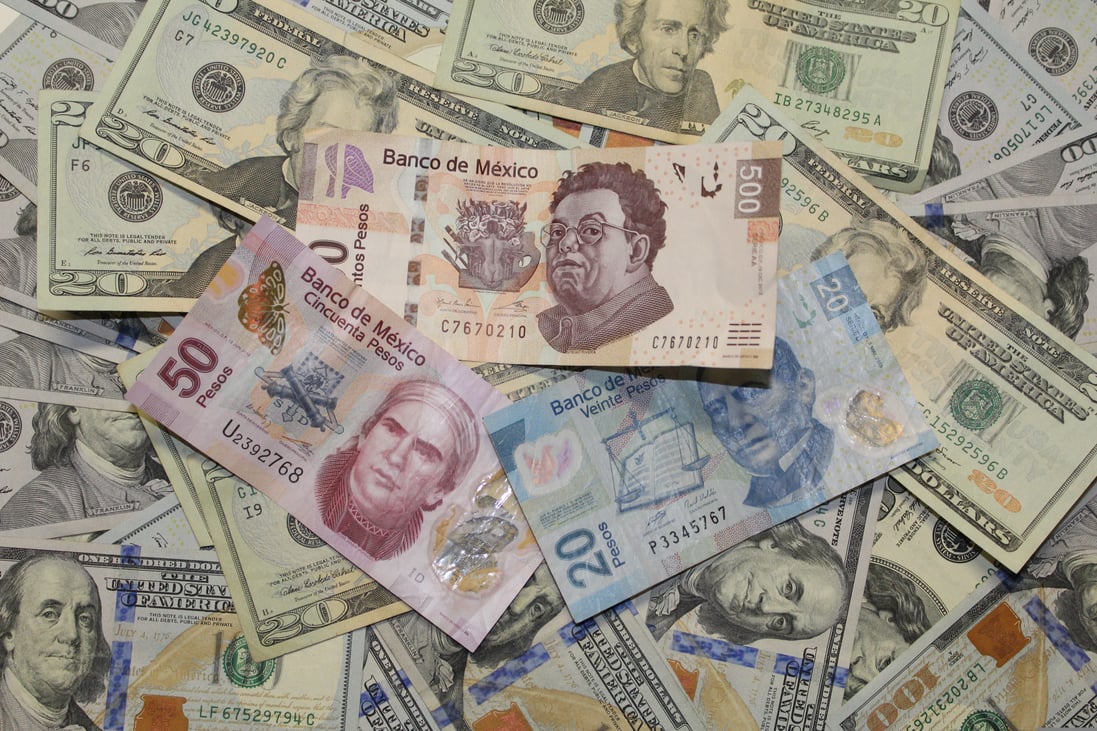
Fed Ends Directo a Mexico Program After 20 Years
Summary
- The Directo a Mexico program, a joint remittance service by the Federal Reserve and Bank of Mexico, ceased operations on Friday.
- The Federal Reserve cited a steep decline in transaction volumes and diminished market relevance as the reason for ending the program.
- Remittances are vital to Mexico's economy, contributing 3.5% to GDP and over 10% in some states, with the program's decline linked to U.S. immigration policies and the appreciating peso.
- Transaction volumes through Directo a Mexico saw significant fluctuations, dropping from over $30 million monthly to as low as $1.7 million before its termination.
- The U.S. is exploring new payment systems like FedNow for international business transfers, while remittances increasingly shift to virtual platforms.
Cessation of Directo a Mexico Program
The Federal Reserve cited a significant reduction in transaction volumes as the primary justification for discontinuing the program, attributing it to a diminished market relevance.
The Directo a Mexico program, a joint initiative of the Federal Reserve and Mexico’s central bank, the Bank of Mexico, concluded its operations on Friday. This service, which facilitated both remittances and pension payments, had been in place since 2003, adopting its current name in 2005. The Federal Reserve had announced its decision to discontinue its FedGlobal ACH Payments to Mexico, the underlying clearinghouse for the Directo a Mexico cross-border program, in November 2025. Concurrently, the Fed also ceased its similar service to Panama.
This US Mexico remittance service allowed individuals to transfer U.S. dollars through participating banks and credit unions to bank accounts in Mexico, with recipients receiving the funds in pesos the following day. The program utilized the competitive interbank exchange rate and imposed a fee on the sender, but not on the recipient. The Bank of Mexico indicated that the program was initially established primarily to enable U.S. retirees to receive government pensions. The Federal Reserve cited a significant reduction in transaction volumes as the primary justification for discontinuing the program, attributing it to a diminished market relevance.
Economic Impact and Policy Context
Remittances serve as a crucial economic engine for Mexico, contributing approximately 5% to total consumption and 3.5% to the nation's Gross Domestic Product. In several Mexican states, including Michoacán, Oaxaca, Zacatecas, and Chiapas, these cross-border financial transfers represent over 10% of their respective GDPs, making them particularly vulnerable to any decline in these funds. The purchasing power of recipients has also been negatively affected by factors such as the appreciation of the Mexican peso, which persisted until September, alongside broader inflationary pressures.
Gabriela Siller Pagaza, director of economic and financial analysis at Banco BASE, noted that while remittances have indeed decreased, the reduction is not substantial enough to warrant a specific public policy response. She speculated that the U.S. government might seek to lower incentives for individuals to travel to the United States for unauthorized work by reducing remittance flows. This perspective aligns with the impact of strict immigration policies, which have been linked to a lack of job opportunities for people of Mexican origin in the U.S., prompting some to return to Mexico. Notably, a 1% remittance tax implemented by the Trump administration in January under the One, Big, Beautiful Bill Act did not affect Directo a Mexico users, as it applied only to cash, money orders, or cashier’s checks.
Declining Program Usage and Future Outlook
Data from the Bank of Mexico illustrates a volatile trend in the Directo a Mexico program's usage. In recent years, users typically sent between $33 million and $41 million monthly through more than 40,000 transactions. However, a sharp decline occurred from January to February of this year, with transfers plummeting to $6.2 million across approximately 2,000 transactions. While there was a rebound in March, with users sending around $40 million through 46,000 transactions, a significant drop was observed in April, where only $1.7 million was transferred via about 600 transactions. This lower monthly total then largely persisted until September, the final month for which the Bank of Mexico collected data.
The termination of this key US Mexico payment channel underscores a broader shift in how cross-border financial transfers are conducted. The U.S. government is currently testing its FedNow service with early adopters for international business-level fund transfers, indicating a move towards modernizing payment infrastructure. The decline in traditional remittance services like Directo a Mexico also reflects an increasing migration of transactions to virtual payment platforms, suggesting that individuals and businesses involved in US-Mexico cross-border transactions will need to adapt to new, compliant remittance channels.
Practical Implications
Lawyers and compliance officers should advise clients, particularly those involved in US-Mexico cross-border transactions or supporting families in Mexico, to identify and transition to alternative, compliant remittance channels following the termination of the Directo a Mexico program. This development may also signal broader shifts in US policy regarding cross-border financial flows, necessitating a review of compliance strategies for businesses operating in this space.
Source
How does this affect you?
Get an AI analysis of this article grounded in your jurisdictions, practice areas, and any policy documents you've uploaded to Wansom.
Finish Reading the Full Story and the Expert Analysis.
Get the latest legal & regulatory intelligence in United States
Wansom is AI and can make mistakes.