
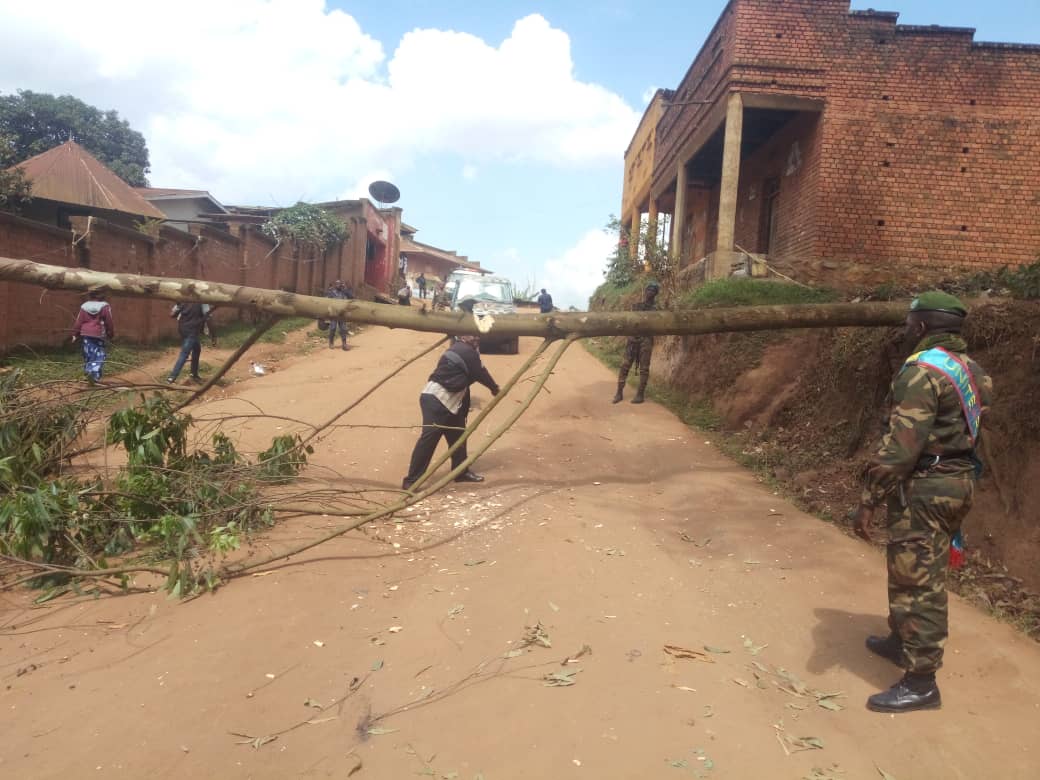
FEC Congo: RN1 Illegal Barrier Suppression Eases Business Burden
Summary
- The central government has ordered the suppression of illegal barriers on the RN1 in the Grand Bandundu region.
- The Fédération des entreprises du Congo (FEC) welcomed this decision on August 25, anticipating reduced transport costs and easier goods circulation.
- Prior to their removal, agents from the PCR and PCR illegally collected funds ranging from 1,000 to 40,000 Congolese francs from vehicles.
- The FEC has called for these illegally collected funds to be reimbursed to the Public Treasury, noting the absence of DGRAD agents at the checkpoints.
- Local FEC president Phifa Mikabar criticized provincial authorities in Kwilu, Kwango, and Mai-Ndombe for their past inaction on these issues.
Government Acts on Illegal Roadblocks
The removal of these illicit structures is anticipated to streamline the movement of goods, thereby contributing to a reduction of transport-related expenses and easing the financial pressures on traders operating across the Grand Bandundu area.
The central government in the Democratic Republic of Congo has taken decisive action to dismantle illegal checkpoints along the Route nationale numéro 1 (RN1) within the Grand Bandundu region. This significant development, announced on August 25, has been met with strong approval from the business community. The Fédération des entreprises du Congo (FEC), representing economic operators in the area, publicly welcomed the suppression of these unauthorized barriers, characterizing the move as a substantial alleviation of burdens for local enterprises. Phifa Mikabar, who serves as the local president of the FEC, extended gratitude to national authorities for implementing this crucial decision. The removal of these illicit structures is anticipated to streamline the movement of goods, thereby contributing to a reduction of transport-related expenses and easing the financial pressures on traders operating across the Grand Bandundu area.
Pervasive Illegal Collections Uncovered
Before their removal, these DRC illegal road checkpoints were sites of widespread unauthorized financial collections. The FEC highlighted that agents from both the Police de circulation routière (PCR) and the Police de circulation routière (PCR) were routinely involved in collecting funds without issuing the required perception notes. Phifa Mikabar specified that the amounts demanded varied considerably depending on the type of vehicle. For instance, motorcycles were typically charged 1,000 Congolese francs, while larger vehicles faced demands of up to 40,000 Congolese francs, an amount equivalent to approximately 18 US dollars. A critical aspect of these illicit activities was the absence of representatives from the Direction générale des recettes administratives, judiciaires, domaniales et de participations (DGRAD) at the affected barriers, raising serious questions about the ultimate destination and accountability of these collected revenues.
Economic Relief and Past Inaction
The suppression of the FEC Congo illegal barriers RN1 suppression is expected to bring considerable economic relief to the Grand Bandundu region. By facilitating the unhindered flow of commerce, the measure directly addresses long-standing issues that have inflated operational costs for businesses. The FEC's local president, Phifa Mikabar, underscored that the dismantling of these Route nationale numéro 1 barriers would not only simplify the logistics of goods transportation but also significantly contribute to Grand Bandundu transport costs reduction, making trade more viable for local merchants. However, Mikabar also expressed regret over what he termed the "inaction" of provincial authorities in Kwilu, Kwango, and Mai-Ndombe—the three provinces comprising the Grand Bandundu space—despite numerous prior complaints from economic operators regarding harassment along this vital transport artery.
Calls for Accountability and Reimbursement
In light of the widespread illegal collections, the Fédération des entreprises du Congo has issued a strong demand for accountability. The organization specifically urged the Police de circulation routière (PCR) and the Police de circulation routière (PCR) to remit all funds collected without proper perception notes directly to the Public Treasury. This call for reimbursement underscores the gravity of the illegal collections and signals a push for greater transparency and adherence to financial regulations. The FEC's inquiry into the destination of these revenues, particularly given the noted absence of DGRAD agents, further emphasizes the need for a thorough investigation into the PCR PCR DGRAD illegal collections and the potential for redress for past grievances. This development could indicate a heightened focus on combating corruption in road transport by authorities, potentially opening new avenues for businesses to seek redress for illegally collected funds.
Practical Implications
Lawyers advising businesses operating in the Grand Bandundu region should inform clients of reduced operational risks and potential cost savings related to goods transport on RN1. Compliance officers should note the call for reimbursement of illegally collected funds, which may indicate a new avenue for seeking redress or a heightened focus on combating corruption in road transport by authorities.
Source
Source: Original reporting via {source}
How does this affect you?
Get an AI analysis of this article grounded in your jurisdictions, practice areas, and any policy documents you've uploaded to Wansom.
Wansom is AI and can make mistakes.