
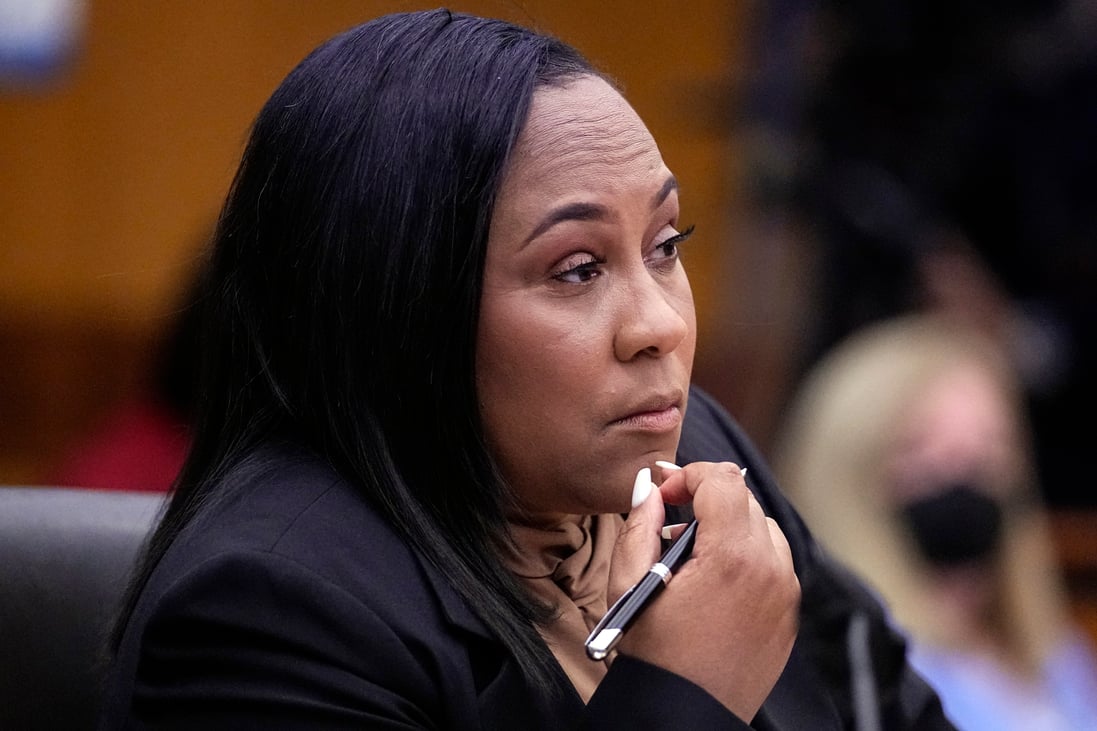
Fani Willis: Seeks to Rejoin Attorney Fees Challenge after Disqualification
Summary
- Fulton County DA Fani Willis is seeking to rejoin the legal proceedings concerning attorney fees, which arose from the now-dismissed Trump racketeering case.
- Willis was previously disqualified from the criminal case by the Georgia Court of Appeals due to a conflict of interest, a decision upheld by Judge Scott McAfee.
- She argues that denying her office the right to contest these fees violates due process, as the funds would come from her budget.
- The legal fees are sought under Georgia's Senate Bill 244, enacted in May 2025, which awards attorney fees to defendants if a prosecutor is disqualified for misconduct and the case is dismissed.
- Judge McAfee previously ruled that Fulton County, as the primary funder, could represent its interests in the fee dispute, while defendants argue the state is already represented by Peter Skandalakis, who oversaw the dismissal of the criminal case.
Fulton DA Seeks Reinstatement to Challenge Fees
She contends that preventing her office from engaging in this litigation infringes upon "fundamental notions of due process," thereby denying her the chance to be heard or to challenge the reasonableness of the requested attorney fees, which would be drawn from her departmental budget.
Fulton County District Attorney Fani Willis has formally requested permission to rejoin the legal proceedings concerning a claim for nearly $17 million in legal fees, which arose from the now-dismissed racketeering case against former President Donald Trump. This appeal was made to the same court that previously removed her from the case. The request comes after Willis's office was deemed "wholly disqualified" due to a conflict of interest by the Georgia Court of Appeals.
In March, Fulton County Superior Court Judge Scott McAfee had explicitly denied Willis the opportunity to participate further, ruling that her return to defend prior charging decisions would compromise public confidence in the integrity of the judicial process. Despite this prior ruling, Willis argued before a Georgia Court of Appeals panel that the current matter, concerning attorney fees, is distinct and necessitates her direct involvement. She contends that preventing her office from engaging in this litigation infringes upon "fundamental notions of due process," thereby denying her the chance to be heard or to challenge the reasonableness of the requested attorney fees, which would be drawn from her departmental budget.
Legal Framework for Attorney Fees
The backdrop to this dispute is Georgia's Senate Bill 244, a new law enacted in May 2025, subsequent to Willis's removal from the case. This legislation mandates the award of reasonable attorney’s fees and costs to a criminal defendant if a prosecutor is disqualified for misconduct and the case is subsequently dismissed. The law also includes provisions for individuals who have been wrongfully convicted, guaranteeing them $75,000 for each year of unjust imprisonment.
During the proceedings, Senior Assistant District Attorney Donald Wakeford highlighted that Judge McAfee's initial ruling did not explicitly define whether a disqualified prosecutor's office retains any role in such fee-related proceedings. Wakeford also asserted that the interests of Fulton County taxpayers are at risk, as the funds in question are earmarked for the district attorney’s prosecution of criminal offenses, and characterized the new Georgia law as having "created a mess." Judge J. Wade Padgett, however, challenged Willis's due process argument, stating, "Your briefing suggests that you are entitled to some process being the district attorney, but I think we’ve held repeatedly that government is not entitled to due process."
Representation and Taxpayer Interests
The question of who adequately represents the interests of Fulton County and its taxpayers remains central to the debate. Judge Kenneth Hodges questioned why the district attorney’s interests would not be sufficiently represented by Fulton County itself, given its financial responsibility. Judge McAfee’s prior order stipulated that Fulton County, as a corporate entity, could participate in the attorney fee dispute. He reasoned that the county provides the "overwhelming source of funding" for the District Attorney’s office and possesses a unique interest in safeguarding its role as the primary prosecuting authority for all felony conduct within its jurisdiction.
Furthermore, Judge McAfee concluded that the county would offer a distinct perspective compared to the state, leveraging its understanding of budgetary matters, local governance, and the structural relationship between itself and the District Attorney’s office. Conversely, Donald Trump and the 13 other defendants in the sprawling racketeering case, which was initiated by Willis in August 2023 and has since been dismissed, contend that the Fulton County DA’s interests are already represented. They argue that Peter Skandalakis, the executive director of the Prosecuting Attorneys’ Council, who assumed the role of district attorney pro tempore following Willis’s removal, represents the state of Georgia, which encompasses Fulton County. Skandalakis ultimately dropped all charges last year, citing the interests of justice and a sitting president’s legal immunity.
Practical Implications
Lawyers in Georgia should monitor the outcome of Fani Willis's attempt to rejoin the case, as it will clarify the standing of a disqualified prosecutor's office to challenge financial awards under the new Senate Bill 244. This development sets a precedent for how attorney's fees are handled when prosecutorial misconduct leads to disqualification, impacting potential financial liabilities for state and county entities.
Source
Source: Original reporting via CN
How does this affect you?
Get an AI analysis of this article grounded in your jurisdictions, practice areas, and any policy documents you've uploaded to Wansom.
Finish Reading the Full Story and the Expert Analysis.
Get the latest legal & regulatory intelligence in United States
Wansom is AI and can make mistakes.