
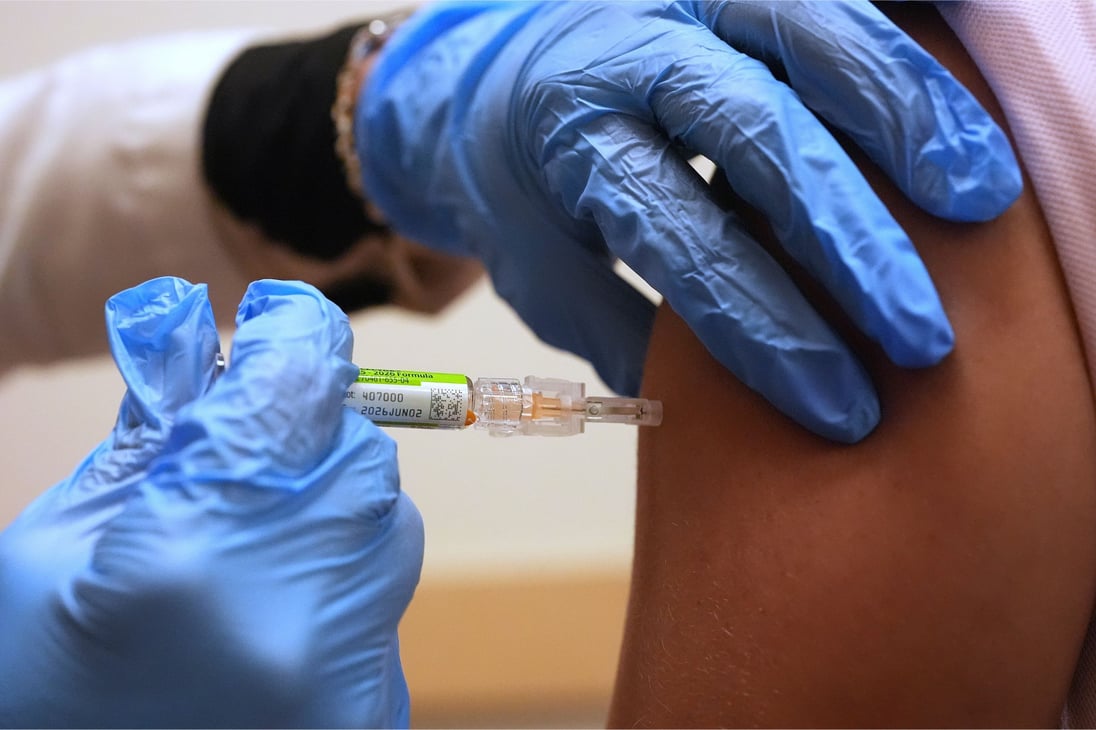
Supreme Court: Considers Maine Vaccine Religious Exemption Challenge
Summary
- A Maine father, James Childs, has asked the Supreme Court to grant a religious exemption from the state's school vaccine mandate for his son.
- Childs claims the mandate violates his Christian faith by making him complicit in abortion due to the historical use of fetal cell lines in vaccine development.
- The conservative nonprofit We the Patriots supports the appeal, citing recent Supreme Court decisions on parental rights and religious development, including Mahmoud v. Taylor.
- The Supreme Court previously rejected similar arguments from We the Patriots regarding California's vaccine mandates but a more recent ruling on parental disclosure of student gender identity is now being leveraged.
- This legal challenge emerges as the U.S. recently lost its measles-elimination status, highlighting the tension between religious freedom and public health.
The Challenge to Maine's Mandate
The Supreme Court's consideration of this Maine vaccine religious exemption case could therefore have significant implications, potentially reshaping the balance between individual religious freedom, parental autonomy, and state authority in public health matters, particularly concerning school immunization requirements.
A father from Maine has brought a significant challenge to the Supreme Court, seeking an exemption from the state's school immunization requirements based on his religious beliefs. James Childs, whose eighth-grade son is affected, contends that Maine's vaccine mandate directly conflicts with his Christian faith. This legal action, filed on Tuesday, requests that the justices grant an opt-out for him and other parents who hold similar religious objections.
Childs asserts that complying with the state's vaccination law would compel him to violate his deeply held religious convictions. As a direct result of this mandate, his son is currently unable to attend public, private, or religious schools in Maine. Consequently, Childs and his fiancée, both employed, are bearing the financial burden of remote instruction for their son, a situation his legal representatives describe as "insulting and legally unsound" and one that leaves him "nowhere to send his son." The conservative nonprofit We the Patriots is supporting Childs in this appeal, framing it as a matter of fundamental First Amendment rights.
Legal Precedents and Arguments
The legal arguments presented by Childs and We the Patriots hinge on recent Supreme Court decisions concerning First Amendment protections and parental rights. Central to their claim is the assertion that authorizing vaccinations for his son would implicate Childs in abortion, which he views as an "unconscionable sin in his faith." This argument stems from the fact that some vaccines utilize human cell cultures derived from two fetuses aborted in the 1960s for growing viruses, a connection the American Academy of Pediatrics clarifies does not involve new aborted fetuses and that vaccines themselves do not contain fetal cells.
We the Patriots previously filed a similar emergency application for California parents, seeking immunization exemptions based on this attenuated connection to abortions, which the Supreme Court ultimately rejected. However, the current appeal cites the 2025 Supreme Court ruling in Mahmoud v. Taylor, which mandated that Maryland schools offer opt-outs to religious parents regarding LGBTQ-themed classroom materials. Childs' legal team argues that the principle established in Mahmoud, which recognized that policies "substantially interfer[e]" with parents' ability to direct their children's "religious development" and trigger strict scrutiny, should extend to state-mandated physical interventions like vaccinations, asserting that "Nothing in Mahmoud confines that rule to instruction or ‘inculcation.’"
Evolving Parental Rights and Public Health
Further bolstering their case, We the Patriots points to a more recent Supreme Court emergency docket decision from March. This ruling compelled California schools to disclose confidential information about students' gender identity to parents without the students' consent. The organization interprets this decision as affirming that parental rights encompass the authority to make judgments about a child's mental health, and by extension, physical interventions. They contend that the First Amendment safeguards parents from being "displaced or punished for making a religious judgment about a state-required physical intervention on his child," emphasizing that parental rights extend to "choices that parents wish to make for their children outside the home."
This appeal arrives amidst a concerning public health backdrop, as an independent commission within the World Health Organization recently revoked the United States' measles-elimination status. This revocation followed more than a year of uninterrupted measles spread, underscoring the critical role of robust immunization programs. The Supreme Court's consideration of this Maine vaccine religious exemption case could therefore have significant implications, potentially reshaping the balance between individual religious freedom, parental autonomy, and state authority in public health matters, particularly concerning school immunization requirements.
Practical Implications
This case represents a significant legal challenge to state-level school vaccine mandates based on religious freedom and parental rights, leveraging recent Supreme Court emergency docket decisions. Lawyers advising educational institutions, public health agencies, or families should monitor this appeal closely, as a favorable ruling could establish new precedents for religious exemptions to public health requirements and expand the scope of parental rights in educational settings.
Source
How does this affect you?
Get an AI analysis of this article grounded in your jurisdictions, practice areas, and any policy documents you've uploaded to Wansom.
Finish Reading the Full Story and the Expert Analysis.
Get the latest legal & regulatory intelligence in United States
Wansom is AI and can make mistakes.