
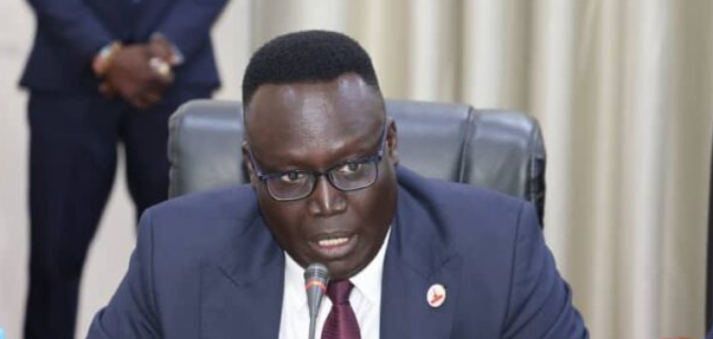
Juba City Council: Property Tax Cut Proposal to Boost Revenue
Summary
- Juba City Council has passed the Property Tax Bylaw 2026, formalizing the existing property tax system.
- Mayor Christopher Wani Sarafino stated that the Property Tax Bylaw 2026 aims to strengthen the legal framework for property taxation and improve service delivery.
- The council also advocates for a South Sudan tax harmonization proposal to streamline collections across national, state, and local governments.
- This Christopher Wani Sarafino tax plan seeks to make payments more predictable for businesses and ensure all authorities receive their due revenues.
- The Juba property tax formalization and broader coordination efforts are expected to be considered as amendments to existing law.
Juba's Proposed Property Tax Reduction
For legal professionals and compliance officers advising businesses and property owners in Juba, these proposed legislative changes warrant close monitoring.
The Juba City Council has passed the Property Tax Bylaw 2026, which formalizes the existing property tax system. This bylaw aims to strengthen the legal framework for property taxation and improve the delivery of municipal services in the capital. Mayor Christopher Wani Sarafino announced this initiative on Saturday during a networking event for media and opinion leaders, organized by the council.
Under the current system, the rental value tax is calculated as one-twelfth of the annual rental income, which translates to approximately 8.3%. The Mayor indicated that the Property Tax Bylaw 2026 formalizes the existing property tax system within the relevant legislation. He articulated that a more affordable tax burden could motivate a larger number of property owners to fulfill their obligations, potentially leading to an overall increase in government revenue by expanding the tax base. The underlying principle is that if the tax is perceived as manageable, more individuals will be willing to pay.
A Call for Coordinated Tax Collection
Beyond the specific Juba property tax rate change, Mayor Sarafino also highlighted a broader vision for fiscal management, advocating for enhanced coordination among national, state, and local government tax collection efforts. He pointed out that businesses in South Sudan frequently contend with multiple collection attempts from various governmental bodies, creating an undue administrative burden. This issue extends beyond just the number of taxes, encompassing the complexity of engaging separately with different authorities.
The Mayor emphasized the critical need for a "harmonization of our collection" to simplify the tax landscape. Under the envisioned South Sudan tax harmonization proposal, traders would submit their payments to the different levels of government through a unified, coordinated mechanism. This streamlined approach aims to significantly reduce repetitive visits from tax collectors, ensuring that once a payment is made, businesses are not approached again until the following year, with follow-ups reserved exclusively for identified non-compliant entities. This Christopher Wani Sarafino tax plan has garnered support, with the Central Equatoria state government also actively promoting tax harmonization to ease the burden on traders.
Strategic Approach to Local Taxation
The Juba City Council currently exercises restraint in its tax collection practices, gathering only about seven of the eighteen taxes and fees legally available under Section 74 of the Local Government Act. This legislative provision outlines nine distinct taxes and nine specific fees. Mayor Sarafino explained that the council deliberately limits its collections to avoid imposing excessive financial strain on residents and local businesses.
This strategic approach to taxation is rooted in the understanding that decisions regarding levies must factor in prevailing economic conditions and the community's capacity to pay. The Mayor underscored that tax structures are developed based on the country's economic state and the living conditions of its populace. While the council possesses the authority to introduce additional taxes and fees, it plans to do so gradually, in alignment with Juba’s economic growth and infrastructure development, rather than implementing all legally permissible charges at once. Imposing all available taxes simultaneously, he cautioned, would deter business activity within the city.
Anticipating Legislative Impact
For legal professionals and compliance officers advising businesses and property owners in Juba, these proposed legislative changes warrant close monitoring. The Juba City Council's Property Tax Bylaw 2026 formalizes the existing property tax system, which could impact financial planning and compliance strategies for property owners. Similarly, the broader South Sudan tax harmonization proposal, championed by Mayor Christopher Wani Sarafino, promises to introduce a more predictable and less cumbersome tax payment system.
This coordinated mechanism is designed to ensure that national, state, and local authorities receive their legally mandated revenues while simultaneously making tax obligations clearer and more manageable for businesses. The shift from fragmented collections to a unified approach could significantly impact operational costs and administrative burdens for enterprises operating within Juba. Therefore, understanding the legislative progress of both the Juba rental value tax formalization and the comprehensive tax harmonization initiative is crucial for effective legal and financial guidance in the region.
Practical Implications
Lawyers and compliance officers advising businesses and property owners in Juba should closely monitor the legislative progress of this proposed property tax reduction and the broader tax harmonization initiative. These changes could significantly impact tax liabilities, compliance processes, and financial planning in South Sudan.
Source
How does this affect you?
Get an AI analysis of this article grounded in your jurisdictions, practice areas, and any policy documents you've uploaded to Wansom.
Wansom is AI and can make mistakes.