
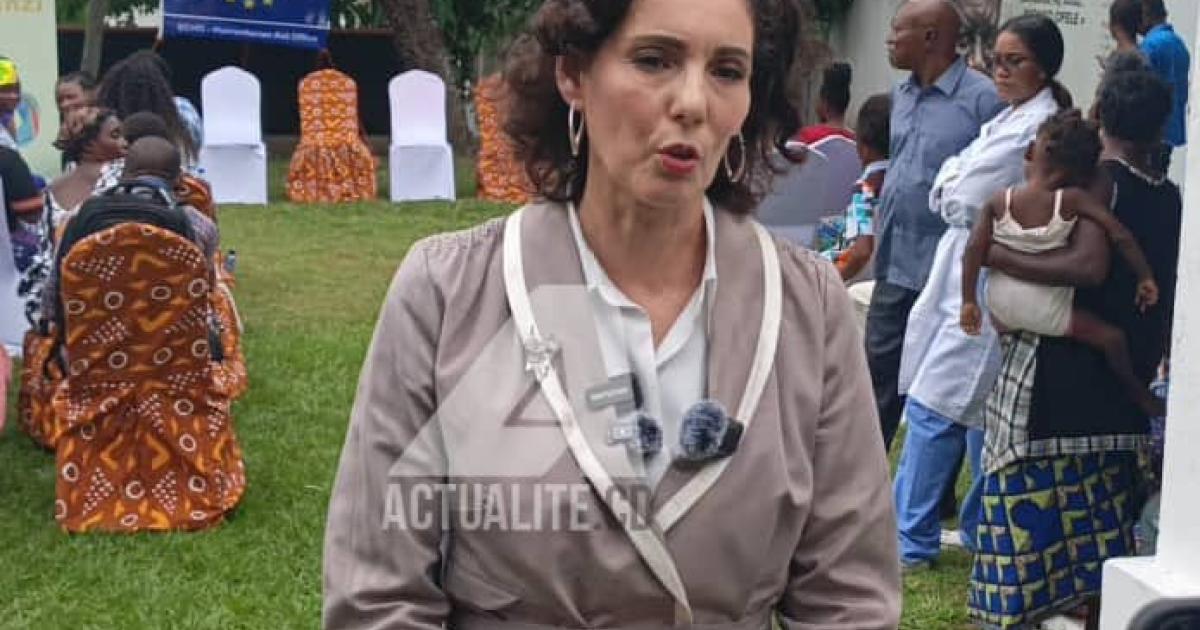
EU Commissioner Highlights International Humanitarian Law for DR Congo Peace
In New York, Hadja Lahbib, the European Commissioner for Equality, Preparedness, and Management, underscored the critical importance of humanitarian diplomacy in fostering peace in the Eastern Democratic Republic of Congo, specifically highlighting its role in upholding international humanitarian law. This statement, made on September 23, 2026, by a high-ranking European Union official, emphasizes a strategic approach to conflict resolution and protection of civilians in a region long plagued by instability and armed conflict. Her remarks position humanitarian diplomacy as a key instrument for addressing the complex challenges in the DRC, advocating for a non-military, dialogue-based approach to mitigate suffering.
This emphasis on humanitarian diplomacy carries significant implications for legal practitioners, international organizations, and governments involved in the DRC. It signals a recognition by a major international actor, the European Union, that traditional diplomatic or military interventions alone may be insufficient to achieve lasting peace and protect human rights in conflict zones. For legal professionals, it highlights the growing intersection of international relations, humanitarian aid, and international humanitarian law (IHL), requiring a multidisciplinary approach to conflict resolution. It underscores the need for a nuanced understanding of how diplomatic efforts can be leveraged to ensure compliance with IHL, facilitate access for humanitarian assistance, and protect vulnerable populations. The key parties involved are Hadja Lahbib, representing the European Union, and implicitly, the various state and non-state actors operating in Eastern DRC whose conduct is governed by international humanitarian law. The United Nations, as the host of the event in New York, also plays a contextual role in facilitating such discussions on international peace and security.
The legal context for humanitarian diplomacy in Eastern DRC is firmly rooted in international humanitarian law (IHL), also known as the law of armed conflict. This body of law, primarily codified in the Geneva Conventions and their Additional Protocols, aims to limit the effects of armed conflict for humanitarian reasons. It governs the conduct of hostilities, protects persons not participating in hostilities (civilians, wounded, prisoners of war), and regulates the means and methods of warfare, establishing clear obligations for all parties to a conflict. Humanitarian diplomacy, in this context, involves advocating for adherence to these rules, negotiating safe passage for aid, and promoting respect for human rights amidst conflict, often through engagement with both state and non-state armed groups. For attorneys and legal professionals, particularly those specializing in international law, human rights, or conflict resolution, this development reinforces the importance of IHL and the mechanisms for its enforcement and promotion. Practitioners should monitor diplomatic initiatives and their impact on the legal landscape in conflict-affected regions. Businesses operating in or near conflict zones should be acutely aware of their responsibilities under IHL and human rights law, and understand how humanitarian diplomacy can influence the operational environment, including access to affected populations and the stability of supply chains. The excerpt does not report any specific legal rulings or outcomes, but rather a policy stance and advocacy for a particular approach.
How does this affect you?
Get an AI analysis of this article grounded in your jurisdictions, practice areas, and any policy documents you've uploaded to Wansom.
Finish Reading the Full Story and the Expert Analysis.
Get the latest legal & regulatory intelligence in DR Congo
Wansom is AI and can make mistakes.