
DR Congo Government: Judicial Inquiry Launched Into Lubumbashi Appeals Court President's M
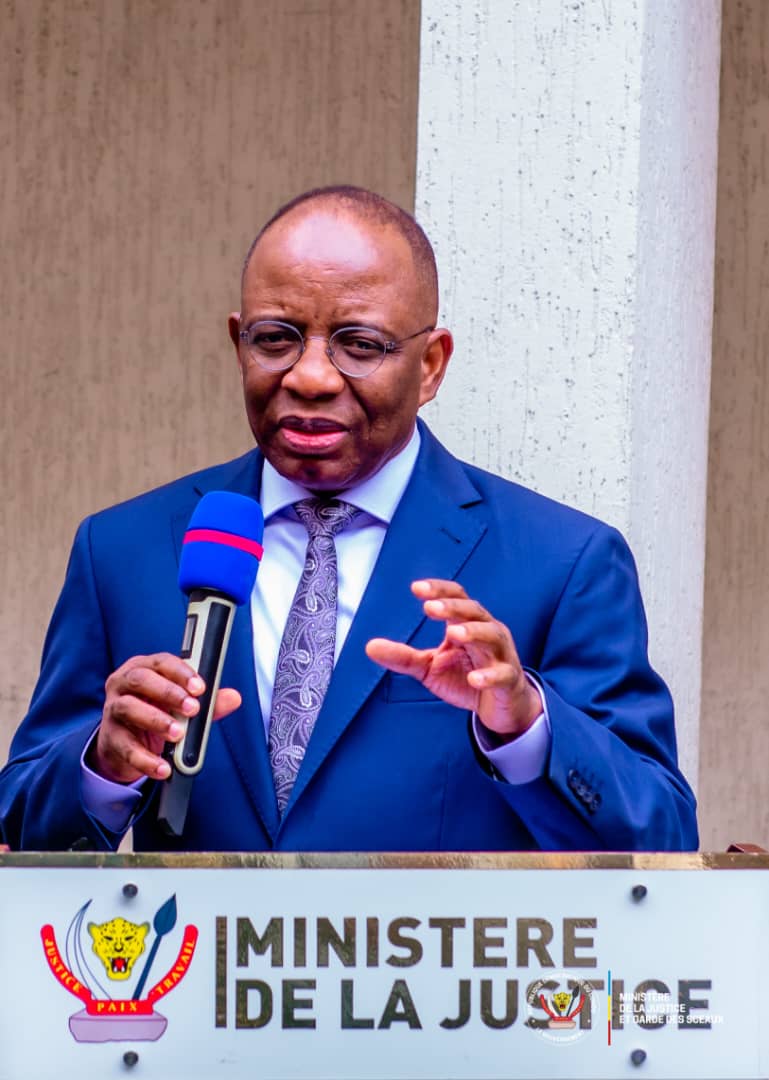
In the Democratic Republic of Congo, the Minister of Justice and the Superior Council of Magistracy (CSM) condemned the murder of Vincent Mwana Mulenda, President of the Haut-Katanga Court of Appeal, in Lubumbashi on September 20-21, 2026, prompting the government to launch a rigorous investigation into the incident. This tragic event involved the killing of a high-ranking judicial official at his home by unknown assailants, occurring amidst a tense security climate in the region. The Minister of Justice, Guillaume Ngefa Atondoko-Andali, explicitly announced the initiation of a thorough inquiry aimed at clarifying the circumstances, establishing the facts, and identifying all responsible parties for this heinous act, emphasizing the gravity of an attack on a member of the judiciary.
This incident carries profound legal significance for the DRC's judicial system and the broader rule of law. The murder of a sitting Court of Appeal President directly undermines judicial independence and security, which are foundational pillars of any functional legal framework. For practitioners, it highlights the inherent risks faced by judicial officers and the potential for external pressures to influence the administration of justice, raising concerns about the integrity and impartiality of future legal proceedings. The key parties involved are the late Vincent Mwana Mulenda, President of the Haut-Katanga Court of Appeal; the Minister of Justice and Keeper of the Seals, Guillaume Ngefa Atondoko-Andali, who initiated the investigation; and the Superior Council of Magistracy (CSM), which condemned the act and is advocating for enhanced protection for judges. The unknown assailants are also central to the ongoing criminal investigation.
The legal context for this development primarily revolves around criminal law, judicial independence, and the statutory framework governing magistrates. The investigation will proceed under the DRC's Code of Criminal Procedure to identify and prosecute those responsible for murder, a process that will be closely watched for its transparency and effectiveness. Crucially, the CSM's demand for judges to be allowed to carry small-caliber firearms is rooted in Article 19 of the organic law on the status of magistrates, which presumably outlines provisions related to their protection and security. This article underscores the institutional recognition of the need to safeguard judicial personnel to ensure their impartiality and ability to dispense justice without fear. For attorneys and legal professionals, this event necessitates close monitoring of the investigation's progress and any subsequent policy changes regarding judicial security. It also serves as a stark reminder of the challenges to judicial independence in certain regions and the importance of advocating for robust protections for all legal professionals. Businesses operating in the DRC should be aware that such incidents can impact judicial stability and potentially the predictability of legal processes, emphasizing the need for strong governance and risk assessment. The outcome of this matter, specifically the identification and prosecution of the perpetrators, is not yet reported.
How does this affect you?
Get an AI analysis of this article grounded in your jurisdictions, practice areas, and any policy documents you've uploaded to Wansom.
Finish Reading the Full Story and the Expert Analysis.
Get the latest legal & regulatory intelligence in DR Congo
Wansom is AI and can make mistakes.