
Eswatini Revenue Tribunal: Income Tax Disputes Predominate 2025/2026 Caseload
Summary
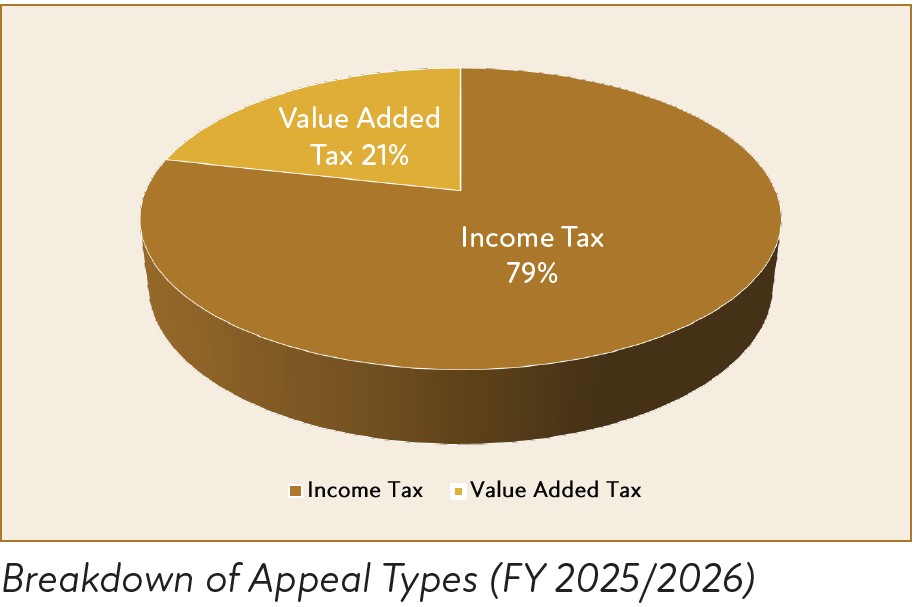
- Income tax disputes constituted the largest share of cases before the Revenue Appeals Tribunal in Eswatini during 2025/2026.
- Key areas of contention included corporate assessments and transfer pricing matters.
- These findings were reported in the Revenue Appeals Tribunal Eswatini (RATE) 2025/2026 Annual Report.
- The high volume of these disputes highlights the intricate nature of tax matters being litigated in Eswatini.
- The trend indicates increased regulatory scrutiny and potential litigation risk for businesses.
Dominance of Income Tax Disputes
The high volume of Eswatini Revenue Tribunal income tax disputes, particularly concerning corporate assessments and transfer pricing, signals an increased regulatory focus and potential litigation risk in these areas.
The Revenue Appeals Tribunal in Eswatini observed that income tax disputes represented the predominant category of cases brought before it during the 2025/2026 fiscal year. This significant finding, detailed within the Revenue Appeals Tribunal Eswatini (RATE) 2025/2026 Annual Report, underscores a clear trend in the nation's tax litigation landscape. The report specifically highlighted that matters pertaining to income tax comprised the vast majority of legal challenges presented to the institution over the period.
The annual report further identified specific areas within income tax that emerged as significant points of contention. Among these, Eswatini corporate tax assessments disputes and Eswatini transfer pricing litigation were particularly prominent. These issues collectively contributed to the high volume of income tax appeals Eswatini faced, indicating complex and often contested interpretations of tax regulations by both taxpayers and the revenue authority.
Understanding the Caseload
The sheer volume of income tax-related matters forming the bulk of the Revenue Appeals Tribunal Eswatini caseload for 2025/2026 suggests an intricate and often challenging environment for tax compliance and enforcement. The complexity inherent in corporate tax assessments, particularly for larger entities, frequently leads to disagreements over taxable income, allowable deductions, and the application of various tax incentives or penalties. Such disputes require detailed analysis of financial records and adherence to specific legal frameworks.
Similarly, Eswatini transfer pricing litigation, concerning transactions between related parties, is inherently complex due to the need to establish arm's-length principles. These cases often involve sophisticated economic analysis and can have substantial financial implications for multinational corporations operating within Eswatini. The consistent appearance of these issues before the Eswatini Revenue Tribunal income tax disputes in 2025/2026 points to ongoing challenges in achieving consensus on these specialized tax areas.
Implications for Businesses and Legal Professionals
The high volume of Eswatini Revenue Tribunal income tax disputes, particularly concerning corporate assessments and transfer pricing, signals an increased regulatory focus and potential litigation risk in these areas. This trend, as evidenced by the RATE 2025/2026 Annual Report, necessitates a proactive and thorough review of client tax positions and compliance strategies by legal and financial professionals in Eswatini. The prevalence of income tax appeals Eswatini is experiencing suggests that the revenue authority is actively scrutinizing corporate tax practices, leading to more challenges and formal disputes.
Lawyers and compliance officers must therefore be acutely aware of these developments. A robust understanding of the nuances surrounding Eswatini corporate tax assessments disputes and Eswatini transfer pricing litigation is crucial to mitigate exposure for their clients. The sustained prominence of these matters within the Revenue Appeals Tribunal Eswatini caseload underscores the importance of meticulous record-keeping, transparent transaction structuring, and expert legal counsel to navigate the intricate tax landscape effectively.
Practical Implications
Lawyers and compliance officers in Eswatini should note the high volume of income tax disputes, particularly concerning corporate assessments and transfer pricing, before the Revenue Appeals Tribunal. This indicates increased regulatory focus and potential litigation risk in these areas, necessitating a proactive review of client tax positions and compliance strategies to mitigate exposure.
Source
How does this affect you?
Get an AI analysis of this article grounded in your jurisdictions, practice areas, and any policy documents you've uploaded to Wansom.
Finish Reading the Full Story and the Expert Analysis.
Get the latest legal & regulatory intelligence in Eswatini
Wansom is AI and can make mistakes.