
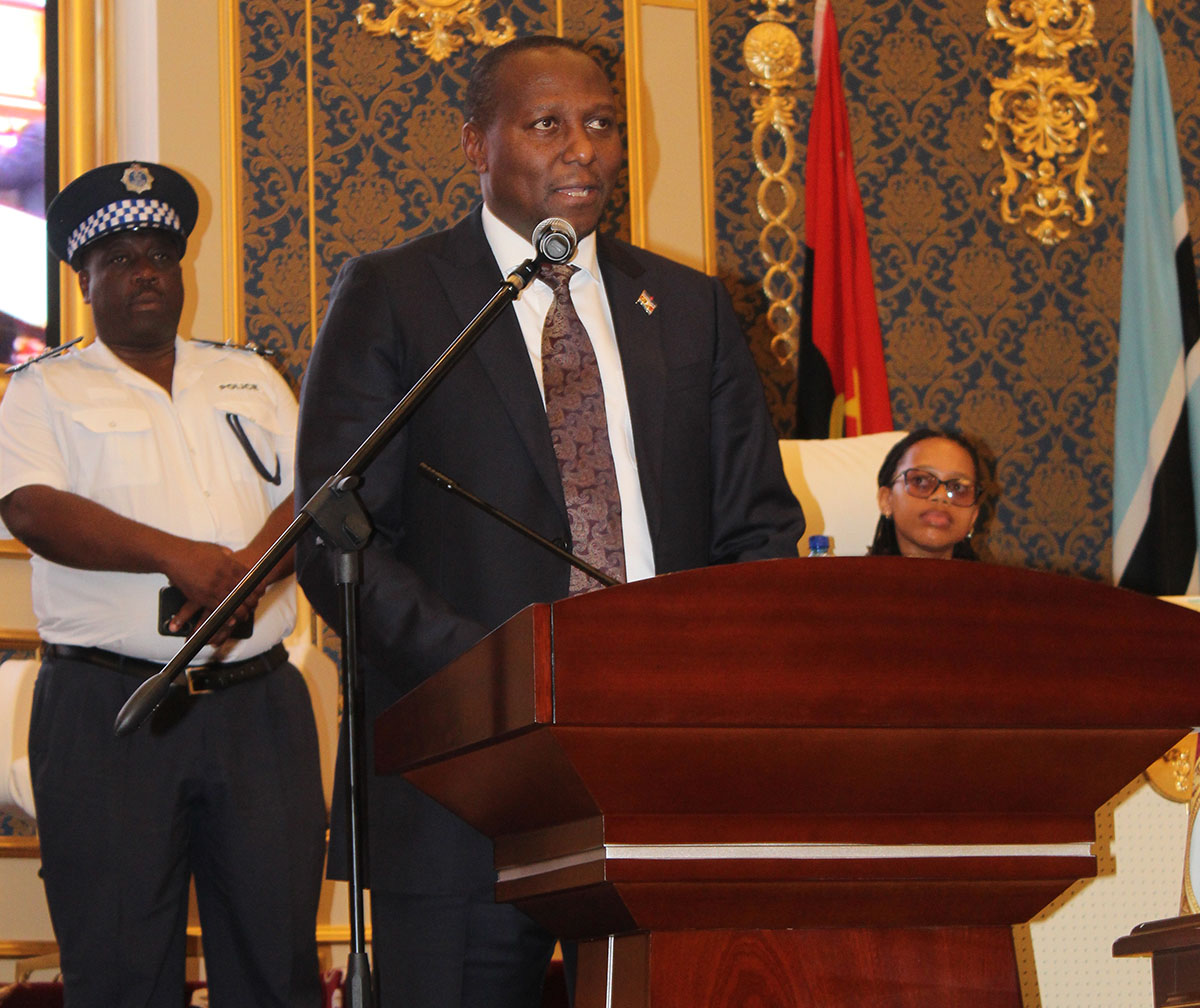
Eswatini PM: Poverty Drives Child Marriage, Calls for Multi-Faceted Approach
Summary
- Prime Minister Russell Mmiso Dlamini stated that poverty is a significant driver of child marriage in Eswatini.
- He emphasized that efforts to protect girls must extend beyond legal frameworks to address economic hardships.
- Dlamini noted that severely deprived households might consider marrying off a daughter as a solution.
- The Prime Minister's remarks highlight the need for a multi-faceted approach to child protection.
The Prime Minister's Call to Action
The Prime Minister's statement emphasizes a critical shift in perspective, suggesting that the fight against child marriage in Eswatini requires a multi-faceted approach that addresses both legal and socio-economic dimensions.
Prime Minister Russell Mmiso Dlamini of Eswatini has issued a significant warning regarding the persistent issue of child marriage, unequivocally identifying poverty as a primary contributing factor. His recent remarks underscore a governmental acknowledgment that effective strategies to safeguard young girls must extend beyond mere legislative measures. Dlamini articulated that while laws are crucial for establishing a protective framework, they are often insufficient on their own to eradicate the practice when severe economic pressures are at play.
The Prime Minister's statement emphasizes a critical shift in perspective, suggesting that the fight against child marriage in Eswatini requires a multi-faceted approach that addresses both legal and socio-economic dimensions. He specifically pointed to the necessity of confronting the deep-seated economic challenges that render families susceptible to engaging in such practices. This indicates a recognition that legal prohibitions, without addressing the root causes of vulnerability, may not fully achieve their intended protective goals, thus calling for a more comprehensive national strategy.
Understanding the Economic Imperative
At the heart of the Prime Minister's concern is the profound impact of economic hardship on household decision-making, particularly in the context of child marriage. Dlamini explained that families experiencing severe financial deprivation might view the marriage of a daughter as a viable, albeit regrettable, solution to their economic woes, such as reducing the number of mouths to feed or securing a dowry. This perspective reveals the complex socio-economic pressures that can override legal and ethical considerations in vulnerable communities across Eswatini.
The economic vulnerability of households, especially those facing extreme poverty, creates an environment where child marriage can be perceived as a coping mechanism or a means of survival. This understanding is crucial for developing interventions that are not only legally sound but also socially and economically relevant. It highlights the intricate link between poverty driven child marriage in Africa and the broader challenges of development, human rights, and the need for sustainable livelihoods.
Evolving Child Protection Strategies
The Prime Minister's comments signal a potential evolution in Eswatini's approach to child protection policy. By asserting that efforts must "go beyond legislation," Russell Dlamini is advocating for a more holistic framework that integrates social and economic support with existing legal structures. This broader policy perspective is vital for addressing the systemic issues that perpetuate child marriage, moving beyond punitive measures to preventative ones.
For legal professionals and policymakers, this statement suggests that future Eswatini legal reforms concerning child marriage may increasingly incorporate socio-economic components. It implies a move towards comprehensive programs designed to alleviate poverty and empower vulnerable families, thereby reducing the economic incentives for child marriage. This integrated strategy aims to create a more robust protective environment for girls, ensuring that legal frameworks are complemented by practical support that tackles the underlying causes of vulnerability and promotes the well-being of all children. The emphasis on economic solutions alongside legal ones marks a significant policy direction for the nation.
Practical Implications
The Prime Minister's statement signals a governmental recognition that legal frameworks alone are insufficient to combat child marriage in Eswatini, emphasizing the need for socio-economic interventions. Lawyers advising on human rights, family law, or child protection in Eswatini should note this broader policy perspective, as it may inform future legislative amendments, enforcement strategies, or the development of holistic legal aid approaches that address underlying economic vulnerabilities.
Source
How does this affect you?
Get an AI analysis of this article grounded in your jurisdictions, practice areas, and any policy documents you've uploaded to Wansom.
Finish Reading the Full Story and the Expert Analysis.
Get the latest legal & regulatory intelligence in Eswatini
Wansom is AI and can make mistakes.