
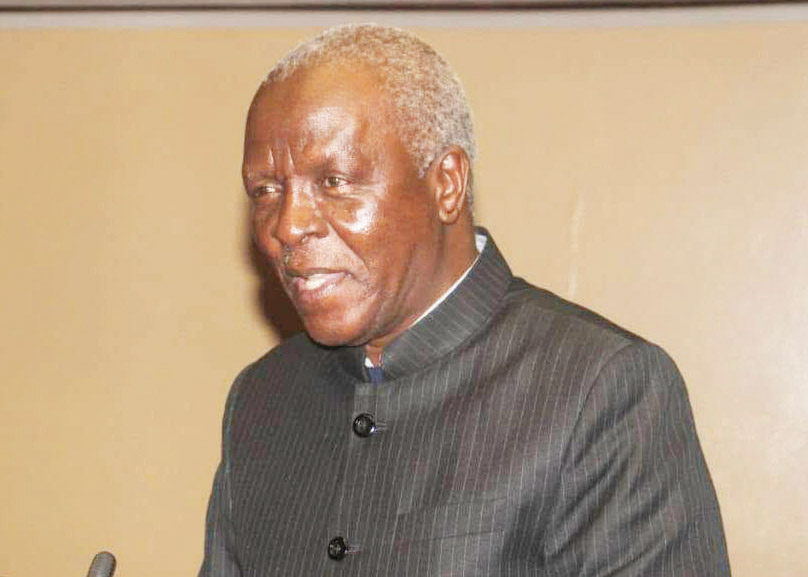
Eswatini Chief Justice Succession: Factionalism Alleged Amidst Delay
Summary
- Chief Justice Bheki Maphalala passed away almost two months ago, leaving the Eswatini Chief Justice post vacant.
- Confusion surrounds the Eswatini Chief Justice succession, with a formal acting Chief Justice appointment still pending, despite constitutional provisions for the most senior judge to assume the role.
- Allegations in Parliament suggest the lack of a formal Eswatini acting CJ appointment has led to four camps, each with a candidate for the position.
- The contested succession could impact the stability and independence of Eswatini's judicial leadership.
- The appointment process is critical for the future direction of legal interpretation and the handling of cases in Eswatini.
The Vacant Bench
The prolonged uncertainty surrounding the Eswatini Chief Justice succession, exacerbated by alleged political maneuvering, poses significant questions regarding the future stability and independence of the nation's judiciary.
The passing of Chief Justice Bheki Maphalala nearly two months ago has left a significant void in Eswatini's judicial leadership, initiating a period of considerable uncertainty regarding the Eswatini Chief Justice succession. This critical vacancy at the apex of the nation's legal system has prompted widespread discussion and concern within legal circles and beyond, as the process to identify a successor unfolds.
Recent allegations made in Parliament yesterday indicate a deepening complexity in this succession process. It has been claimed that the delay in a formal Eswatini acting CJ appointment, despite constitutional provisions for the most senior judge to assume the role, has inadvertently fostered the emergence of four distinct factions, each reportedly championing a different candidate for the esteemed Chief Justice position. This development suggests a potentially contentious path forward for filling the vacant Eswatini CJ post.
Contested Judicial Leadership
The reported formation of multiple camps vying for the top judicial role introduces an element of political maneuvering into what should ideally be a merit-based appointment process. Such internal contestation for the Chief Justice Bheki Maphalala successor could have profound implications for the perceived impartiality and operational stability of Eswatini's judicial leadership, potentially impacting public confidence in the legal system.
The absence of a swift and clear formal Eswatini acting CJ appointment, coupled with the alleged factionalism, risks creating a leadership vacuum that could impede the efficient functioning of the courts. A judiciary grappling with internal divisions or external pressures during a succession period may struggle to maintain its independence and uphold the rule of law without perceived bias.
Implications for Legal Stability
The prolonged uncertainty surrounding the Eswatini Chief Justice succession, exacerbated by alleged political maneuvering, poses significant questions regarding the future stability and independence of the nation's judiciary. Lawyers in Eswatini should closely monitor the appointment process, as the eventual selection of the Chief Justice could profoundly influence the direction and integrity of the country's legal framework.
Potential ramifications include an impact on the efficiency of case management, possibly contributing to increased backlogs, and a shift in the interpretation of key legal precedents, depending on the judicial philosophy of the new appointee. The manner in which the vacant Eswatini CJ post is filled will be a critical indicator of the judiciary's resilience against political influence.
Ultimately, the stability and direction of Eswatini's judiciary are intrinsically linked to a transparent and impartial succession process. The legal community must remain vigilant to ensure that the appointment of the Chief Justice Bheki Maphalala successor reinforces, rather than undermines, the foundational principles of justice and judicial independence in Eswatini.
Practical Implications
Lawyers in Eswatini should monitor the appointment process for the new Chief Justice closely, as the stability and direction of the judiciary could be impacted by political maneuvering. This could affect case backlogs, judicial independence, and the interpretation of key legal precedents depending on the eventual appointee.
Source
How does this affect you?
Get an AI analysis of this article grounded in your jurisdictions, practice areas, and any policy documents you've uploaded to Wansom.
Wansom is AI and can make mistakes.