
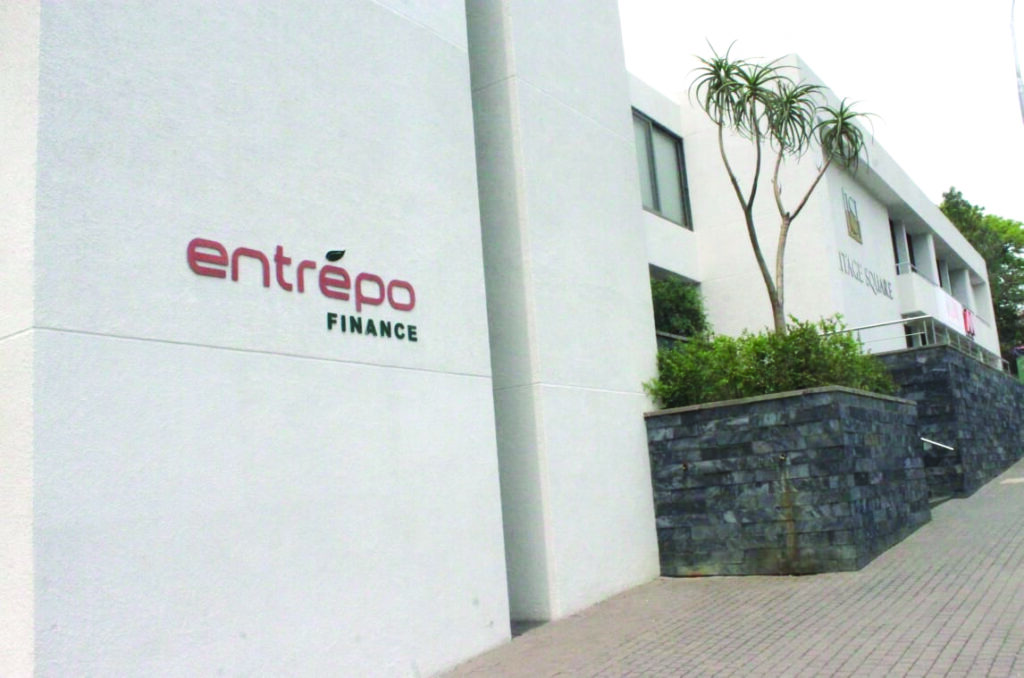
Entrepo Finance: N$500M Loan Book Shrinks From Namibia Payroll Deduction Changes
Summary
- Entrepo Finance's loan book decreased by N$500 million in the 2026 financial year.
- This shrinkage was caused by changes to the Namibian government's payroll deduction system, leading to Entrepo Finance no longer granting new loans to civil servants.
- Despite the loan book contraction, Entrepo Finance managed to increase its profit by 6%.
- The microlender contributed 14% to Capricorn Group’s total profit after tax.
- The incident highlights the significant regulatory impact of government policy changes on microlenders in Namibia.
Significant Loan Book Contraction for Entrepo Finance
The changes to the government's payroll deduction framework specifically led to Entrepo Finance no longer granting new loans to civil servants.
Entrepo Finance, a prominent microlender, experienced a substantial reduction in its loan portfolio during the 2026 financial year. The company's loan book saw a shrinkage of N$500 million, a development directly linked to recent adjustments within the Namibian government's payroll deduction system. This significant contraction highlights the immediate and tangible impact of regulatory shifts on financial institutions operating in the region.
The changes to the government's payroll deduction framework specifically led to Entrepo Finance no longer granting new loans to civil servants. As a microlender heavily reliant on this segment for its lending activities, the disruption to the established system for processing deductions from government employee salaries posed a direct challenge to its operational model and growth trajectory in the civil servant loans Namibia market.
This event underscores the vulnerability of specialized lenders to alterations in public sector administrative processes, particularly when those processes underpin their primary mechanism for loan repayment and risk management. The N$500 million Entrepo loan book Namibia payroll deduction-related shrinkage represents a material shift in the company's asset base.
Unexpected Profit Growth Amidst Challenges
Despite the considerable N$500 million Entrepo Finance loan book shrinkage, the microlender reported an unexpected positive financial outcome for the same 2026 financial year. The company successfully increased its profit by 6%, demonstrating resilience in navigating a challenging operational environment.
This profit growth is particularly noteworthy given the significant reduction in its lending volume to civil servants. Furthermore, Entrepo Finance played a crucial role in the overall financial health of its parent entity, Capricorn Group. The microlender contributed 14% to Capricorn Group’s total profit after tax, underscoring its strategic importance within the larger financial conglomerate, even as it contended with the Namibia government payroll deduction system changes.
Regulatory Shifts and Microlender Operations
The core issue driving Entrepo Finance's loan book contraction stems from the modifications implemented in the government's payroll deduction system in Namibia. These systemic changes directly affected the mechanism by which microlenders like Entrepo collect repayments from civil servants, thereby disrupting their ability to underwrite and issue new loans to this demographic.
For microlenders specializing in civil servant loans Namibia, the payroll deduction system is often a cornerstone of their business model, providing a reliable and efficient method for loan servicing. Any alteration to this system can have profound implications, not just for new loan origination but also for the perceived risk profile of existing portfolios. The regulatory impact on the Namibia financial sector is evident through this disruption, forcing institutions to adapt their strategies and operational frameworks.
Broader Implications for the Financial Sector
The experience of Entrepo Finance serves as a critical case study for the broader Namibia financial sector, particularly for institutions engaged in microlending to public sector employees. It highlights the significant regulatory impact that government policy and administrative changes can have on business models and revenue streams.
This situation necessitates a thorough assessment by financial institutions of their reliance on specific government systems and the potential for future regulatory shifts. The ability of Entrepo Finance to maintain and even increase profitability despite a substantial loan book shrinkage suggests a capacity for adaptation, yet the underlying challenge posed by the Namibia government payroll deduction system changes remains a key concern for the industry.
Practical Implications
Lawyers and compliance officers advising financial institutions, particularly microlenders in Namibia, should assess the implications of government payroll deduction system changes on lending practices to civil servants. This development highlights the need to monitor regulatory shifts that can significantly impact business models and revenue streams within the financial sector.
Source
How does this affect you?
Get an AI analysis of this article grounded in your jurisdictions, practice areas, and any policy documents you've uploaded to Wansom.
Finish Reading the Full Story and the Expert Analysis.
Get the latest legal & regulatory intelligence in Namibia
Wansom is AI and can make mistakes.