
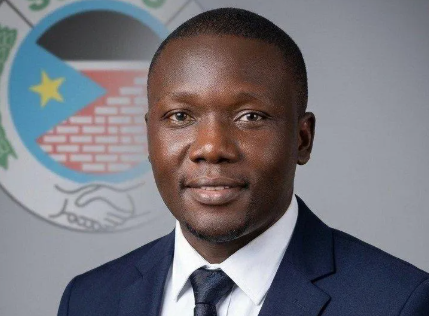
Emmanuel William Atit: South Sudan Youth Urged to Reject Divisive Politics
Summary
- Emmanuel William Atit, Secretary-General of the South Sudan National Youth Union, urged young people to reject divisive political leaders and unite for national development.
- The call was made during a training event organized by Markaz Al Salam with Norwegian People’s Aid, focusing on enhancing youth-led legislative reform.
- Atit highlighted that youth constitute 74% of South Sudan's population, possessing significant electoral power to influence governance.
- Speakers emphasized the South Sudan Youth Policy's affirmation of a 20% youth representation threshold across all levels of government.
- Youth were encouraged to engage in political parties, use non-violent persuasion, and plan strategically for their political participation, regardless of election schedules.
Call for Unity and Responsible Leadership
Youth leaders are actively campaigning for a 20% representation policy, underscoring the demographic power of young people who constitute 74% of the nation's population.
Emmanuel William Atit, the Secretary-General of the South Sudan National Youth Union (SSNYU), recently issued a strong appeal to the nation's youth, urging them to reject political figures who foster division through tribalism, hatred, or monetary incentives. His remarks were delivered during a one-day training session held on a Tuesday, which focused on "Enhancing Youth-Led Legislative Reform in South Sudan." The event was organized by Markaz Al Salam, with crucial backing from the Norwegian People’s Aid (NPA).
Atit underscored the significant demographic power held by the youth, who comprise 74 percent of South Sudan's total population. He highlighted that this substantial demographic could potentially secure all gubernatorial positions and half of the seats in the National Assembly, in addition to other elective offices. Emphasizing the necessity of elections, Atit stated that they are vital for rectifying past and present societal injustices. He cautioned against the practice of accepting money for votes, explaining that such actions effectively forfeit the right to demand essential public services like roads, schools, or hospitals. Instead, he advised young people to support leaders committed to peace, stability, and development, steering clear of Emmanuel William Atit divisive politicians.
Further, Atit articulated the specific needs of the youth, which include access to youth centers, recreational facilities, dedicated offices, vocational training centers, schools, improved infrastructure such as roads, hospitals, market opportunities, and agricultural support. He critically noted that politicians in Juba often deploy young people to conflict frontlines while shielding their own children. In response, he called for an unequivocal rejection of violence, inter-state conflict, and tribal fighting, asserting that firearms should be reserved strictly for national border defense against foreign invasion, not for use against fellow citizens. This message from Emmanuel William Atit South Sudan youth leaders resonates deeply with the aspirations for a peaceful and developed nation.
Advocating for Youth Representation and Policy
A central theme of the training and Atit's address was the critical importance of unity among young people to advance their collective interests. He specifically urged an end to fragmentation among various youth groups—including those from civil society, political parties, government, and faith-based organizations—to collectively demand the implementation of the 20 percent youth representation policy. This policy, which aims to ensure significant youth participation in governance, was a key focus for SSNYU legislative reform South Sudan.
Michael Gorjin, a Project Coordinator at Norwegian Peoples Aid, reinforced this point by highlighting that the South Sudan Youth Policy explicitly affirms a 20 percent youth representation threshold across all levels of government. Gorjin encouraged attendees to adopt strategic, non-violent methods of persuasion to influence decision-makers within their respective political parties. He also advised youth to register with a political party, not to endorse a specific one, but to actively engage in and influence the political process by being part of a party registered with the Political Parties Council. This guidance is crucial for enhancing South Sudan youth political participation.
Florence Agiba, Executive Director for Markaz Al Salam, elaborated on the meeting's objective, stating it was designed to help young people strategically plan their approach to political engagement, irrespective of whether elections proceed as scheduled. She expressed gratitude to NPA for their consistent support for youth initiatives and underscored the urgency of the youth's commitment, given the current challenges in securing funding and resources for such planning efforts. The discussions underscored the ongoing advocacy for the South Sudan 20% youth representation policy.
Building a Future for South Sudan
Atit's vision for South Sudan extended beyond immediate political reforms, encompassing a broader call for national development and resilience. He drew parallels with European and American nations, noting that they endured significant conflicts, including World Wars and widespread destruction, before embarking on their nation-building efforts. He asserted that South Sudan possesses the same capacity to overcome its challenges and construct a prosperous future. This perspective emphasizes the long-term commitment required for national progress and stability.
He further cautioned against collaborating with foreign interests that could undermine the nation's sovereignty and stability. Atit passionately urged young people to cherish their nationality, passport, and homeland, likening their love for the country to the love for one's mother. This sentiment reinforces a strong sense of national identity and responsibility among the youth. The Markaz Al Salam youth initiative, supported by NPA, aims to empower young people to take ownership of their nation's trajectory.
Gorjin concluded with a hopeful prayer for peaceful and non-violent elections, where citizens can assert their rights without resorting to conflict, particularly given that the current generation was born out of war. This collective aspiration for a peaceful transition and active, non-violent civic engagement underscores the profound importance of the ongoing youth-led legislative reform efforts in shaping South Sudan's future.
Practical Implications
This article highlights ongoing advocacy for youth-led legislative reform and the 20% youth representation policy in South Sudan. Lawyers advising NGOs, political parties, or international bodies involved in governance and electoral processes should monitor these discussions for potential future policy and legislative developments impacting political participation and electoral frameworks.
Source
How does this affect you?
Get an AI analysis of this article grounded in your jurisdictions, practice areas, and any policy documents you've uploaded to Wansom.
Finish Reading the Full Story and the Expert Analysis.
Get the latest legal & regulatory intelligence in South Sudan
Wansom is AI and can make mistakes.