
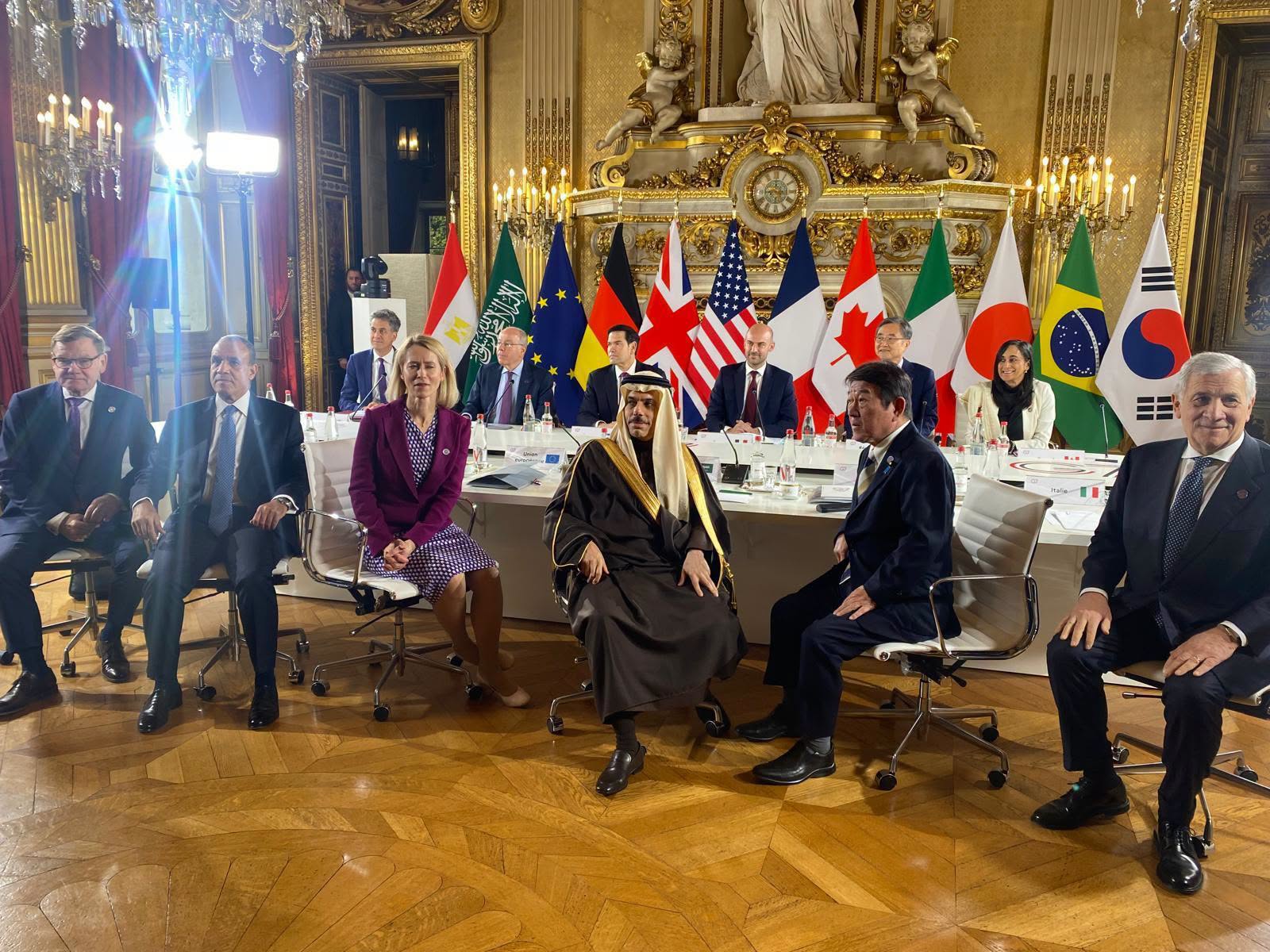
Egypt: Presents AI Governance Vision at G7 Ministerial Meeting
Summary
- Egypt's Foreign Minister Badr Abdelatty presented the nation's AI governance vision at a G7 ministerial meeting in Paris.
- During the G7 session, Minister Abdelatty highlighted artificial intelligence as a main driver for economic growth.
- Separately, Minister Abdelatty met with Mathias Cormann, Secretary-General of the Organisation for Economic Co-operation and Development (OECD).
- This engagement signals Egypt's proactive approach to AI regulation and international collaboration.
Egypt Outlines AI Governance Vision at G7 Ministerial
The emphasis placed by Foreign Minister Abdelatty on artificial intelligence as a primary engine for economic growth provides a clear indication of Egypt's long-term objectives and its commitment to an Egypt AI economic growth strategy.
Egypt’s Foreign Minister, Badr Abdelatty, recently presented the nation's strategic framework for the governance of artificial intelligence during a G7 ministerial meeting convened in Paris on Monday. This high-level engagement provided a significant platform for Egypt to articulate its forward-looking approach to managing the rapidly evolving field of AI, signaling a proactive stance on its development and deployment. The address underscored Egypt's commitment to shaping a responsible and effective regulatory environment for this transformative technology, aiming to balance innovation with ethical considerations.
During his participation in the G7 session specifically dedicated to artificial intelligence governance, Minister Abdelatty emphasized the profound economic potential of AI. He characterized the technology as a fundamental catalyst for economic expansion, highlighting its capacity to drive growth across various sectors and contribute significantly to national prosperity. This perspective positions AI not merely as a technological advancement but as a critical component of Egypt's broader economic development strategy, crucial for future prosperity.
Fostering International Collaboration on AI Regulation
Beyond the formal G7 proceedings, Minister Abdelatty engaged in a separate bilateral discussion with Mathias Cormann, who serves as the secretary-general for the Organisation for Economic Co-operation and Development (OECD). This meeting signifies Egypt's active participation in international dialogues concerning the future of artificial intelligence regulation and its global implications. Such interactions are crucial for aligning national strategies with international best practices and fostering a collaborative approach to complex technological challenges that transcend national borders.
The engagement with the OECD's top official further illustrates Egypt's intent to contribute to and learn from global efforts in establishing robust frameworks for artificial intelligence. The OECD, known for its extensive work in promoting policies that improve economic and social well-being worldwide, offers a significant forum for discussions on digital policy and governance. This interaction suggests Egypt's interest in leveraging international expertise and collaborative platforms to refine its own artificial intelligence regulation and ensure its global compatibility.
Strategic Direction for Egypt's AI Future
Egypt's decision to unveil its artificial intelligence governance vision at a G7 ministerial meeting in Paris underscores the strategic importance the nation places on this technology. By presenting its approach on such a prominent international stage, Egypt signals its ambition to be a key player in the global conversation surrounding AI ethics, development, and regulation. This move is indicative of a deliberate strategy to integrate AI responsibly into its national infrastructure and economy, ensuring its benefits are maximized while risks are mitigated.
The emphasis placed by Foreign Minister Abdelatty on artificial intelligence as a primary engine for economic growth provides a clear indication of Egypt's long-term objectives and its commitment to an Egypt AI economic growth strategy. This vision suggests that future policy and legislative developments within Egypt will likely prioritize frameworks that facilitate innovation while ensuring responsible use and compliance. The high-level articulation of this strategy sets a foundational direction for Egypt's engagement with AI, both domestically and on the international stage, influencing future regulatory landscapes.
Practical Implications
This article signals Egypt's high-level strategic direction on artificial intelligence governance. Lawyers and compliance officers should monitor subsequent legislative or policy developments stemming from this vision, as they will likely impact future regulatory frameworks, compliance obligations, and business opportunities related to AI in Egypt.
Source
How does this affect you?
Get an AI analysis of this article grounded in your jurisdictions, practice areas, and any policy documents you've uploaded to Wansom.
Finish Reading the Full Story and the Expert Analysis.
Get the latest legal & regulatory intelligence in Egypt
Wansom is AI and can make mistakes.