
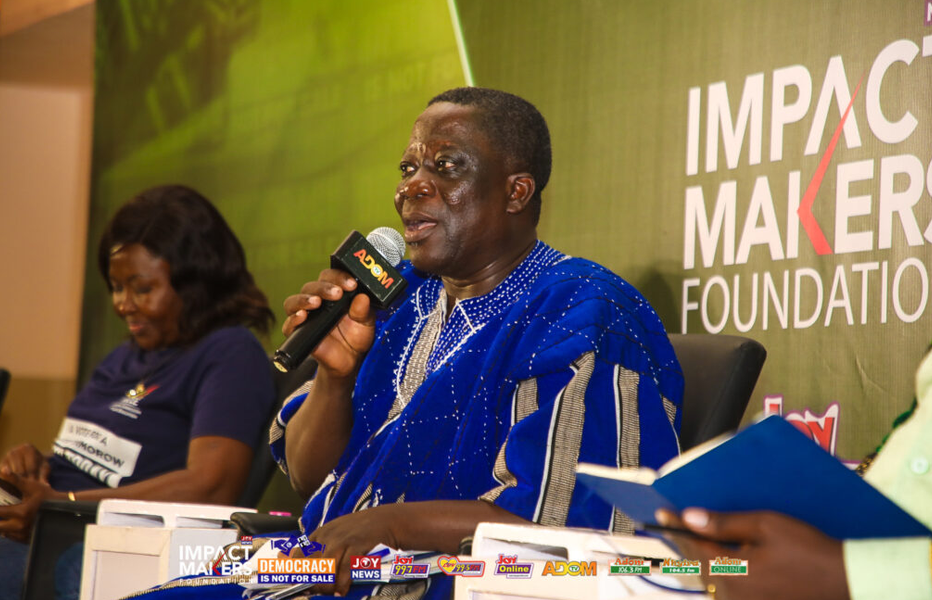
Edward Gyamfi: Ghana Election Bribery Warning Issued by EC Deputy Director
Summary
- Edward Gyamfi, Deputy Director of Ghana's Electoral Commission in the Eastern Region, issued a warning against the growing influence of money and bribery in the nation's democratic processes.
- He emphasized that using financial inducements to sway voters undermines democracy and has serious national consequences, referencing the constitutional principle of popular sovereignty.
- Gyamfi highlighted Article 46 of the 1992 Constitution, which guarantees the EC's independence, and urged adherence to transparent electoral laws.
- He expressed concern that vote-buying practices are spreading to younger generations, citing an example of primary school children using sweets to influence votes.
- Gyamfi called for urgent action from parents, schools, and political actors to prevent the entrenchment of vote-buying and urged citizens to choose candidates based on competence and integrity.
Electoral Commission Issues Stern Warning Against Bribery
He reiterated that a failure to curb electoral corruption and vote buying could ultimately prove detrimental to the nation's progress and stability, underlining the critical role of Ghana election finance laws.
Edward Gyamfi, the Deputy Director of Ghana's Electoral Commission (EC) in the Eastern Region, has issued a strong caution regarding the increasing impact of financial incentives and bribery within the nation's democratic processes. Speaking at a public dialogue titled "Democracy Is Not For Sale," Mr. Gyamfi underscored that while money holds a significant place in society, its deployment to sway voters poses a direct threat to Ghana's democratic foundations, potentially leading to severe national repercussions. This event, organized by Adom Brands of the Multimedia Group Limited in collaboration with the JoyNews Impact Makers Foundation, took place at Ascension Hall in Koforidua, focusing specifically on the pervasive influence of money in Ghanaian politics.
Mr. Gyamfi reminded attendees that the very preamble of the Ghanaian Constitution vests ultimate sovereignty in the people, who then entrust their power to leaders for the betterment of the country. He emphasized that this fundamental principle is jeopardized when financial inducements corrupt the electoral choice. The EC Deputy Director's remarks highlight a critical concern for the integrity of future elections, serving as a significant Edward Gyamfi Ghana election bribery warning to all stakeholders.
Upholding Constitutional Principles and Electoral Laws
Ghana's democratic system operates under a clear legal framework that delineates the responsibilities of both institutions and citizens, a point Mr. Gyamfi stressed as paramount. He urged all parties involved to adhere strictly to these established laws, asserting their transparency and comprehensive guidance for all electoral activities. A key aspect of his address involved a direct reference to Article 46 of the 1992 Constitution, which explicitly guarantees the independence of the Electoral Commission in the execution of its duties.
This constitutional provision ensures that the EC can perform its functions without undue influence, reinforcing the importance of fair and uncorrupted elections. Mr. Gyamfi warned that citizens must exercise extreme caution to prevent financial inducements from becoming the decisive factor in who attains public office. He reiterated that a failure to curb electoral corruption and vote buying could ultimately prove detrimental to the nation's progress and stability, underlining the critical role of Ghana election finance laws.
Addressing the Entrenchment of Vote-Buying Across Generations
A particularly alarming concern raised by Mr. Gyamfi was the observation that the practice of using gifts and incentives to influence voting decisions is now permeating even younger generations. He cited a striking example of primary school children employing sweets to persuade their peers in school elections, illustrating how deeply entrenched this behavior could become if left unchecked. This trend, he argued, necessitates immediate and concerted action from a broad spectrum of society.
Mr. Gyamfi called for urgent attention from parents, educational institutions, political actors, and other relevant stakeholders to proactively address and prevent the culture of vote-buying from becoming an ingrained societal norm. He urged a thorough examination of the issue, emphasizing the need to resolve it before it escalates beyond control. Ultimately, he implored Ghanaians to safeguard the country's democratic achievements by upholding electoral laws and basing their voting choices on the competence and integrity of candidates, rather than succumbing to monetary temptations.
Practical Implications
Lawyers advising political parties, candidates, or organizations involved in Ghanaian elections should note the Electoral Commission's renewed public emphasis on enforcing laws against vote-buying and financial inducements, particularly in light of the explicit reference to constitutional provisions like Article 46 guaranteeing EC independence. This indicates a heightened focus on electoral integrity that could lead to increased scrutiny and potential enforcement actions.
Source
How does this affect you?
Get an AI analysis of this article grounded in your jurisdictions, practice areas, and any policy documents you've uploaded to Wansom.
Finish Reading the Full Expert Analysis.
Wansom is AI and can make mistakes.