
Ghana OSP: AKSA Bribery Investigation Launched, Ex-Minister Named
Summary
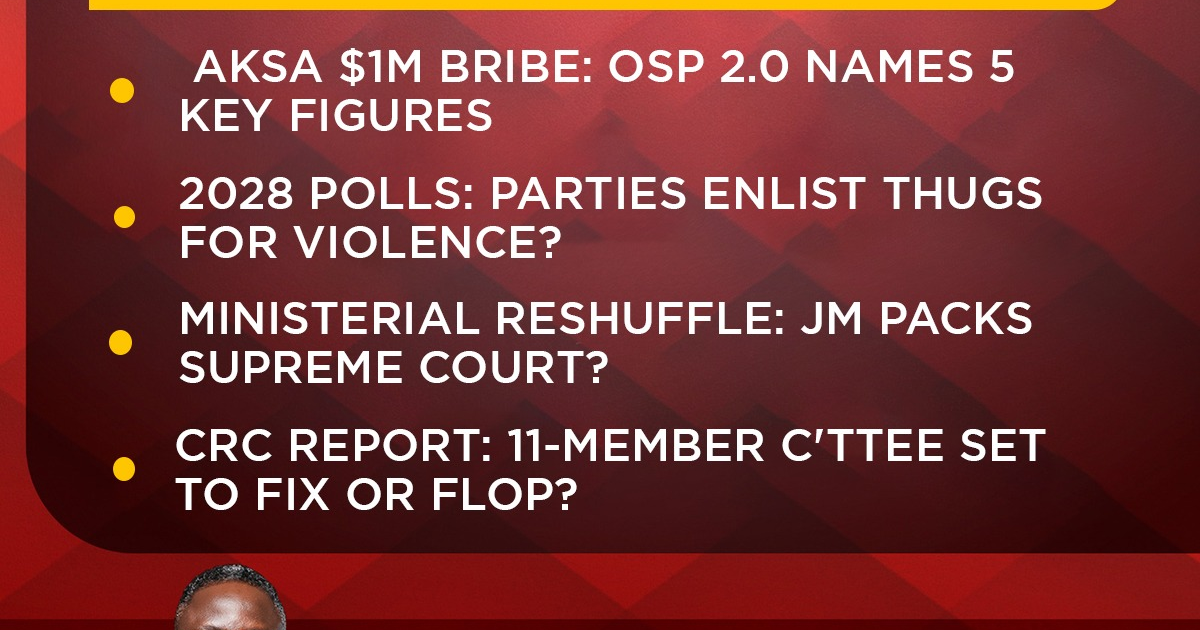
- Ghana's Office of the Special Prosecutor (OSP) has named former Power Minister Dr. Kwabena Donkor and others as persons of interest in the Aksa power deal bribery investigation.
- This OSP inquiry follows a US prosecution of former TOR boss Asante Berko over an alleged one-million-dollar bribery scheme related to the Aksa deal.
- National Security is raising concerns about increasingly organized and underground political vigilantism potentially preparing for violence ahead of the 2028 elections.
- President Mahama has reshuffled his government, reassigning Minister of State for Special Initiatives Abdul-Rashid Pelpuo and Presidential Advisor on National Resilience and Emergency Preparedness Ernest Brogya Genfi, among others.
- A new 11-member committee has been inaugurated to implement recommendations from Ghana's Constitution Review Committee, following a Supreme Court ruling on political-party elections.
Unpacking the AKSA Bribery Allegations
The fundamental question confronting the country is whether its institutional framework is robust enough to effectively hold power accountable, protect its democracy, and successfully implement the necessary constitutional changes.
Ghana's Office of the Special Prosecutor (OSP) has initiated a significant investigation into the controversial Aksa power deal, naming former Power Minister Dr. Kwabena Donkor and other individuals as persons of interest. This development follows a prosecution in the United States involving Asante Berko, a former boss of TOR, who was implicated in an alleged one-million-dollar bribery scheme connected to the same power transaction. The OSP's current focus is squarely on the Ghanaian dimension of these allegations, aiming to uncover the specifics of what transpired locally.
Dr. Donkor has publicly denied any wrongdoing in relation to the Aksa deal. However, the ongoing Ghana OSP AKSA bribery investigation seeks to clarify critical questions: precisely what events unfolded during the Aksa transaction, who allegedly received or facilitated the illicit payments, and whether Ghana incurred any financial losses as a result of the alleged scheme. A key challenge for the OSP will be to determine if the evidence emerging from the US case can be leveraged to secure a successful prosecution within Ghana's legal framework.
Broader Challenges to Governance and Democracy
Beyond the specific bribery allegations, Ghana faces broader governance challenges, particularly concerning the integrity of its electoral processes. National Security has issued a warning regarding the evolving nature of political vigilantism, noting that political groups are becoming increasingly organized, operating covertly, and potentially preparing for violence in the lead-up to the 2028 elections. This concern persists despite the existence of a Ghanaian law specifically criminalizing political vigilantism, raising questions about the effectiveness of current measures and the genuine commitment of political parties to dismantle such structures.
Simultaneously, President Mahama has undertaken a government reshuffle, reassigning key figures such as Minister of State for Special Initiatives Abdul-Rashid Pelpuo and Presidential Advisor on National Resilience and Emergency Preparedness Ernest Brogya Genfi, among others. This move prompts scrutiny into whether these changes are merely administrative adjustments or if they signal dissatisfaction with performance and a strategic effort to reposition the government. The effectiveness of these reassignments in improving the delivery of the government's stated reset agenda remains a critical point of evaluation for the Ghanaian public.
The Path to Constitutional Reform
The nation is also embarking on a new phase of its Constitution Review process, with the government inaugurating an 11-member committee tasked with implementing recommendations from the Constitution Review Committee. This initiative comes at a time when the Supreme Court has recently declared the delegate system for political-party elections unconstitutional, highlighting structural weaknesses within Ghana's democratic framework that require attention.
The implementation phase of constitutional reform is fraught with political sensitivities. Key questions revolve around which recommendations President Mahama's government will ultimately accept or reject, and whether politically charged proposals concerning elections, political parties, decentralization, and governance will successfully navigate the implementation process. The outcome of these reforms will be crucial in shaping the future constitutional order of the country.
A Nation at a Crossroads
These diverse issues—the Ghana OSP AKSA bribery investigation, the evolving threat of political vigilantism, government reshuffles, and the constitutional review process—collectively underscore a pivotal moment for the nation. They place Ghana's institutions under intense scrutiny, testing their capacity to uphold accountability, safeguard democratic principles, and deliver essential reforms. The fundamental question confronting the country is whether its institutional framework is robust enough to effectively hold power accountable, protect its democracy, and successfully implement the necessary constitutional changes.
These critical discussions are set to take center stage on Saturday, August 28, 2026, at 8 a.m. on JoyNews and MyJoyOnline, where host Samson Lardy Anyenini and a panel will delve into the facts, arguments, and challenging questions Ghana must address. The outcomes of these various processes will significantly influence the nation's trajectory in the coming years.
Source
How does this affect you?
Get an AI analysis of this article grounded in your jurisdictions, practice areas, and any policy documents you've uploaded to Wansom.
Finish Reading the Full Expert Analysis.
Wansom is AI and can make mistakes.