
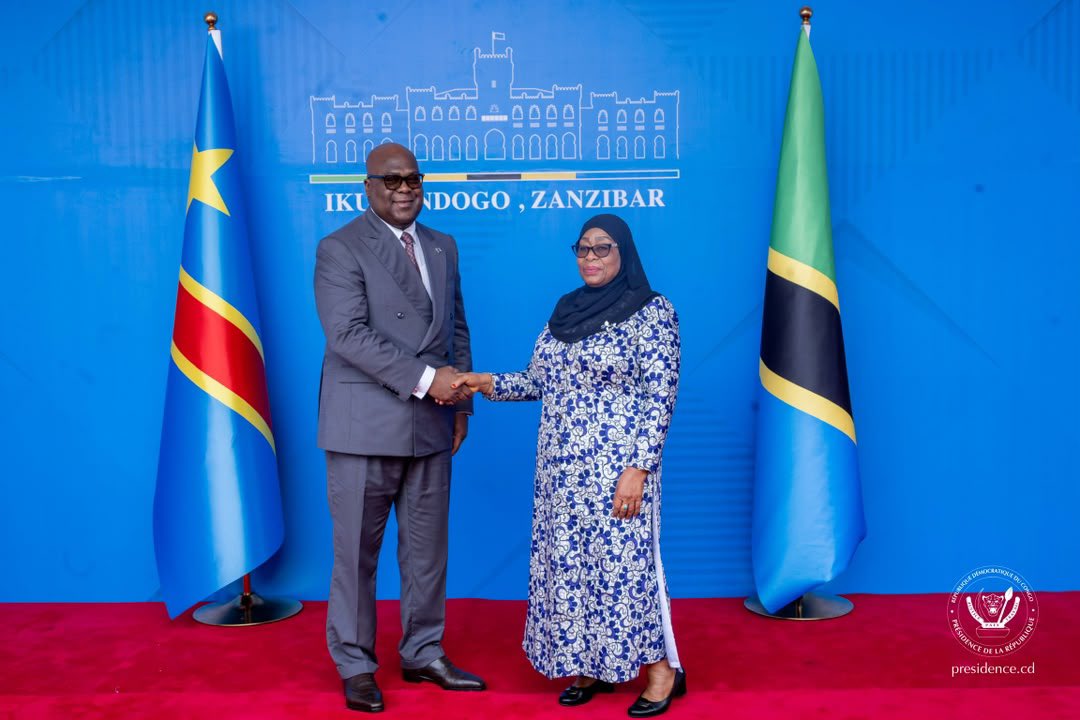
DRC and Tanzania Strengthen Economic Cooperation: Presidents Tshisekedi and Suluhu Hassan Agree on Strategic P
Summary
- Presidents Félix Tshisekedi and Samia Suluhu Hassan met in Zanzibar on August 18, 2026 to discuss strengthening economic and sanitary cooperation between the DRC and Tanzania.
- The two leaders agreed to revitalize the Permanent Mixed Commission and establish a new partnership to facilitate economic exchanges between the two nations.
- The cooperation agreements include sharing strategic geological data and evaluating opportunities for collaboration in oil and gas sectors.
- Tanzania will provide assistance to help the DRC combat the Ebola outbreak.
What Happened
The two leaders also called for respect of international law, including the withdrawal of foreign forces and an end to hostilities.
The presidents of the Democratic Republic of Congo (DRC) and Tanzania, Félix Tshisekedi and Samia Suluhu Hassan respectively, met in Zanzibar on August 18, 2026 to discuss strengthening their countries' economic and sanitary cooperation. The meeting took place at the State House of Kizimkazi, following President Tshisekedi's official visit to Tanzania. During the talks, the two leaders agreed to revitalize the Permanent Mixed Commission and establish a new partnership to facilitate economic exchanges between the two nations.
The cooperation agreements also include the sharing of strategic geological data and the evaluation of opportunities for collaboration in the oil and gas sectors. Additionally, the countries plan to modernize transportation infrastructure along the Central Corridor, including rehabilitating ports in Dar es Salaam, Kigoma, and Kalemie, and strengthening lake transport.
The Tanzanian president reaffirmed her country's commitment to the sovereignty and territorial integrity of the DRC, amid ongoing violence in eastern Congo. The two leaders also called for respect of international law, including the withdrawal of foreign forces and an end to hostilities.
Legal Context
The agreements reached by the presidents of the DRC and Tanzania have significant implications for trade and investment between the two countries. Lawyers advising clients on such matters should be aware of the establishment of a joint commission to facilitate economic exchanges, as well as the sharing of strategic geological data. The cooperation agreements also include provisions for modernizing transportation infrastructure along the Central Corridor, which will impact the flow of goods and services between the two nations.
The agreements are likely to have a positive impact on the economies of both countries, particularly in the sectors of oil and gas, mining, and agriculture. However, there may be challenges ahead in implementing these agreements, including ensuring that they align with international law and the laws of both countries.
Why It Matters
The strengthening of economic and sanitary cooperation between the DRC and Tanzania is a significant development for the region. The agreements reached by the presidents of the two countries have the potential to boost trade and investment, create jobs, and improve living standards in both nations.
Furthermore, the cooperation agreements demonstrate the commitment of both countries to regional integration and economic development. The sharing of strategic geological data and the evaluation of opportunities for collaboration in key sectors such as oil and gas will also contribute to the growth of the region's economy.
The assistance announced by President Suluhu Hassan to help the DRC combat the Ebola outbreak is also a testament to the solidarity between the two countries. This cooperation will not only save lives but also demonstrate the strength of their partnership.
Practical Implications
Lawyers advising clients on trade and investment between the DRC and Tanzania should be aware of the new cooperation agreements, including the establishment of a joint commission to facilitate economic exchanges and the sharing of strategic geological data.
Source
How does this affect you?
Get an AI analysis of this article grounded in your jurisdictions, practice areas, and any policy documents you've uploaded to Wansom.
Wansom is AI and can make mistakes.