
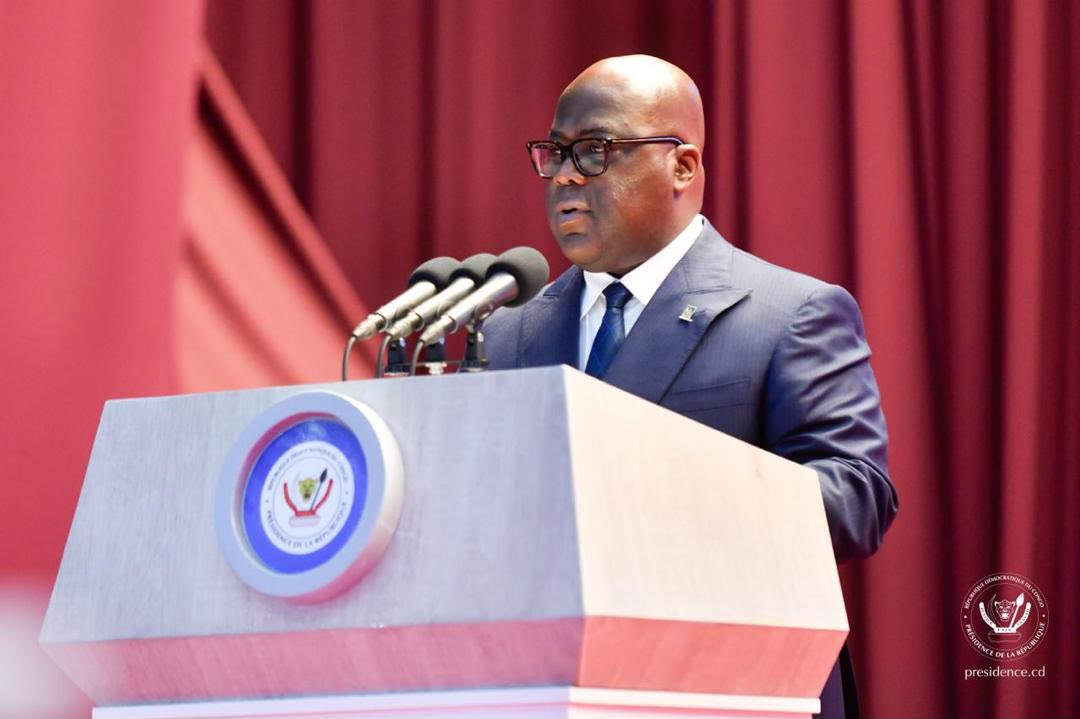
DRC: Félix Tshisekedi Delays National Dialogue Presidential Ordinances
Summary
- Congolese media on September 4 highlighted delays in presidential ordinances crucial for structuring the national dialogue.
- The absence of these legal texts raises questions about the government's management of the dialogue's timeline and keeps it a political promise.
- Minister Nicolas Kazadi and Human Rights Minister Samuel Mbemba justified excluding armed groups like AFC/M23 from political discussions, advocating for external security negotiations and a grassroots dialogue.
- The Agence Congolaise de Presse called for a general mobilization of national forces to consolidate peace and refound the state.
- President Félix Tshisekedi's visit to São Tomé for Carlos Vila Nova's inauguration underscored the DRC's commitment to diplomatic relations and African unity.
Delayed Legal Framework for National Dialogue
The continued deferral of these key legal instruments underscores the uncertainty surrounding the commencement and operational modalities of the dialogue, impacting the broader DRC political dialogue process.
The Democratic Republic of Congo's political landscape on Friday, September 4, was dominated by discussions surrounding the anticipated national dialogue and the ongoing delay in its formal establishment. Local media outlets in the capital city extensively covered the controversies and questions emerging from this crucial political process. A prominent tri-weekly publication, Congo Nouveau, highlighted the significant wait for the issuance of presidential ordinances, which are essential for structuring the proposed national dialogue. Its front-page headline critically questioned the timing, asking if President Félix Tshisekedi was intentionally prolonging the process.
The absence of these foundational legal texts has raised considerable concerns regarding the government's management of the dialogue's timeline. According to Congo Nouveau, without these presidential decrees, the entire initiative remains merely a political promise, lacking the necessary legal and procedural framework to move forward. This situation has led to widespread speculation and inquiries into who controls the scheduling and progression of this vital national conversation, suggesting a potential strategic delay in the DRC national dialogue presidential ordinances. The continued deferral of these key legal instruments underscores the uncertainty surrounding the commencement and operational modalities of the dialogue, impacting the broader DRC political dialogue process.
Exclusion of Armed Factions from Discussions
Further complicating the national dialogue landscape is the contentious issue of participant eligibility, particularly concerning armed groups. Online news platform Actualite.cd reported on statements made by Minister Nicolas Kazadi, who provided justification for the exclusion of the AFC/M23 republican group from the political discussions. Kazadi asserted that security-related matters involving such entities should be addressed through separate, external negotiation processes, rather than within the framework of the internal national dialogue. This position firmly supports the AFC/M23 national dialogue exclusion.
Echoing this sentiment, the daily newspaper Infos 27 elaborated on the rationale behind preventing armed factions like the AFC/M23 from participating in the sovereign National Dialogue. This perspective received backing from Samuel Mbemba, the Minister of Human Rights, who, speaking from Kenge, advocated for a grassroots-level popular dialogue originating from provincial bases. Minister Mbemba explicitly rejected any blurring of lines between legitimate political actors and armed movements, emphasizing that the national dialogue should not serve as a platform for groups engaged in armed conflict. This stance, articulated by figures like Nicolas Kazadi, reinforces the government's approach to the DRC political dialogue process, clearly delineating who is considered a legitimate participant.
Broader Calls for Unity and Diplomatic Engagements
Amidst the internal debates surrounding the national dialogue, broader calls for national unity and state-building efforts were also prominent. The Agence Congolaise de Presse (ACP) reported on an appeal for a general mobilization of the nation's vital forces, urging collective action to consolidate peace and facilitate the refoundation of the state. This call underscores a wider governmental objective to stabilize the nation and rebuild its institutions, irrespective of the specific challenges facing the DRC political dialogue process.
In parallel to these domestic concerns, President Félix Tshisekedi engaged in significant diplomatic activity, traveling to São Tomé to attend the inauguration of Carlos Vila Nova. As noted by Le Potentiel, this visit extended beyond mere protocol, with the Congolese Presidency emphasizing the profound importance Kinshasa places on its relationship with São Tomé-et-Príncipe. Congolese authorities viewed the President's presence as a clear demonstration of the strong bonds of friendship and cooperation that exist between the two nations. Le Tabloïd further highlighted the commitment to maintaining and strengthening direct political and diplomatic cooperation between the Democratic Republic of Congo and São Tomé-et-Príncipe. Additionally, 7sur7.cd pointed to the multilateral implications of this diplomatic engagement, suggesting that such actions contribute to the consolidation of African unity and the reinforcement of ties among nations across the continent, showcasing Félix Tshisekedi's engagement beyond the immediate national dialogue.
Practical Implications
Lawyers and compliance officers should monitor the delayed presidential ordinances for the DRC national dialogue, as their eventual issuance will define the legal framework and participants, impacting political stability and potential future legislative changes. The ongoing debate and exclusion of groups like AFC/M23 signal potential political and security risks that could affect business operations or legal interpretations in the region.
Source
How does this affect you?
Get an AI analysis of this article grounded in your jurisdictions, practice areas, and any policy documents you've uploaded to Wansom.
Finish Reading the Full Story and the Expert Analysis.
Wansom is AI and can make mistakes.