
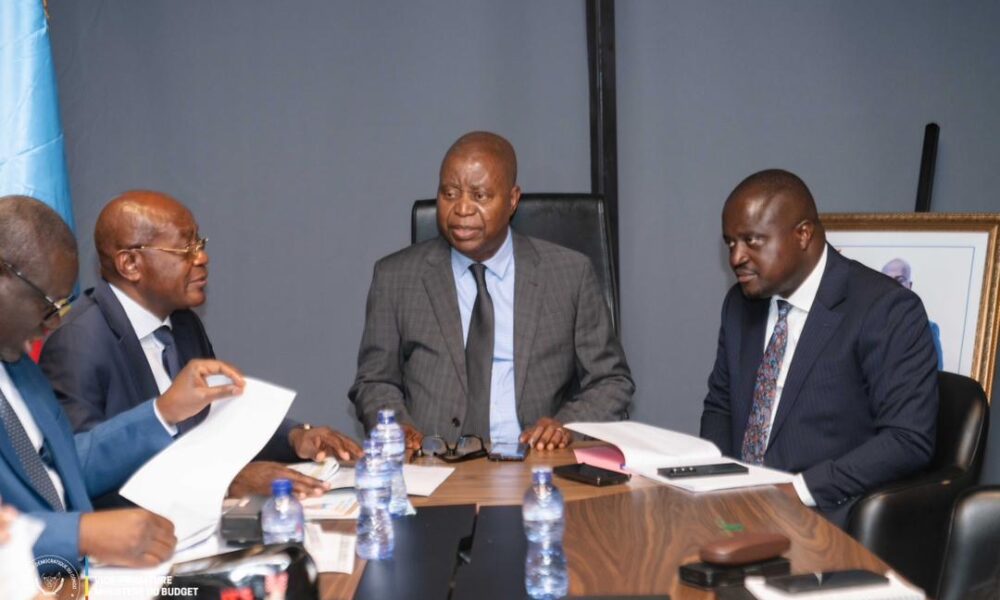
DRC: Muzito Leads Consultations for 2027 Draft Finance Bill
Summary
- Adolphe Muzito, the DRC's Vice-Prime Minister and Minister of Budget, continued consultations for the 2027 draft finance bill on September 3, 2026.
- This session marked the second day of discussions aimed at elaborating the crucial financial legislation for the upcoming fiscal year.
- Government members and public administration officials presented their priorities and defended proposed budget allocations during the meetings.
- The consultations are designed to reconcile diverse sectoral needs with the nation's existing budgetary constraints.
Key Consultations for DRC's 2027 Budget Underway
The ongoing deliberations represent a pivotal stage in the annual budgetary cycle of the Democratic Republic of Congo.
On Thursday, September 3, 2026, Adolphe Muzito, who holds the dual portfolios of Vice-Prime Minister and Minister of Budget for the Democratic Republic of Congo, continued a series of critical discussions aimed at formulating the DRC 2027 draft finance bill. This particular session marked the second day of intensive consultations dedicated to this significant legislative undertaking.
The proceedings involved a diverse group of high-ranking officials. Numerous members of the government participated alongside key representatives from the public administration. Their primary objective during these Adolphe Muzito budget consultations was to articulate their respective departmental and institutional priorities for the upcoming fiscal year.
A core component of these discussions involved the rigorous defense of proposed budget allocations. Each participating entity was tasked with justifying its financial requests, ensuring that the envisioned spending aligns with broader national objectives and fiscal realities. This collaborative effort is a crucial step in shaping the financial framework for the Democratic Republic Congo 2027 budget.
Navigating Fiscal Realities and Sectoral Demands
The ongoing deliberations represent a pivotal stage in the annual budgetary cycle of the Democratic Republic of Congo. The draft finance bill, often referred to as the "Loi de finances RDC 2027," is the foundational legal instrument that will govern the state's revenues and expenditures for the entire 2027 fiscal year. Its meticulous preparation is essential for the nation's economic stability and development.
These consultations are specifically designed to navigate the complex interplay between competing sectoral demands and the inherent constraints of the national budget. The process, led by the Vice-Prime Minister, seeks to achieve a delicate balance, ensuring that vital public services and strategic development initiatives receive adequate funding without overstretching the country's financial capacity. This reconciliation of diverse interests is central to creating a viable Congo finance law 2027.
The comprehensive nature of these discussions underscores the government's commitment to a structured and inclusive approach to fiscal planning. By engaging various stakeholders at this early stage, the administration aims to foster transparency and ensure that the final 2027 budget priorities reflect a broad consensus on national development goals and resource allocation.
Future Implications for the Congolese Economy
The outcomes of these Adolphe Muzito budget consultations will have far-reaching implications for the Democratic Republic of Congo. The decisions made during this phase will directly influence public spending patterns, tax policies, and investment priorities across all sectors for the 2027 fiscal year. This makes the DRC 2027 draft finance bill a document of immense national importance.
For businesses, investors, and citizens alike, the development of the Congo finance law 2027 signals forthcoming changes that could impact economic activities and daily life. The careful arbitration of budget requests and the establishment of DRC 2027 budget priorities will determine which areas of the economy receive governmental support, where new revenues might be sought, and how public services will be funded.
Therefore, close monitoring of these legislative developments is crucial for anyone operating within or engaging with the DRC economy. The foundational work currently being undertaken by Vice-Prime Minister Muzito and his team will lay the groundwork for the nation's financial trajectory, shaping the economic landscape and regulatory environment for the Democratic Republic Congo 2027 budget.
Practical Implications
Lawyers and compliance officers in the DRC should closely monitor the ongoing consultations for the 2027 draft finance bill to anticipate potential changes in tax policy, public spending priorities, or sector-specific regulations that could impact their clients' operations or investment planning. This early stage offers an opportunity to understand and potentially influence future legislative provisions.
Source
How does this affect you?
Get an AI analysis of this article grounded in your jurisdictions, practice areas, and any policy documents you've uploaded to Wansom.
Finish Reading the Full Story and the Expert Analysis.
Wansom is AI and can make mistakes.