
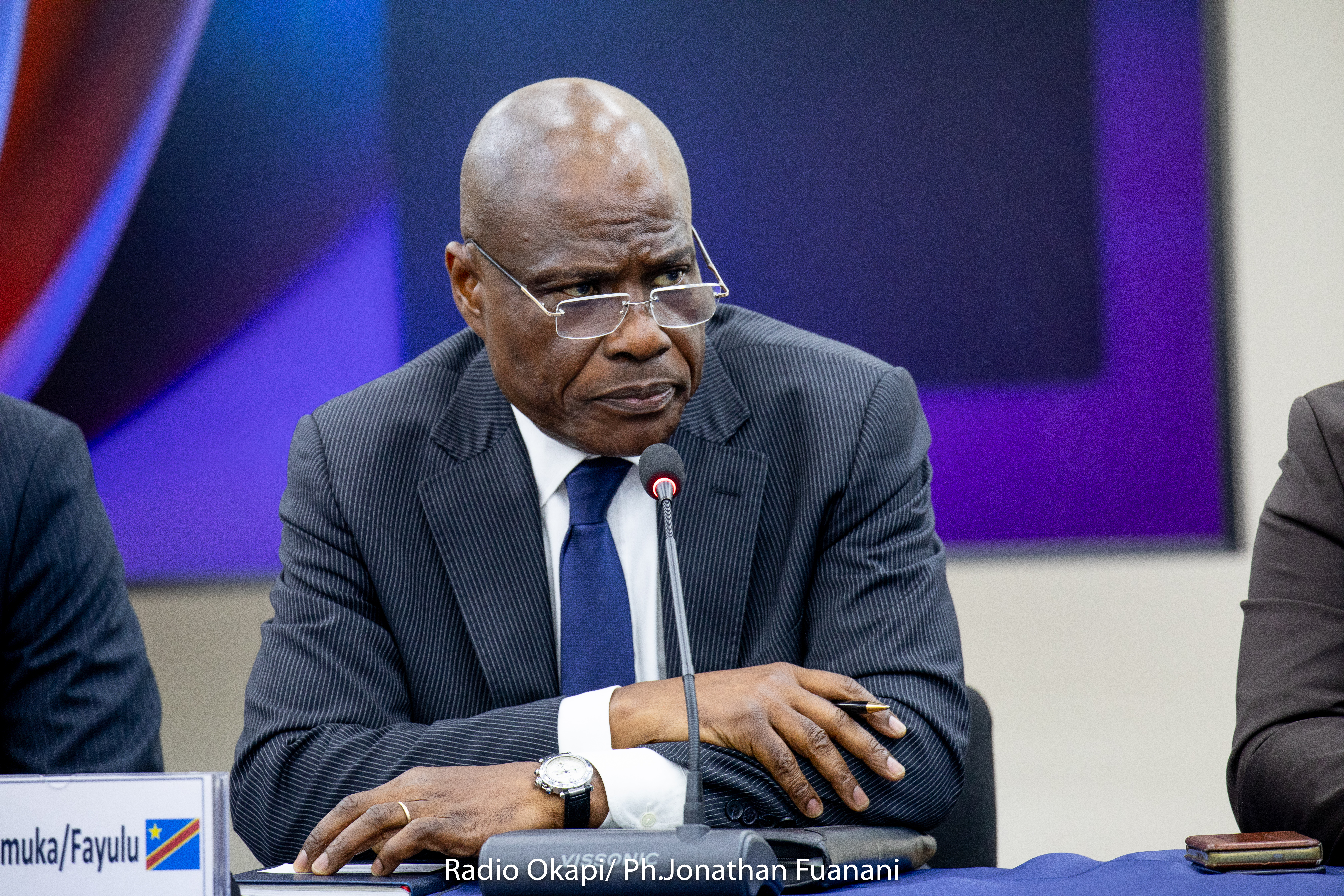
DR Congo: Prince Epenge Brought Before Prosecutor, Fayulu Denounces Justice System
Political opposition leader Martin Fayulu, in the Democratic Republic of Congo, on Wednesday, October 28, 2026, denounced the detention of Prince Epenge, a member of the Coalition C64, after his referral to the public prosecutor's office.
Martin Fayulu publicly condemned the detention of Prince Epenge, who was arrested on Sunday, October 25, at N'djili airport and subsequently referred to the public prosecutor's office near the Tribunal de grande instance de Kinshasa/Gombe after 48 hours in detention at the National Cybercrime Council. Epenge is reportedly accused of spreading false rumors concerning the death of Manasse Lomboto, which Epenge attributed to violence during a September 15, 2026, demonstration. Fayulu demanded respect for Epenge's fundamental rights, an impartial judicial procedure, and an independent investigation into Lomboto's death, while also calling for diligence in examining a complaint filed by C64 lawyers regarding the matter. The outcome of Epenge's case or the C64 complaint is not yet reported.
This incident highlights critical concerns regarding due process, freedom of speech, and the independence of the judiciary in the DRC. The accusation of "spreading false rumors" against a political opposition figure raises questions about the potential for criminal charges to be used to suppress dissent. Fayulu's denunciation of "justice à deux vitesses" (two-tiered justice) underscores perceptions of political interference in the judicial system, which can erode public trust and undermine the rule of law. For legal professionals, it emphasizes the importance of safeguarding fundamental rights, ensuring fair trial standards, and challenging arbitrary detentions or politically motivated prosecutions.
The legal framework implicated includes the DRC's Constitution, which guarantees fundamental rights such as freedom of expression, due process, and the right to a fair trial. Specific criminal statutes related to "propagation des faux bruits" (spreading false rumors) would be relevant to Epenge's accusation. The involvement of the public prosecutor's office (parquet) and the Tribunal de grande instance de Kinshasa/Gombe indicates the application of the DRC's criminal procedure code. The reference to the National Cybercrime Council suggests potential charges related to online communication, highlighting the evolving legal landscape concerning digital speech.
Attorneys representing political activists, journalists, or anyone facing charges related to public statements in the DRC must be vigilant in defending freedom of expression and ensuring strict adherence to due process. This includes challenging the legal basis of charges like "spreading false rumors," monitoring conditions of detention, and advocating for independent investigations into alleged abuses. Businesses should recognize that such incidents contribute to a perception of legal and political risk, potentially impacting human rights due diligence and overall investment climate assessments. Monitoring the progression of Prince Epenge's case will offer insights into the practical application of criminal law and the independence of the judiciary in politically sensitive matters.
How does this affect you?
Get an AI analysis of this article grounded in your jurisdictions, practice areas, and any policy documents you've uploaded to Wansom.
Finish Reading the Full Story and the Expert Analysis.
Wansom is AI and can make mistakes.