
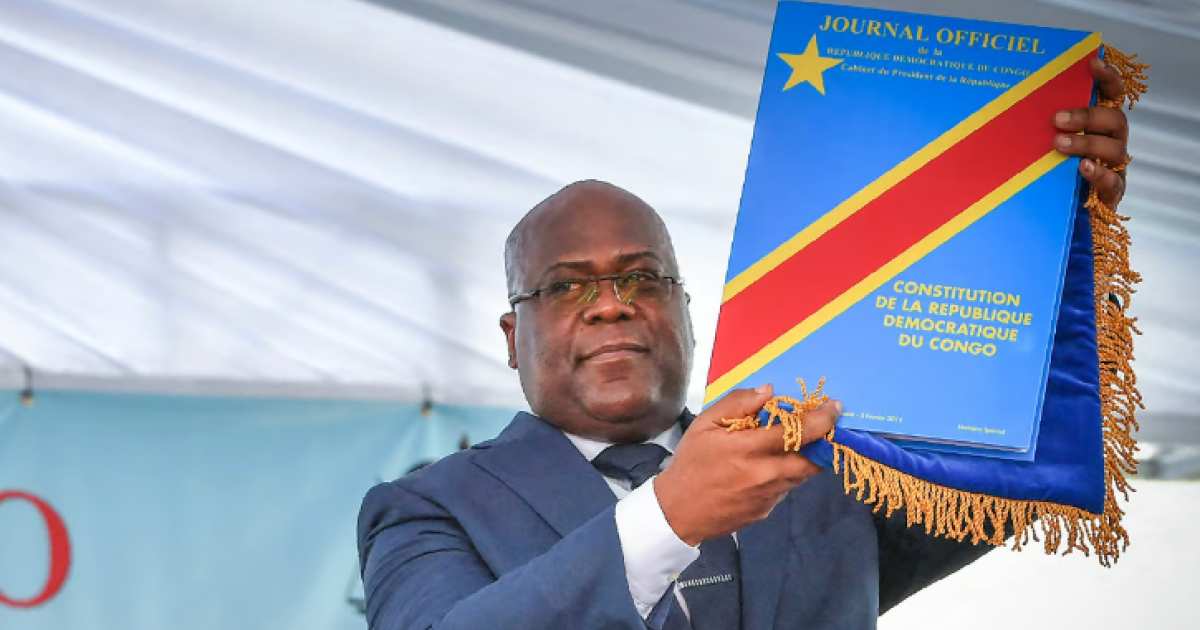
Jean-Claude Katende: Accuses Tshisekedi of Undermining DRC Rule of Law
Summary
- Me Jean-Claude Katende accused President Félix Tshisekedi of undermining the Constitution and the rule of law in the Democratic Republic of Congo.
- The prominent legal figure made this serious allegation on November 3, 2026.
- Katende's statement highlights concerns about the 'fragilisation' of the nation's legal framework under the current administration.
- The accusation suggests a perceived erosion of constitutional integrity and the principle that all are accountable to the law.
- This critique of Tshisekedi's actions carries significant weight within the DRC's political and legal landscape.
Allegations Against the Presidency
A prominent legal figure in the Democratic Republic of Congo, Me Jean-Claude Katende, has publicly accused President Félix Tshisekedi of undermining the nation's foundational legal framework.
A prominent legal figure in the Democratic Republic of Congo, Me Jean-Claude Katende, has publicly accused President Félix Tshisekedi of undermining the nation's foundational legal framework. Katende's assertion, made on November 3, 2026, specifically targets the head of state for allegedly weakening both the Constitution and the broader principle of the rule of law within the country. This serious charge highlights growing concerns among legal professionals regarding the state of governance in the DRC.
The accusation from Me Katende, a well-known voice in Congolese legal circles, points to a perceived erosion of constitutional integrity under the current administration. The statement directly implicates President Tshisekedi in actions that, according to Katende, contribute to the "fragilisation" of the state's legal and political stability. Such an indictment from a legal expert carries significant weight, drawing attention to the executive's adherence to established legal norms and the supreme law of the land.
The Core of the Accusation
The central claim by Jean-Claude Katende is that President Félix Tshisekedi is actively engaged in practices that "fragilise la Constitution et l'État de droit" in the Democratic Republic of Congo. This phrase encapsulates a dual concern: first, a direct challenge to the authority and inviolability of the national Constitution, and second, a broader assault on the principle that all individuals and institutions, including the government itself, are accountable to laws that are publicly promulgated, equally enforced, and independently adjudicated. The accusation suggests a departure from the fundamental tenets of a democratic and legally governed state.
For a nation like the DRC, which has experienced significant political and institutional challenges, the integrity of its Constitution and the strength of its rule of law are paramount for stability and development. Katende's statement implies that the actions of the presidency are creating an environment where these critical pillars are being systematically weakened, potentially leading to increased legal uncertainty and a decline in public trust in governmental institutions. The political context surrounding this accusation underscores the gravity of such a claim against the sitting president.
Significance for the Rule of Law
The concept of the rule of law dictates that no one is above the law, and that legal principles should govern the nation, rather than arbitrary decisions by individual government officials. When a figure like Me Jean-Claude Katende, with his legal background, alleges that the head of state is fragilizing this principle, it signals a potential crisis in governance. Such an accusation suggests that the executive branch may be perceived as operating outside or undermining the established legal framework, which is a critical concern for any state striving for democratic consolidation and respect for human rights.
This critique of Tshisekedi's adherence to the Constitution and the rule of law could have far-reaching implications for the Democratic Republic of Congo. It raises questions about the separation of powers, the independence of the judiciary, and the protection of civil liberties. The public nature of Katende's statement, made on November 3, 2026, ensures that these concerns are brought to the forefront of political discourse, compelling scrutiny of the executive's actions and their impact on the nation's legal foundations.
Practical Implications
Lawyers in the DRC should monitor the political discourse surrounding constitutional integrity, as accusations from prominent legal figures like Me Katende against the President may signal growing legal uncertainty or challenges to the rule of law, potentially impacting legal practice and client advisory regarding regulatory stability and executive actions.
Source
Source: Original reporting via PMaki
How does this affect you?
Get an AI analysis of this article grounded in your jurisdictions, practice areas, and any policy documents you've uploaded to Wansom.
Wansom is AI and can make mistakes.