
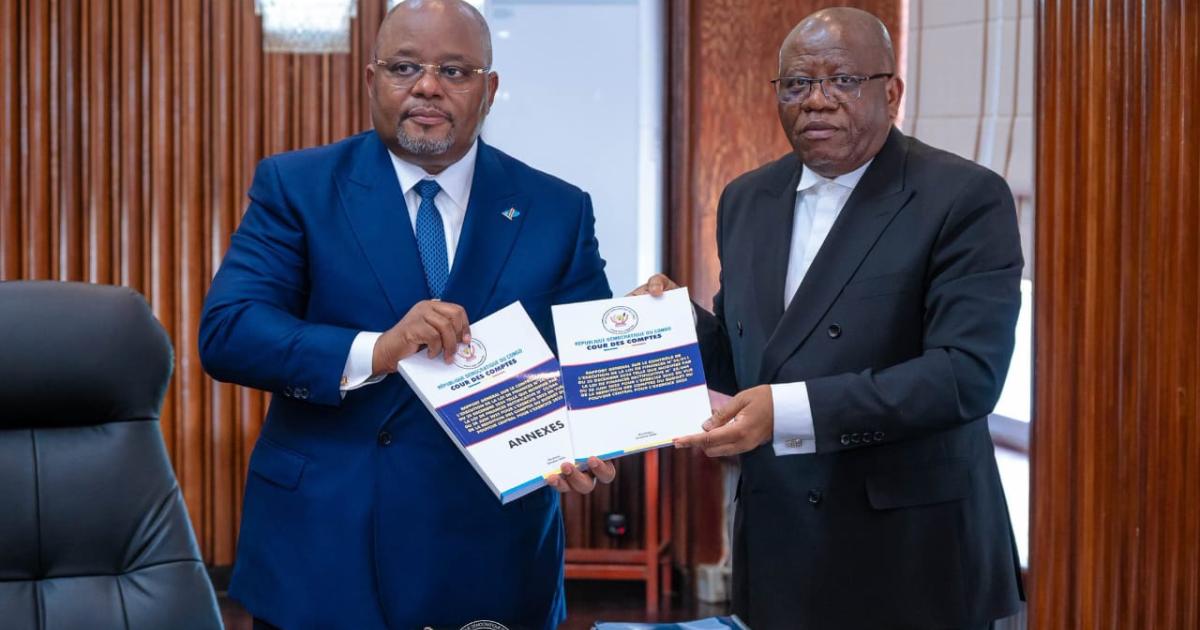
Cour des comptes RDC: Transmits RDC Budget 2025 Execution Report to Parliament
Summary
- The Cour des comptes has submitted its general report on the 2025 budget execution to the Congolese Parliament.
- The presidents of the National Assembly, Aimé Boji Sangara, and the Senate, Sama Lukonde, received the report on Monday, October 26.
- This report details the control of how public funds were spent during the 2025 fiscal year.
- The transmission initiates the parliamentary review process for the Democratic Republic of Congo's financial activities.
What Happened
For legal professionals and compliance officers, the public release and subsequent parliamentary examination of this report are particularly vital.
The general report from the Cour des comptes, detailing the control of the 2025 budget execution, has been formally transmitted to both legislative chambers of the Democratic Republic of Congo's Parliament. This pivotal document, central to the nation's financial accountability mechanisms, was received by the presiding officers of the National Assembly and the Senate. On Monday, October 26, the President of the National Assembly, Aimé Boji Sangara, and the President of the Senate, Sama Lukonde, each successively accepted the comprehensive findings from the state's supreme audit institution. This formal handover initiates the parliamentary review phase of the government's financial activities for the preceding fiscal year.
The report specifically scrutinizes the implementation of the RDC loi de finances 2025, providing an independent assessment of how public funds were managed and expended throughout that period. Its delivery to the Congolese Parliament underscores the constitutional role of the legislature in overseeing the executive's financial stewardship. The RDC budget 2025 execution report Parliament transmission is a standard, yet critical, procedural step designed to ensure transparency and adherence to budgetary allocations approved by the representatives of the people.
Legal and Regulatory Context
The Cour des comptes serves as the Democratic Republic of Congo's supreme audit institution, holding a constitutionally mandated role in safeguarding public finances. Its primary responsibility involves conducting an independent audit of the state's financial operations, ensuring that public expenditures align with approved budgets and legal frameworks. This institution's general report on the execution of the RDC budget 2025 is therefore a cornerstone of the nation's financial accountability system, providing an objective assessment of governmental spending.
The legal framework governing DRC public finance report mandates such comprehensive reviews, establishing a clear process for the executive to account for its use of public resources. The transmission of this report to the Congolese Parliament is not merely a formality; it represents a critical juncture where the legislative branch exercises its constitutional prerogative to scrutinize the government's financial performance. This oversight function is crucial for maintaining fiscal discipline and ensuring that funds are allocated and spent in accordance with the RDC loi de finances 2025 and other relevant statutes.
Why It Matters
The delivery of the RDC budget 2025 execution report Parliament holds significant implications for transparency and accountability within the Democratic Republic of Congo's governance structure. This detailed assessment by the Cour des comptes RDC budget 2025 provides a critical lens through which the public and various stakeholders can evaluate the government's financial stewardship. The findings contained within such a DRC public finance report can highlight areas of efficient resource utilization, but also expose potential irregularities, instances of non-compliance with budgetary laws, or even indications of financial mismanagement.
For legal professionals and compliance officers, the public release and subsequent parliamentary examination of this report are particularly vital. These documents offer invaluable insights into prevailing government spending patterns, potential financial irregularities, and areas where compliance with established regulations may be lacking. Such information is crucial for assessing risks associated with public sector engagements, understanding the operational environment for businesses, and anticipating future policy adjustments or enforcement actions that might stem from the report's conclusions. The rigorous Congolese Parliament budget oversight that follows this transmission is therefore a critical process to observe for anyone involved in or affected by the nation's public finances.
Practical Implications
Lawyers and compliance officers should monitor the public release and parliamentary review of this report for insights into government spending patterns, potential financial irregularities, and areas of non-compliance that could impact public sector engagements or future policy changes in the DRC.
Source
How does this affect you?
Get an AI analysis of this article grounded in your jurisdictions, practice areas, and any policy documents you've uploaded to Wansom.
Finish Reading the Full Story and the Expert Analysis.
Wansom is AI and can make mistakes.