
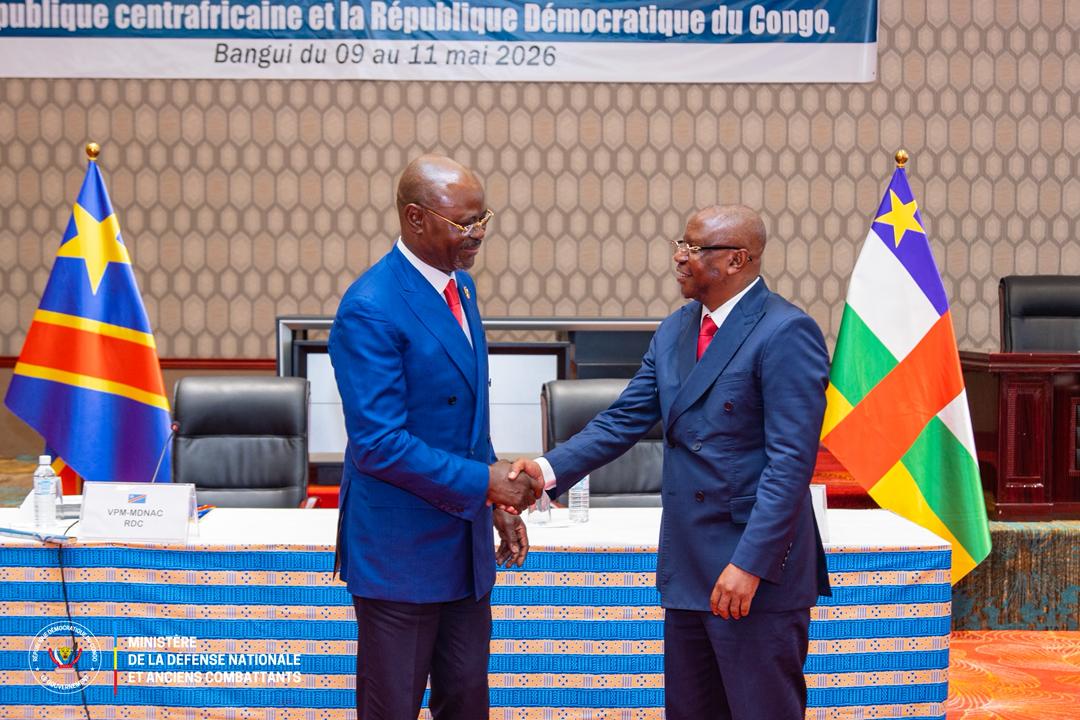
DR Congo, CAR Sign Military Intelligence Cooperation Agreement
The Democratic Republic of Congo (DRC) and the Central African Republic (CAR) formalized a strategic military and defense cooperation agreement focused on intelligence in Kinshasa on Friday, August 21, 2026. This agreement, signed by the DRC's Vice-Prime Minister in charge of National Defense, Guy Kabombo Muadiamvita, and his CAR counterpart, Rameaux-Claude Bireau, aims to strengthen security along their extensive 1,600-kilometer shared border. It specifically provides for real-time transmission of strategic and operational intelligence on cross-border movements and outlines joint strategies to secure vulnerable areas, particularly in the Nord-Ubangi and Bas-Uele provinces.
This bilateral agreement holds significant legal implications for practitioners in international law, national security, and human rights. It represents a formal commitment under international public law, requiring careful consideration of its terms, particularly regarding intelligence sharing protocols and the legal framework for joint military operations. Such cooperation, while aimed at enhancing regional security and combating non-state armed groups like the SELEKA rebels and regulating armed transhumance involving Mbororo herders, must strictly adhere to international humanitarian law and human rights principles. The agreement's success and legitimacy will depend on its transparent implementation and accountability mechanisms, especially concerning potential impacts on civilian populations in border regions.
The legal context for this agreement is primarily international public law, governing treaties and state cooperation. Domestically, its full integration into the legal frameworks of both the DRC and CAR would typically necessitate parliamentary ratification processes, transforming international obligations into national law. The agreement explicitly references an earlier military cooperation agreement signed in Kinshasa on October 18, 2024, indicating that this new intelligence-focused pact is part of a broader, ongoing security partnership. The mandates of the respective defense ministries and armed forces in both nations provide the operational and legal authority for such cooperation.
The key parties involved are the governments of the Democratic Republic of Congo and the Central African Republic, represented by their respective defense ministers. The agreement specifically targets issues related to Mbororo herders and SELEKA rebels, aiming to neutralize rebel movements and regulate armed incursions. The CAR Minister of Defense assured that his country would not serve as a rear base for destabilizing forces against the DRC, while the DRC Vice-Prime Minister emphasized this as a new step in consolidating defense cooperation.
Practitioners advising governments, international organizations, or businesses operating in the Great Lakes region should meticulously analyze the specific provisions of this agreement, particularly those pertaining to intelligence sharing, rules of engagement for joint operations, and mechanisms for accountability and oversight. It is crucial to monitor the implementation of this pact, its impact on cross-border security dynamics, and any potential human rights implications arising from joint military actions. Businesses involved in security, logistics, or resource extraction in the Nord-Ubangi and Bas-Uele provinces should assess the evolving security landscape and regulatory environment shaped by this enhanced bilateral cooperation.
How does this affect you?
Get an AI analysis of this article grounded in your jurisdictions, practice areas, and any policy documents you've uploaded to Wansom.
Wansom is AI and can make mistakes.