
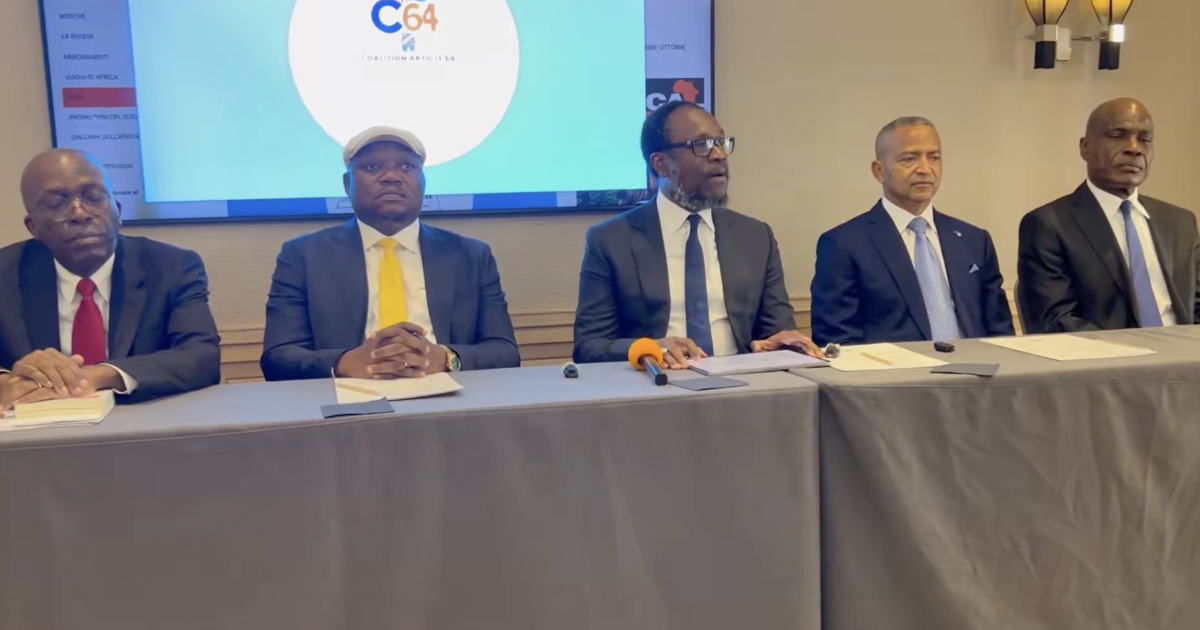
DR Congo: C64 Warns on Referendum Law, Citing Constitution
In the Democratic Republic of Congo, on October 27, 2026, the C64 coalition issued a warning that a majority cannot disregard the Constitution, reacting to the National Assembly's adoption of a text on referendum organization. This significant pronouncement by the C64 coalition came in response to the National Assembly's approval, on October 23, 2026, of a legislative text outlining the conditions for organizing a referendum. The excerpt indicates that this text had undergone a re-examination and a new deliberation process before its final adoption by the legislative body, suggesting a potentially contentious legislative journey. The C64's statement, emphasizing that "a majority cannot disregard the Constitution," underscores a deep concern that the adopted text or the potential use of a referendum might infringe upon fundamental constitutional principles or lead to an overreach of legislative power. The specific details of the text's content are not provided, but the coalition's reaction points to a perceived threat to constitutional supremacy.
This development carries substantial legal significance for practitioners in the DRC, particularly those specializing in constitutional law, public administration, and legislative affairs. It signals a potential constitutional challenge to the legislative process and the exercise of popular sovereignty through referenda, which could have far-reaching implications for the country's political and legal landscape. The C64's public intervention suggests an impending legal and political contestation over the interpretation and application of the Constitution, especially concerning any proposed amendments or significant policy changes that might be put to a popular vote. For businesses and investors, such constitutional debates are critical, as they can impact regulatory stability, the rule of law, and the overall investment climate. Legal professionals must therefore closely monitor these developments to advise clients on potential shifts in the legal and political environment.
The legal context for this matter is firmly rooted in the Democratic Republic of Congo's Constitution, which serves as the supreme law of the land, establishing the framework for governance, legislative procedures, and the protection of fundamental rights. Article 218 of the DRC Constitution, for instance, specifically addresses the conditions under which a referendum can be held, particularly for constitutional revisions, thereby setting clear boundaries for such processes. The National Assembly, as a key component of the bicameral Parliament, holds the power to enact legislation, but this power is always subject to constitutional review. The C64's warning directly invokes the principle of constitutional supremacy, a cornerstone of the DRC's legal system, asserting that no legislative act, regardless of the majority support it garners, can override the Constitution. In the event of a constitutional dispute, the Constitutional Court (Cour Constitutionnelle) would be the ultimate judicial authority tasked with adjudicating the constitutionality of the adopted text or the referendum process itself.
The key parties involved in this unfolding legal and political narrative include the C64 coalition, a political grouping that has voiced its strong constitutional concerns, and the National Assembly, the legislative body responsible for adopting the contentious text. Implicitly, the Congolese people are also a key party, as any referendum directly involves their exercise of popular sovereignty. The Constitutional Court stands as the crucial judicial arbiter, poised to review any constitutional challenges that may arise from the National Assembly's actions or the subsequent referendum process. While the excerpt does not report the outcome of this matter, the C64's proactive statement indicates a strong likelihood of future legal scrutiny and potential challenges.
For attorneys and legal professionals practicing in the DRC, the immediate takeaway is the imperative to closely track the progression of this referendum text, including its potential promulgation into law and any subsequent legal challenges that may be brought before the Constitutional Court. It is essential to understand the precise scope and limitations of referenda under the DRC Constitution, as well as the powers and jurisdiction of the Constitutional Court in reviewing such processes. Practitioners should be prepared to advise clients on the potential implications of constitutional amendments or significant policy shifts that could result from a referendum, ensuring their operations remain compliant and resilient amidst evolving legal frameworks. Proactive engagement with constitutional law and legislative developments will be paramount in navigating this complex landscape.
How does this affect you?
Get an AI analysis of this article grounded in your jurisdictions, practice areas, and any policy documents you've uploaded to Wansom.
Finish Reading the Full Story and the Expert Analysis.
Wansom is AI and can make mistakes.